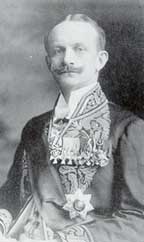

To watch “La Chica De La Calle Florida” was a nice surprise for this German Count because it is unusual for the aristocracy to be pleasantly surprised by an Argentinean film ( well, at this age it is very unusual to be surprised at all ) since the silent film industry in Argentina was not very well known or remarkable for its own merits in far away Germany.
The film tells the story of Dame Alcira who works in a mall together with other girls, a closed environment that generates jealousy, envy and hated between the different employees as well as their bosses… The most astonishing aspect of “La Chica De La Calle Florida” is that, in spite of being an early Argentinean production, the direction is absolutely modern, and most remarkable in its depiction of the thrill of a big city ( Buenos Aires in this case ) and it has undertones of American social drama as well as elements even of avant-garde German films; very important silent references, ja wöhl!.
The credit for such an interesting but sadly forgotten film goes to HerrJose A. Ferreyra, probably the most important and outstanding Argentinean silent film director and pioneer, who was very concerned to strengthen an incipient Argentinean film industry during the 20s. Herr José A. Ferreyra's creative mind leaned toward anarchy rather than organization and he often improvised and recreated the script during the shooting of the film till he found what he was looking for. Sometimes his methods resulted in remarkable films like this one but his technique occasionally led to failure.
Besides the modernity of “La Chica De La Calle Florida” in its creative concept, there is too an important social content in the film, exposing the social differences among the two principal characters and the problems that they will find when they are trying to develop their relationship and run afoul of strict conventionalisms ( ah!... the eternal class war ). Nor should we forget the strong and independent feminine characters depicted in the film; resolute and determined, evidence that asserts your grandmothers were real and genuine modern girls.
In short, “La Chica De La Calle Florida” is a silent Argentinean gem that proves that talent can be found in the most exotic and strange countries, pleasing to silent film fans and even to a German aristocrat.
And now, if you'll allow me, I must temporarily take my leave because this German Count needs suddenly to dance a tango with one of his rich and fat German heiresses.
Herr Graf Ferdinand Von Galitzien
-/-
Ver “La Chica De La Calle Florida” ha sido toda una sorpresa para éste Conde germánico, pues no es habitual que la aristocracia sea agradablemente sorprendida por un filme argentino ( más bien, a esta edad no es nada habitual sorprenderse ya con nada ) pues la producción silente argentina no es demasiado conocida o destacable por sus propios méritos en la lejana Germania.
El filme narra la historia de Dame Alcira, una joven melenuda que trabaja en un centro comercial conjuntamente con otras melenudas, un espacio laboral demasiado opresivo que genera celos, envidias y odios entre los diferentes empleados además de sus jefes; el aspecto más sorprendente de “La Chica De La Calle Florida” es el hecho de que a pesar de ser una producción argentina temprana, la dirección es absolutamente moderna, destacando especialmente al mostrar el trepidante ritmo de vida de una gran ciudad ( Buenos Aires en teste caso ), observándose ligeras influencias de los dramas sociales americanos de la época además de también influencias de los filmes vanguardistas germánicos, importantísimas referencias silentes, ja wöhl!.
El responsable de tan interesante y olvidada película recae en Herr José A. Ferreira, probablemente el más importante, pionero y destacado director argentino de dicha época, que siempre se mostró muy preocupado por asentar las bases de una incipiente industria cinematográfica argentina durante los años 20; la mente creativa de Herr José A. Ferreira era más bien anárquica antes que organizativa, optando a menudo por improvisar el guión de sus obras durante los rodajes y hasta que encontraba lo que realmente estaba buscando, teniendo como resultado filmes realmente destacables pero también numerosos fiascos.
Además de la modernidad que subyace en “La Chica De La Calle Florida” en conceptos creativos, hay también un importante contenido social en el filme, exponiendo las diferentes clases sociales de sus protagonistas y los problemas que tendrán que soportar cuando intenten continuar con una relación que pone en cuestión rígidos convencionalismos sociales ( ¡ah, la eterna lucha de clases! ), sin olvidarse tampoco de la importancia de sus protagonistas femeninas, mujeres independientes, de carácter, resolutivas y dueñas de sus propias decisiones, lo que evidencia que sus abuelas sí que eran las auténticas y genuinas chicas modernas.
Resumiendo, “La Chica De La Calle Florida” es una joyita argentina que demuestra que el talento se puede encontrar en los más exóticos y extraños países, agradables descubrimientos para los admiradores del cine silente, incluyendo incluso un Conde germánico.
Y ahora si me lo permiten les tengo que dejar momentáneamente, pues este Conde germánico siente una necesidad imperiosa de bailar un tango con una de sus ricas y gordas herederas teutonas.
Herr Graf Ferdinand Von Galitzien


