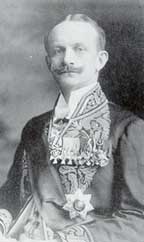

“Límite”, the only film directed by Herr Mario Peixoto (although he had several unfinished film projects during his life), is considered by the longhaired youngsters around the world as the best Brazilian film in the country’s cinema history. And this German Count enjoyed such an astonishing and avant-garde film, a very important aristocratic and provincial representation, that is to say, this German Count… shares those longhaired and cinematic praises, another astonishing fact in itself, certainly.
Such exceptional and coincidental opinions among the middle and upper class is due to the fact that “Límite” it is an excellent and original avant-garde Brazilian film. It is a film highly influenced by the European avant-garde movements, namely the French one but with evident German and Russian cinematic inspirations as well. All were filmed during the intersectional era between the silent and the talkie one, a film that fascinates the audience from the beginning.
Three people are in a boat adrift, with no food and each with a particular past of their own. That’s the plot of the film, although simple is not quite an easy one, certainly… but the mastery of Herr Peixoto’s telling and intertwining of those different stories of these lonely people is remarkable. That’s due to the cinema narrative: superb and complex. There is no use of established film rules, but instead there is nonconformist experimentation. The film does not have usual or lineal description of the facts as used in many “ordinary” silent films. On the contrary (and that’s the excellence of this film) Herr Peixoto includes allegories, metaphors, suggestive and experimental images (a woman handcuffed. figured thick bars, oppressive surroundings with the sea, and at last, unique salvation) in order to tell… or even better said… suggest the miserable lives of those castaways. Succinct but enough information for the audience, he creates, in this way, fascinating images full of lyricism, hopelessness and saudade (nostalgia). “Límite” is an astounding and experimental film supported with a collection of beautiful classical music oeuvres that gives the mood to Herr Edgar Brazil’s magnificent cinematography even for an aristocratic and hieratic German Count.
And now, if you'll allow me, I must temporarily take my leave because this German Count must go somewhere beyond the aristocratic sea.
Herr Graf Ferdinand Von Galitzien
-/-
“Límite”, el único filme dirigido por Herr Mario Peixoto ( este director desarrollaría a lo largo de su vida, varios e inacabados proyectos cinematográficos ), está considerado por los jóvenes melenudos del mundo entero, como el mejor filme brasileño producido en la historia de dicho país y tras haber visto y disfrutado este Conde germánico esa sorprendente y vanguardista obra, una importante representación provinciana y aristocrática, esto es, este Conde germánico, comparte también esas alabanzas melenudas cinematográficas acerca del filme de Herr Peixto, otro sorprendente hecho éste en si mismo, ciertamente.
Tan excepcionales opiniones coincidentes entre clases medias y elevadas se debe al hecho de que “Límite” es un excelente y original filme vanguardista brasileño; se trata de una obra enormemente influenciada por las vanguardias europeas, especialmente la francesa, aunque con evidentes inspiraciones cinematográficas de filmografías como la alemana y la rusa; “Límite” fue realizado durante la época de transición entre el cine silente y el sonoro y estamos ante una obra que fascina al público desde el mismo momento en que comienza.
Tres personas se hayan, sin comida, en un bote a la deriva; cada uno de esos personajes tiene un particular pasado…así de sencilla es la trama del filme y aunque parezca simple no estamos ante una historia fácil ciertamente…
Y es que la maestría de Herr Peixoto narrando y entrelazando las diferentes historias de los solitarios protagonistas del filme es realmente destacable, sobretodo gracias a una compleja y soberbia narrativa cinematográfica; en esta ocasión no sirven las preconcebidas reglas fílmicas, optando por emplear inconformistas y experimentales técnicas cinematográficas.
El filme no posee una clásica y lineal descripción de los hechos tal y como se desarrollan en numerosos filmes silentes, todo al contrario ( y estas son las excelencias de esta obra ) Herr Peixoto incluye alegorías, metáforas, sugestivas y experimentales imágenes ( una mujer esposada, figuradas imágenes de barrotes, opresivos escenarios con el mar, finalmente, como única vía de escape ) a la hora de narrar, o mejor dicho, sugerir las tristes vidas de esos náufragos, sucinta pero más que suficiente información para el público, creando de esta forma, fascinantes imágenes repletas de lirismo, desesperanza y saudade.
Por todo ello, “Límite” es un sorprendente y experimental obra que cuenta además con la excelente fotografía de Herr Edgar Brazil, estando acompañada dicha obra con una colección de bellas y clásicas obras musicales, consiguiendo, en su globalidad, incluso emocionar a un hierático y aristocrático Conde germánico.
Y ahora si me lo permiten les tengo que dejar momentáneamente, pues este Conde germánico tiene que viajar a algún lugar más allá del mar aristocrático.
Herr Graf Ferdinand Von Galitzien


