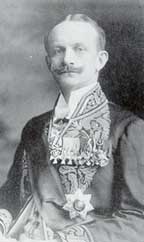

At this time, those longhaired youngsters interested in this Herr Graf’s silent rants, probably will know, among other aristocratic trifles, the fondness of this German count for the autumn season, an indispensable relief for the battered aristocrats, wearied after enduring the sufferings of the summer season going to and fro, that is to say, from soirées to private balls, from Baden-Baden to Monte Carlo.
All the virtues of the autumn season are wonderfully depicted in a short but exceptional silent film, “Brumes D’Automne” (1929), another superb, lyrical masterpiece by Herr Dimitri Kirsanoff.
As it says in the preface to this beautiful short film, “Brumes D’Automne” is a cinematic poem, an astounding, lyrical and avant-garde oeuvre wherein Herr Kirsanoff gets hold of the titanic task of capturing the melancholy, nostalgia, the hope and hopelessness of human inner sentiments. Frau Nadia Sibirskaia ( Herr Kirsanoff’s first wife and his muse during his early oeuvres ) reflects these aims perfectly and Herr Kirsanoff transmits them to the audience in an incredible way.
The genuine autumn mood is exhibited in “Brumes D’Automne” in a superior, unique, painful and even magical manner. It is an exceptional film in which the autumn atmosphere and ethereal human feelings complement each other admirably. The audience is moved by evocative images from nature ( falling leaves, rain, mist frozen landscapes), all beautifully photographed by Herr Jean de Miéville. This, combined with the suffering the heroine must undergo, makes “Brumes D’Automne” a melancholy masterpiece.
And now, if you'll allow me, I must temporarily take my leave because this German Count must enjoy the autumn season mood.
Herr Graf Ferdinand Von Galitzien
-/-
A estas alturas, todos esos jovenzuelos melenudos interesados en las peroratas silentes de éste Herr Graf, probablemente sabrán que, entre otras menudencias aristocráticas, éste conde germánico tiene una cierta querencia por la época otoñal, una época ésta de alivio muy necesario para los magullados cuerpos aristocráticos después de haber soportado éstos los sufrimientos de la época veraniega, esto es, el ir de aquí para allá, de soirées a bailes privados, de Baden-Baden a Montecarlo.
Todas las virtudes del otoño están maravillosamente reflejadas en el cortometraje e igualmente excepcional filme silente “Brumes D’Automne”, otra magnífica, lírica obra maestra del director Herr Dimitri Kirsanoff.
Tal y como se anuncia en el prefacio de éste bella obra, “Brumes D’Automne” (1929), es un poema cinematográfico, un sorprendente, lírico y vanguardista filme en donde Herr Kirsanoff consigue la titánica tarea de capturar la melancolía, la nostalgia, la esperanza y el desasosiego, esos primarios sentimientos humanos.
Frau Nadia Sibirskaia ( primera esposa de Herr Kirsanoff y musa de sus filmes primerizos ), refleja de forma admirable esos sentimientos y Herr Kirsanoff los transmite al público de una forma igualmente sorprendente.
La auténtica atmósfera otoñal se muestra en “Brumes D’Automne” de una forma excepcional, única, mágica e incluso dolorosa; se trata de una obra irrepetible en donde la atmósfera del otoño ( hojas caídas, lluvia, paisajes helados y brumas ) y los sentimientos humanos más etéreos, se complementan de forma admirable, emocionando al público gracias a esas evocadoras imágenes de paisajes naturales, además de las penas de nuestra particular heroína, todo ello fotografiado por Herr Jean de Miéville, consiguiendo que, finalmente, “Brumes D’Automne” sea toda una obra maestra de la melancolía.
Y ahora si me lo permiten, les tengo que dejar momentáneamente, pues este conde germánico tiene que disfrutar de la atmósfera otoñal.
Herr Graf Ferdinand Von Galitzien
All the virtues of the autumn season are wonderfully depicted in a short but exceptional silent film, “Brumes D’Automne” (1929), another superb, lyrical masterpiece by Herr Dimitri Kirsanoff.
As it says in the preface to this beautiful short film, “Brumes D’Automne” is a cinematic poem, an astounding, lyrical and avant-garde oeuvre wherein Herr Kirsanoff gets hold of the titanic task of capturing the melancholy, nostalgia, the hope and hopelessness of human inner sentiments. Frau Nadia Sibirskaia ( Herr Kirsanoff’s first wife and his muse during his early oeuvres ) reflects these aims perfectly and Herr Kirsanoff transmits them to the audience in an incredible way.
The genuine autumn mood is exhibited in “Brumes D’Automne” in a superior, unique, painful and even magical manner. It is an exceptional film in which the autumn atmosphere and ethereal human feelings complement each other admirably. The audience is moved by evocative images from nature ( falling leaves, rain, mist frozen landscapes), all beautifully photographed by Herr Jean de Miéville. This, combined with the suffering the heroine must undergo, makes “Brumes D’Automne” a melancholy masterpiece.
And now, if you'll allow me, I must temporarily take my leave because this German Count must enjoy the autumn season mood.
Herr Graf Ferdinand Von Galitzien
-/-
A estas alturas, todos esos jovenzuelos melenudos interesados en las peroratas silentes de éste Herr Graf, probablemente sabrán que, entre otras menudencias aristocráticas, éste conde germánico tiene una cierta querencia por la época otoñal, una época ésta de alivio muy necesario para los magullados cuerpos aristocráticos después de haber soportado éstos los sufrimientos de la época veraniega, esto es, el ir de aquí para allá, de soirées a bailes privados, de Baden-Baden a Montecarlo.
Todas las virtudes del otoño están maravillosamente reflejadas en el cortometraje e igualmente excepcional filme silente “Brumes D’Automne”, otra magnífica, lírica obra maestra del director Herr Dimitri Kirsanoff.
Tal y como se anuncia en el prefacio de éste bella obra, “Brumes D’Automne” (1929), es un poema cinematográfico, un sorprendente, lírico y vanguardista filme en donde Herr Kirsanoff consigue la titánica tarea de capturar la melancolía, la nostalgia, la esperanza y el desasosiego, esos primarios sentimientos humanos.
Frau Nadia Sibirskaia ( primera esposa de Herr Kirsanoff y musa de sus filmes primerizos ), refleja de forma admirable esos sentimientos y Herr Kirsanoff los transmite al público de una forma igualmente sorprendente.
La auténtica atmósfera otoñal se muestra en “Brumes D’Automne” de una forma excepcional, única, mágica e incluso dolorosa; se trata de una obra irrepetible en donde la atmósfera del otoño ( hojas caídas, lluvia, paisajes helados y brumas ) y los sentimientos humanos más etéreos, se complementan de forma admirable, emocionando al público gracias a esas evocadoras imágenes de paisajes naturales, además de las penas de nuestra particular heroína, todo ello fotografiado por Herr Jean de Miéville, consiguiendo que, finalmente, “Brumes D’Automne” sea toda una obra maestra de la melancolía.
Y ahora si me lo permiten, les tengo que dejar momentáneamente, pues este conde germánico tiene que disfrutar de la atmósfera otoñal.
Herr Graf Ferdinand Von Galitzien


