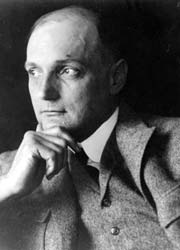
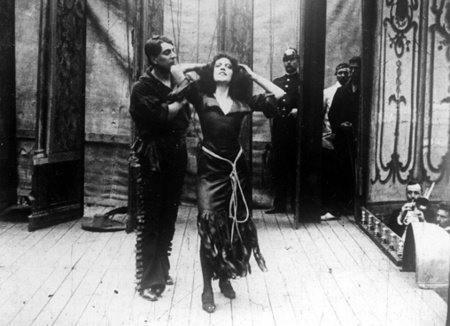
The pioneer Danish film director Herr Urban Gad directed “Den Store Flyver” ( The Aviator’s Generosity ) in the silent year of 1912, a drama with romance, compromising documents and modernen aircrafts.
The film depicts the story of two bourgeois siblings, Herr Arthur Vidart, an aviator, and his sister, Frau Else, who is in love with Herr Jean Aubert, an aviator too and friend of Herr Vidart. Until here the story was very easy to follow for this German count but due to the fact that the blurry copy that this Herr Graf watched at the Schloss theatre was another, errrr....“restored” copy from the Library Of Congress, the old nitrate didn’t have any intertitles. For this reason this German count was very confused ( more than usual… ) about some fundamental plot elements included in the story: Why is Herr Vidart constantly harassed by (I think) a pawnbroker? Who has the compromising document? If this Herr Von is right, then the mysterious paper could be some money debt that Herr Vidart can’t pay.
Compounding the confusion, Herr Vidart doesn’t allow his sister to continue her engagement with Herr Aubert, a strange fact this because he is a good friend of his (just one title card would clear this up), In the end the aviator’s generosity seems to pay Herr Vidart’s money debt (if that’s what it is) to the annoying… pawnbroker?... releasing Herr Vidart from such a burden and in this way allowing Herr Aubert to resume his engagement to Frau Else.
This three reels “Nordisk” film production includes some aerial scenes wherein the most modernen aircrafts of the time are in action in a flying competition ( historical scenes that were a relief to this Herr Graf because it wasn’t necessary to keep speculating about the plot). There are some naïf tricks used when the aviator’s plane is in close-up; these bold and daring aviators have nothing in common with the nowadays safe and well-paid pilots with their common planes.
In spite of the lack of intertitles that often made this Herr Von yell, “an intertitle, an intertitle, my Schloss for an intertitle!”, “Den Store Flyver” is an interesting piece of Danish film archaeology that certainly needs to be restored properly in order to be enjoyed at its best one hundred years after its official premiere.
And now, if you'll allow me, I must temporarily take my leave because this German Count has a terrible headache after so much guesswork.
Herr Graf Ferdinand Von Galitzien
-/-
El pionero director danés Herr Urban Gad, dirigió en el año silente de 1912 el filme “Den Store Flyver”, un drama silente con amoríos, documentos comprometedores y modernas aeronaves.
El filme narra la historia de dos hermanos burgueses, Herr Arthur Vidart, aviador, y su hermana, Frau Else, la cuala está enamorada de Herr Jean Aubert, aviador también y amigo de Herr Vidart.
Hasta aquí la historia fue fácilmente comprensible para éste conde germánico pero debido al hecho de que la copia borrosa que éste Herr Von pudo ver de dicho filme en el teatro del Schloss, era otro nitrato “restaurado” por la fundación americana “Library Of Congress” y carecía éste de rótulos, por dicho motivo, éste Herr Von se halló más confuso de lo habitual acerca de ciertos asuntos del filme, destacando especialmente el hecho de que Herr Vidart es continuamente molestado por ¿un prestamista?, el cual tiene en su poder un comprometedor documento, documento que si las suposiciones de éste Herr Graf están en lo cierto, está relacionado con ciertas deudas económicas que Herr Vidart es incapaz de abonar.
Continuando con las suposiciones de éste Herr Von, Herr Vidart no permite que su hermana continúe su idilio con Herr Aubert, un extraño hecho éste pues ambos son dos buenos amigos, un misterio que desafortunadamente, cómo ha mencionado anteriormente éste Herr Graf, ningún rótulo puede dilucidar, aunque finalmente y gracias a la generosidad del aviador, la ¿deuda económica de Herr Vidart?... será pagada al… ¿prestamista?... más concretamente, dicha cantidad será abonada por un hombre barbudo con chistera en vez de hacerlo Herr Vidart, liberando a éste de tan pesada carga, reanudando entonces Herr Aubert su relación con Frau Else, liberando así también de otra carga a su amigo…
En éste mediometraje producido por “Nordisk”, se incluye también algunas escenas aéreas en donde las más modernas aeronaves de la época se pueden contemplar en acción durante una competición aérea ( escenas de gran valor histórico y que suponen un descanso a éste Herr Graf pues éstas no necesitan de más conjeturas… ), en donde algunos sencillos trucos de cámara son empleados cuando el aviador y su aeronave son filmados, atrevidos y audaces pilotos que ciertamente no tienen nada que ver con los actuales, muy bien pagados y más seguros éstos en sus ordinarios aparatos aéreos.
A pesar de la falta de rótulos que muchas veces hicieron exclamar a éste Herr Von: “¡un rótulo, un rótulo, mi Schloss por un rótulo!”… “Den Store Flyver” es una interesante pieza de arqueología silente danesa que ciertamente necesita ser restaurada como es debido para que así pueda ser disfrutada cien después de su estreno oficial.
Y ahora si me lo permiten, les tengo que dejar momentáneamente, pues este conde germánico tiene un gran dolor de cabeza después del esfuerzo que le ha supuesto el haber estado haciendo tantas conjeturas.
Herr Graf Ferdinand Von Galitzien
-----------------------------------------
Appendix
German film program of Herr Gad's "Den Store Flyver"
DER HÖHEN-WELTREKORD
Ein sensationeller Aviatiker-Roman
Arthur Vidart ……………………….…… Aviatiker
Else, seine Schwester
Jean Aubert …………………………….. Aviatiker
Lydia, dessen frühere Freundin
Pehrson …………………………………. Wucherer
Die beiden Flieger, Arthur Vidart und Jean Aubert traineren sich frühmorgens zu dem grossen Wettbewerb im Hochflug, der in einigen Tagen stattfinden soll, aber obgleich Konkurrenten, sind sie doch so gute Freunde, dass Vidart den Aubert zu sich nach Hause einladet, wo er ihn seiner jungen, schönen Schwester, dem Fräulein Else, vorstellt.
Aubert ist ganz bezaubert von Elses frischer Anmut, und als sie und der Bruder sich entfernt haben, nimmt e reine Rose aus seinem Knopfloch und befestigt sie an der Hecke auf der Stelle, wo sie sich trafen. Gleich darauf findet Else die Rose. Sie nimmt sie an sich, haucht einen Kuss auf die zarten Blätter, iin der Ahnung eines schönen Liebesabenteuers. Inzwischen ist ihr Bruder in nicht so guter Stimmung, da er erstens eine Mitteilung von seinem Vormund erhält, dass bis auf weiteres der Geldschrank für ihn geschlossen sei, und darauf macht ihm noch der Menschenfreund Pehrson seine Aufwartung, und präsentiert ihm einen fälligen Wechsel von 3000 Kronen. Vidart weiss sich keinen Rat, wie er sich aus dieser schwierigen Situation befreien soll. Er eilt zu seinem Vormund, um ihn, wenn irgend möglich, umzustimmen ; der Versuch missglückt jedoch gänzlich. Es bleibt ihm nichts anderes übrig, als Pehrson um Aufschub zu bitten. Mit schwerem Herzen geht er zu ihm; doch besser wird es deswegen nicht, da ihm Pehrson seine Bitte um Aufschub aufs Bestimmteste abschlägt. Vidart beruft sich darauf, dass er in wenigen Tagen höchst wahrscheinlich 5000 Kr. beim Hochflug verdienen werde, aber Pehrson will ihm nur dann eine längere Zahlungsfrist gewähren, wenn er den Namen seines Vormundes auf dem Wechsel nachschreiben will. Dieses schurkische Ansinnen belohnt Vidart vor die Wahl stellt, zu unterschreiben oder wegen gewaltsamen Ueberfalles bei der Polizei gemeldet zu warden, zieht er doch das erstere vor. Al ser nach Hause kommt, ist er sehr überrascht, Aubert bei seiner Schwester zu finden.
Es ist ganz klar, dass die beiden einander lieben. Er ermahnt Elsa jedoch zur Vorsicht Aubert gegenüber, da dieser ein Herr mit vielen Beziehungen sei, und al ser am nächsten Tage auf dem Fliegeplatze sieht, dass Lydia, eine der früheren Freundinnen Auberts, ihr Recht geltend zu machen sucht, verbietet Vidart der Schwester aufs strengste, fernerhin an Aubert zu denken. Die arme kleine Else weiss nicht, was sie glauben soll. Eben hat sie als Pfand ihrer Liebe ein Medaillon von Aubert erhalten; sollte sie das fortwerfen? Nein, sie kann nicht so schlecht von ihm denken.
Inzwischen kommt der Tag, an dem die Hochflugkonkurrenz stattfinden soll, und Pehrson, dem es kleine Ruhe lässt, sucht Vidart in seiner Wohnung auf, um ihn an seine Verpflichtungen zu erinnern, Vidart, der schon so wie so sehr nervös ist, weist ihm die Tür, aber vorher hat Else noch aus ihm heraus bekommen, was ihren Bruder so bedrückt.
Von jetzt ab hat sie nur einem Gedanken, nämiich den, ihren Bruder um jeden Preis zu retten. Aber wie? Halt –nun weiss sie es. Resolut setzt sie sich nieder, und schreibt an Aubert einen Brife, worin sie ihn inständigst bittet, ihren Bruder am Abend siegen zu lassen, da es um seine und ihre Ehre gelte. Aubert empfängt den Brief gerade in dem Augenblick, in dem er in seine Maschine steigen will, aber er schüttelt nur den Kopf dazu. Nein, er kann Vidart nicht helfen, ihm, der seinem Glücke bei Else im Wege gestanden hat. Aber als Else plötzlich vor ihm steht und er sieht, dass sie ihn trotzallem liebt, und mit festem Händedruck, gelobt er ihr, ihren Bruder die Prämie gewinnen zu lassen. Beide Flieger steigen unter dem des Volkes auf, während Else gespannt ihren Flug gen Himmel verfolgt. Was ist das? Aubert ist ja doch höher steigt. Else fällt vor Freude dem Inspektor des Fliegeplatrzes um den Hals, und Pehrson reibt sich die Hände in der Aussicht auf den guten Gewinnst. Vidart landt, mit stürmischer Begeisterung von der Volksmenge begrüsst, während Aubert nur von einer einzigen empfangen wird, eas für ihn aber mehr bedeutet als die Prämienund Goldmedaillen und der Volksjubel der ganzen Welt. Mit einem strahlenden Lächein drückt er Else an seine Brust, und es versteht sich von selbst, dass Vidart nun nichts mehr dagegen hat, seine Schwester dem Freunde zu geben, der so grossmüttig seine Ehre gerettet hat.
Erscheinungstag: 16 Dezember 1911
Preis: Mark 925
-/-
English translation
THE AVIATOR’S GENEROSITY
Arthur Vidart .... Aviationist
Else, his sister
Jean Aubert……Aviationist
Lydia, his former girlfriend
Pehrson………..Usurer
The two aviationists, Arthur Vidart and Jean Aubert, are training early in the morning for the great competition in high flying about to take place in a few days. But although they are competitors, they are such good friends that Vidart invites Aubert to his home and introduces him to his young and beautiful sister, Else. Aubert is enchanted by Else's grace, and after she and her brother have gone away, he takes a pure rose from his buttonhole and fastens it to the hedge where they first met. Soon after, Else finds the rose. She takes it, breathes a kiss on the soft pedals, in expectation of a beautiful love adventure. Meanwhile, her brother has gotten into a less joyful mood. First, he has received a message from his guardian telling him that for now a safe (with needed money in it) is closed to him, and then he is visited by the philantropist Pehrson who presents him a bill of exchange of 3000 kronen, to be paid at once.
Vidart does not know how to get out of this difficult situation. He hurries to his guardian in order to try to change his mind; but the attempt fails completely. He has no other option than to ask Pehrson for a respite. With heavy heart he goes to him, but that doesn't help anything, as Pehrson firmly refuses any respite. Vidart claims that he will most likely earn 5000 kronen in a few days in high flying, but Pehrson only wants to grant him a respite if he forges the name of his guardian on the bill. Vidart rewards this roguish request by giving Pehrson a good beating. But when the servant enters and Pehrson asks Vidart to choose between forging the signature or being reported to the police for violent assault, Vidart chooses the former.
When he comes home, he is very surprised to find Aubert with his sister.
It's obvious they are in love with each other, but he warns Elsa to be careful, as Aubert is a man who has a lot of relationships. And when he sees the next morning that Lydia, one of Aubert's former girlfriends, tries to demand her rights, Vidart forbids his sister to think of Aubert any further. The poor little Else doesn't know what to think. Just now she has received a locket from Aubert as a symbol of their love: shall she throw it away? No, she can't think that badly of him.
Meanwhile the day of the high flight competition has arrived, and Pehrson, who can't stop thinking of it, visits Vidart in his apartment to remind him of his duties. Vidart, already very nervous, throws him out, but before that Else has found out what weighs on her brother.
From now on she has only one thought: to save her brother. But how? Hang on - now she knows. Resolutely she sits down and writes a letter to Aubert asking him to let her brother win this evening, as it's a matter of his and her honour. Aubert receives the letter right at the moment when he wants to step into the machine, but he only shakes his head about it. No, he can't help Vidart who has stood in the way of his luck with Else. But when Else suddenly appears before him and he realises that she loves him nevertheless, he pledges with a firm handshake to let her brother win the prize. Both aviationists rise to the sky accompanied by the people's cheers, while Else anxiously follows their flight. But what is this? Aubert is higher! But no, now he stops the motor and sinks, while Vidart rises higher and higher. Gladly, Else embraces the aerodrome inspector, and Pehrson greedily looks forward to the good gain. Vidart lands, welcomed by the people's stormy enthusiasm, whereas Aubert is only welcomed by one person; but for him it means more than all the prizes and gold medals and the people's cheers. With a radiant smile he presses Else to his chest, and it goes without saying that Vidart now doesn't have anything against giving his sister to his friend, who has saved his honour so nobly.
First release: 16 December 1911
Price: 925 marks
 There are two
very remarkable people in “Das Mädchen Ohne Vaterland” ( The Girl Without
Fatherland ) (1912), making it a highly regarded film by this German count; one
is Frau Asta Nielsen ( putting women first, an ancient aristocratic custom ),
and the other, director Herr Urban Gad.
There are two
very remarkable people in “Das Mädchen Ohne Vaterland” ( The Girl Without
Fatherland ) (1912), making it a highly regarded film by this German count; one
is Frau Asta Nielsen ( putting women first, an ancient aristocratic custom ),
and the other, director Herr Urban Gad.