Montag, April 30, 2007

"Cud Nad Wisla" (1921) By Ryszard Boleslawski


It is well known that the German aristocracy doesn’t sometimes have limits. In Central Europe for centuries there have been many problems and quarrels with their neighbours trying to clarify their limits, that is to say, where the German aristocracy’s estate holdings begins or ends.

But this European custom wasn’t exclusive of the German aristocracy. It was depicted in the Polish film that was shown last night at the Schloss theatre, “Cud Nad Wisla” ( Miracle At The Vistula ), a film directed by Herr Ryszard Boleslawski based in the decisive battle ( won by the Poles ) between Second Polish Republic and Soviet Russia in what is known as the Polish-Soviet war.

“Cud Nad Wisla” was the last Polish film by Herr Boleslawski, a stage actor from an early age, who studied under Herr Stanislavsky at the Moscow Art Theater and who began after this film a successful career in Amerika working with famous actors of the time.

“Cud Nad Wisla” is a remarkable film in spite of the fact that some of the reels are lost forever. The film is in 8 acts but is only three of them are available. Still, there is no problem to enjoy Herr Boleslawski’s skilful direction.

The film depicts two Polish love stories. The first involves Dame Krysta (Jadwiga Smosarska, a famous Polish actress of that time). She’s a daughter of a wealthy landholder who was brought up by the Granowski family and is in love with Jerzy, elder son of the Granowski’s. The second is between Dame Ewa, daughter of a hospital porter and a doctor who she loves, Jan Powada.

It is Christmas Eve and such merry sentiments among those couples will be threatened with the coming of the Bolshevik soldiers. This complicates love matters but everything finally will end up happily for both couples with the defeat of the Bolshevists by the Poles at the battle of Warsaw. The film ends with the wedding of both couples… in what this German aristocrat thinks that it is a even more terrible fate, to be married instead of occupied by the Bolshevists!!…

The film narrative of “Cud Nad Wisla” is very fluid and ingenious, keeping in mind that the Polish industry at that time were not a very important or generally remarkable one technically. The picture includes double exposures or the use of different parts of the screen as a substitute of combined close-ups. The story has a certain epic and classic quality, developing superbly the different parts of the story… first in depicting the future plans of those lovers and then showing how the war influenced and affected their lives. The result is a perfectly paced and structured film.

And now, if you'll allow me, I must temporarily take my leave because this German Count must to delimit the Schloss limits beyond the legal limits.

Herr Graf Ferdinand Von Galitzien


-/-


Es harto notorio que la aristocracia germánica a veces no tiene límites en ciertos asuntos varios, tal y como viene aconteciendo en Centroeuropa desde hace centurias en relación a los problemas y disquisiciones varias y limítrofes entre vecinos, los cuales intentan solucionar en donde están sus fronteras, esto es, en donde comienzan o finalizan las propiedades de la aristocracia teutónica.

Pero dicha cuestión no es exclusiva de la aristocracia germánica tal y como se refleja en el filme polaco que fue exhibido durante la pasada noche en el teatro del Schloss, de titulo “Cud Nad Wisla” y dirigido por Herr Ryszard Boleslawski, el cual está basado en la decisiva batalla ( ganada finalmente por los polacos ) entre la segunda república polaca y la Rusia soviética de entonces, también conocida como la guerra Polaco-Soviética.

“Cud Nad Wisla” fue el último filme realizado por Herr Boleslawski , actor desde edad temprana el cual estudió con Herr Stanislawsky en el teatro artístico de Moscú, antes de comenzar una exitosa carrera en America, en donde trabajaría con famosos actores de la época.

“Cud Nad Wisla” es un filme realmente destacable y ello a pesar de que varias de sus bobinas se han perdido para siempre, logrando sobrevivir hasta nuestros días solamente tres actos de los ocho en los cuales estaba dividido el filme; a pesar de dichas circunstancias, ello no impide el disfrute de las habilidades cinematográficas de Herr Boleslawski.

El filme nos cuenta dos historias de amor polacas; la primera incumbe a Dame Krysta ( Dame Jadwiga Smosarska, una famosa actriz polaca del momento ), hija de un rico terrateniente y criada por la familia Granowski, a la cual pertenece Jerzy, hijo mayor de dicha familia y del cual está enamorada Krysta.
La segunda historia amorosa se centra en Dame Ewa, hija de un portero de hospital y la cual ama al doctor Jan Powada.

Durante la noche de Navidad, felices sentimientos embargan a ambas parejas sin saber que tanta felicidad se verá amenazada ante la llegada de los soldados bolcheviques; esto complicará dichos asuntos amorosos aunque finalmente todo tendrá un final feliz para ambas parejas al ser derrotadas las tropas bolcheviques por las polacas durante la célebre batalla de Varsovia, pudiendo celebrar al final del filme ambas parejas, su matrimonio, un hecho éste que para éste Conde germánico se le antoja un destino aún más terrible, esto es, ¡preferir contraer matrimonio en vez de ser ocupados por los bolcheviques!...

El lenguaje narrativo de “Cud Nad Wisla” es muy ingenioso y fluido para una obra que pertenece a una industria cinematográfica, la polaca, que ciertamente no destacaba entonces por su relevancia o avanzada tecnología; sin embargo ello no impide el disfrute de efectos especiales varios o el uso de diferentes partes de la pantalla, comol remedio y hábil sustitutivo de primeros planos.
Además el filme posee un cierto aire épico y clásico durante el desarrollo de las diferentes partes de la obra, como al reflejar los planes de futuro truncados de los amantes por las consecuencias de la guerra, consiguiendo en su conjunto, un filme muy bien estructurado y de ritmo hábil.

Y ahora si me lo permiten les tengo que dejar momentáneamente, pues este Conde germánico tiene que delimitar los límites del Schloss más allá de sus límites legales.

Herr Graf Ferdinand Von Galitzien

Donnerstag, April 26, 2007

"Bialy Slad" (1932) By Adam Krzeptowski


Continuing with the exclusive Polish silent film festival at the Schloss and after dealing with some servant quarrels ( it must be the bad influence of those communist films that are showing in the Schloss ), on this last mournful night was shown “Bialy Slad” ( White Track )a film directed by Herr Adam Krzeptowski.

Herr Krzeptowski was very fond of the Polish mountains; this was his first and only film as a director although he directed before some sort of publicity film about Zakopane, place in where he lived in the heart of the Tatry Mountains.
“Bialy Slad” featured as the main characters amateur actors, who were by that time well-known Polish skiers, among them Andrzej, Herr Krzeptowski’s brother.

Now, this German Count recommends the study of Polish personal names before reading the confusing and very Polish plot of the film…

The film depicts the story of two orphans, Zoska and Wladek; Zoska is in love with Jasiek, a hunter, but this is an unrequited love because Jasiek loves Hanka, who at the same time is desired by the handsome and strong Andrzej, a mountain climber.
So, love is in the cold Polish air…

One day Hanka and Andrzej go for a walk up to the mountains but an avalanche will interfere with their idyll; Jasiek will try to rescue the unfortunate couple but he only will find Andrzej but no trace of Hanka.
When Andrzej realizes that Hanka has not been found, he will try to find her alone but without success; the next day he will be rescued in an unconscious state by Zoska and brought to his home where he will find that Hanka is safe and waiting for him.
Jasiek sees this happy Polish love scene and realizes that he will never get the love of Hanka so he goes by white track to look for peace and tranquillity in the Polish mountains.

This film is highly influenced by Herr Arnold Fanck’s mountain films but transcribed to the atmosphere of Polish mountains with very similar intentions: beautiful nature shots where the audience can see skiing competitions, traditional customs and various sky races with the excuse, in this case, of an ordinary plot.

Those incredible and beautiful shots ( the film includes skilful and thrilling subjective shots ) received awards at the 1st International Venice Film Festival, appropriate prizes for a film that was made to celebrate and praise-unpretentiously-those beautiful landscapes.

And now, if you'll allow me, I must temporarily take my leave because this German Count must polish off some cocktails.

Herr Graf Ferdinand Von Galitzien

-/-

Prosiguiendo con el exclusivo ciclo cinematográfico silente polaco que se está celebrando en el Schloss y tras acallar una rebelión de la servidumbre ( debido seguramente a las malas influencias que se respiran en el Schloss por culpa de esos filmes comunistas ), la pasada y lúgubre noche, fue exhibido el filme “Bialy Slad”, una obra dirigida por Herr Adam Krzeptowski.

Herr Krzeptowski tiene cierta predilección por las montañas polacas, siendo éste su única obra como director aunque anteriormente había realizado ciertos filmes publicitarios sobre Zakopane, lugar en donde tenía su residencia y corazón de la cordillera montañosa del Tatra.
“Bialy Slad” contó con la colaboración de famosos esquiadores polacos del momento, los cuales protagonizaron el filme, hallándose entre ellos, Andrzej, hermano del realizador polaco.

A continuación, éste Conde germánico les recomienda el estudio de la antroponimia polaca, antes de leer la confusa y muy polaca trama del filme…

La obra nos narra la historia de dos huérfanos, Zoska y Wladek; Zoska está enamorada de Jasiek, un cazador, un amor no correspondido éste, pues Jasiek ama a Hanka, la cual es cortejada asimismo por el guapo y fornido Andrzej, un escalador de esas cumbres polacas.
Se respira amor en el frío aire polaco, ciertamente…

Un día Hanka y Andrzej se van a pasear por esos parajes nevados, cuando son sorprendidos por una avalancha que pondrá fin a tan idílica caminata; Jasiek intentará rescatar a la desafortunada pareja encontrando solamente a Andrzej, no hallando rastro de su amada Hanka.
Cuando Andrzej se da cuenta de que Hanka sigue desaparecida, intentará encontrarla por su propia cuenta, aunque sin éxito; al día siguiente Andrzej será asimismo rescatado en un estado semiinconsciente por Zoska, el cual lo alojará en su casa siendo allí finalmente en donde se reencontrará, sana y salva, con Hanka.
Jasiek contempla tan feliz escena polaca de amor y de inmediato se da cuenta de que nunca conseguirá el amor de Hanka, alejándose del lugar para adentrarse en las montañas en busca de paz y sosiego.

En este filme se percibe gran influencia de los célebres filmes de montaña realizados por el director germánico Herr Arnold Fanck, trasladándonos en esta ocasión a las montañas polacas aunque con muy similares intenciones artísticas, esto es, bellos planos de dichos parajes en los cuales se pueden contemplar competiciones y carreras varias de esquí, además de típicas costumbres del lugar, todo ello sustentado, en este caso, por un guión anodino.

Esos bellos e increíbles escenas montañosas ( el filme incluye hábiles e imaginativos planos subjetivos ) fueron premiados en la primera edición del festival de Venecia, un justo reconocimiento para un filme cuyas únicas pretensiones son, precisamente, regocijarse en tan bellos parajes.

Y ahora si me lo permiten les tengo que dejar momentáneamente, pues este Conde germánico tiene que tomarse varios cocktails con hielo.

Herr Graf Ferdinand Von Galitzien

Mittwoch, April 25, 2007

Silent Films Illustrated With Commentaries By:

About Henryk Szaro's "Mocny Czlowiek" (1929)

Silent Guest Star: Herr Kino Eye

Herr Kino Eye wrote: "You got me. I can't tag my review on yours. As far as I know, I have never seen a Polish silent. I can tell you that Murnau filmed the castle scenes of Nosferatu in what is now Slovakia, in Orava castle in the Tatras, quite close to the Polish border. So I've ALMOST seen a Polish film".

Und Herr Graf Ferdinand Von Galitzien replied: "To see silent Polish films, to listen in its integrity the opera "Der Ring Des Nibelungen" by Herr Wagner or to dance dizzy polkas in a soirée, are good examples of the eccentricity of the German aristocracy... anyway, don't worry about that ( the eccentricity not the Germans ) because even the Poles usually don't watch silent Polish films either".

Published in "alt.movies.silent".

Montag, April 23, 2007

"Mocny Czlowiek" (1929) By Henryk Szaro


After a long period of troubles and disagreements between Germany and Poland, this German Count thought necessary to forget all those dissensions. The best way to do that was to show a Polish silent film programme at the Schloss theater. Obviously this German aristocrat doesn’t lack polish but it is time to give polish to those unknown Polish nitrates.

“Mocny Czlowiek” ( A Strong Man ) was the first of that film programme, a film directed by Herr Henryk Szaro. Both film and director are considered as the most important and representative of the achievements of the Polish industry in the silent film era.

Henryk Szaro was a theater director and screenwriter and also fond of adapting important oeuvres of Polish literature; due to his Jew heritage (he also directed films in Yiddish), he died at the Warsaw ghetto.

“Mocny Czlowiek” was one of those adaptations that Herr Szaro liked so much; this time the film was based in a controversial novel by the Polish author Herr Stanislaw Przybyszewsky, known as “the discoverer of the human naked soul”, a literary reflection that it is not exclusive of that time or country. This can be seen in the plot of the film that depicts the story of Herr Henryk Bieleck ( performed by the Russian actor Herr Gregori Chmara ) who is a mediocre journalist that, dreaming of fame and glory, doesn’t hesitate to lead his ill friend Jerzy Gorski, a writer, to death in order to appropriate his unknown manuscript. It’s the perfect way to achieve success without effort for Bielecki.

The film is very interesting for many reasons. The first one it is the present importance of the story, that is to say, the pursuit of fame and glory without, if possible, by the sweat of the brow (about this, the aristocracy are experts in the subject). It is a common subject in those silent times and even more in this longhaired times. Hypocrisy and immorality is present to such an extent that the main character doesn’t care if he finally achieves what he wants. That’s not to mention that his wife, Lucja, shares more or less the same opinion, in spite of the fact that she discovers the fraud. She only wants that her lover will love her until the end of times. Problems appear precisely when Bielecki falls in love with Nina, a beautiful and idle woman, and that will ignite the wrath of Lucja. It is an interesting reflection, certainly, on the humanity and the sense of justice that only appears when one’s is cuckolded…

In its technical aspects, “Mocny Czlowiek” its a remarkable film, using a vigorous film narrative (camera movements or dissolves and over impression shots) for the developing of the story. What struck this German Count is the editing of the film by Herr Szaro, thrilling images and dramatic intensity that ends Bielecki’s farce in the farce of a theater, in what it is a curious and bizarre première.

And now, if you'll allow me, I must temporarily take my leave because this German Count must order polish on the coat of arms of his Teutonic family.

Herr Graf Ferdinand Von Galitzien


-/-


Tras un largo periodo de conflictos y desencuentros entre Germania y Polonia, este Conde germánico ha creído necesario olvidar todas esas disensiones y la mejor forma para conseguirlo, era proyectar un ciclo de cinema silente polaco en el teatro del Schloss, pues ya iba siendo hora de dar lustre a esos desconocidos nitratos polacos que reposaban en los archivos del Schloss.

“Mocny Czlowiek” ha sido el primer filme exhibido de dicho ciclo, un filme dirigido por Herr Henryk Szaro, los cuales son considerados, tanto el filme como el director, como los más representativos de los logros conseguidos por la industria polaca durante los tiempos de la era silente.

Henryk Szaro fue director teatral además de guionista y también gustaba especialmente de las adaptaciones cinematográficas basadas en obras de la literatura polaca; debido a su herencia judía ( también dirigió filmes en hebreo ), murió en el ghetto de Varsovia durante la II Guerra Mundial.

“Mocny Czlowiek” fue una de esas adaptaciones cinematográficas que Herr Szaro gustaba tanto; en esta ocasión el filme está basado en una controvertida obra del autor polaco Herr Stanislaw Przybyszewsky, también conocido como el “descubridor del alma humana”, toda una reflexión literaria no del todo exclusiva de dicha época o país.
Ello puede ser comprobado en el filme el cual nos narra la historia de un mediocre periodista, Her Henryk Bieleck ( interpretado por el actor ruso Herr Gregori Chmara ) el cual, soñando con fama y gloria, no duda en forzar la muerte de su amigo, el escritor Jerzy Gorski, para de esa forma apropiarse de su inédito manuscrito, el mejor camino para Bielecki para conseguir el éxito sin el más mínimo esfuerzo.

El filme es muy interesante por diferentes motivos; el primero es su contemporaneidad, esto es, la búsqueda de fama y gloria, a ser posible, sin el más mínimo esfuerzo personal o a costa del sudor de los demás ( sobre este aspecto, la aristocracia es toda una experta en dicha materia ), un asunto de rabiosa actualidad durante los años silentes y muchísimo más durante estos tiempos melenudos.
Al personaje principal no le importa la hipocresía o la inmoralidad siempre y cuando ello le ayude a lograr lo que pretende, sin olvidarse tampoco de su mujer, Lucja, la cual comparte la misma opinión a pesar de haber descubierto el fraude desde el principio, con la única condición de que su amado la quiera hasta el fin de los tiempos.
Los problemas entre ambos aparecerán cuando Bielecki se enamora de Nina, una bella y ociosa mujer, hecho éste que provocará la ira de Lucja, toda una interesante reflexión, ciertamente, esto es…el sentido de justicia o la humanidad solamente aparece cuando a uno le ponen los cuernos…

En sus aspectos técnicos, “Mocny Czlowiek” es un filme realmente destacable, el cual posee un vigoroso lenguaje narrativo ( movimientos de cámara, sobreimpresiones, fundidos ), destacando especialmente éste Conde germánico el montaje, a cargo del mismo Herr Szaro, emocionantes imagines de intensidad dramática las cuales finalizarán con la farsa de Bielecki durante la farsa de una función teatral, en lo que se antoja todo un curioso y bizarro estreno cinematográfico para éste aristócrata teutón.

Y ahora si me lo permiten les tengo que dejar momentáneamente, pues este Conde germánico tiene que ordenar dar lustre al escudo de armas de su familia teutónica.

Herr Graf Ferdinand Von Galitzien

Donnerstag, April 19, 2007

"Her Bridal Night-Mare" (1920) By Al Christie


“Her Bridal Night-Mare” it is another of Herr Al Christie’s films produced by Mack Sennett. But this time it is a more elaborate film than their early ones, and even it is a funnier and more entertaining film in many moments (taking into account what could be considered funny or amusing for a German aristocrat.)

Another special characteristic of this oeuvre is that the film stars Dame Colleen Moore, that fashionable flapper of the 20’s. She’s a better actress than many of the other ones, namely Dame Betty Compson, that starred in many of Al Christie’s B early pictures.

Dame Ora Carew, an unknown and discreet actress who wrote only this story, wrote the film story. It is about the problems that our heroine, Mary (Colleen Moore) has in order to get married with her fiancée Jack ( Earle Rodney ). She has two suitors and the one left behind will try to obstruct the wedding at any cost. The film includes murder attempts, suicide attempts and theft attempts. So if those are the usual subjects or problems before matrimony, this German count is glad to continue being an esteemed bachelor.

As this aristocrat said before, this is a more elaborated Al Christie oeuvre, in the pacing, calculated and full of classic gags as well as in camera and visual tricks. Especially significant is the vertigo scene that our heroine suffers and the camera tracking of her street wandering.

And now, if you'll allow me, I must temporarily take my leave because this German Count must keep away from his fat and rich Teutonic heiresses’ matrimony proposals.

Herr Graf Ferdinand Von Galitzien


-/-


“Her Bridal Night-Mare” es otro más de los numerosos filmes de Herr Al Christie producidos por Mack Senté, aunque en esta ocasión estamos ante una obra mucho más elaborada, divertida y entretenida ( teniendo en cuenta lo que pueda ser considerado divertido o entretenido para un aristócrata germánico… ) que sus primerizas obras.

Otra cuestión a destacar de este filme es el hecho de que está protagonizado por Dame Colleen Moore, esa chica tan moderna de los años 20 del siglo pasado, muchísimo mejor actriz, como pudiera ser Dame Betty Compson, que las que protagonizaron muchas de esas producciones de serie B tan célebres de Herr Al Christie.

Dame Ora Carew, desconocidísima y discreta actriz, es la que firma el guión del filme, su única obra por cierto y que nos cuenta los problemas que tendrá que sortear nuestra heroína, Mary ( Colleen Moore ) para conseguir casarse con su prometido Jack ( Earle Rodney ); la susodicha tiene dos pretendientes y el que es rechazado intentará por todos los medios impedir la boda; el filme incluye intentos de asesinato, intentos de suicidio e intentos de robo, por lo que si esos son los problemas más habituales con los que uno se puede encontrar antes del matrimonio, este Conde germánico celebra especialmente el continuar siendo un preciado solterón.

Como éste aristócrata mencionó anteriormente, estamos ante una elaborada obra de Herr Al Christie, tanto en el ritmo, bien ponderado y repleto de gags clásicos, como en los aspectos técnicos, movimientos de cámara y trucos varios, siendo especialmente relevante una escena mareante que sufre nuestra protagonista así como el seguimiento que hace la cámara de nuestra heroína en su deambular callejero.

Y ahora si me lo permiten les tengo que dejar momentáneamente, pues este Conde germánico tiene que mantenerse alejado de las proposiciones matrimoniales de sus gordas y ricas herederas teutonas.

Herr Graf Ferdinand Von Galitzien

Montag, April 16, 2007

Silent Films Illustrated With Commentaries By:

About Al Christie's "As Luck Would Have It" (1917)

Silent Guest Stars: Herr Tommie Hicks und Herr Eric Stott

Herr Tommi Hicks wrote: "While I would agree with this non-de-plumer's assessment of Christie's work in the late teens, I would submit that Christie's comedies after 1920 rivaled those of Sennett and Roach".

Und Herr Eric Stott added: "Definitely- "Up in Mable's Room" starring Harrison Ford and Marie Prevost, is a delight".

Finally, Herr Graf Ferdinand Von Galitzien said: "Talking about this and in German, don't miss next week the exception proves the rule, that is to say, Herr Al Christie's "Her Bridal Night-Mare" (1920) reviewed by this Teutonic aristocrat in his modern diary".

Published in "alt.movies.silent".

Freitag, April 13, 2007

"As Luck Would Have It" (1917) By Al Christie


Herr Al Christie was a prolific film director who made a lot of trifling short comedies during the early silent times for the ephemeral glory of ordinary actors who starred in the majority of those productions, namely the comedy team Eddie Lyons & Lee Moran and Dame Betty Compson who is the lustreless star of “As Luck Would Have It”. For these reasons, this German aristocrat could say that Herr Al Christie was a kind of early and significant pioneer director of silent B pictures.

“As Luck Would Have It” is a good example of Herr Al Christie typical films: simple history, poor performances and scarce technical improvements although in this case the film includes some outer shots of racing cars for the joy of the longhaired audience.

The plot besides being simplistic and humourless is ordinary for this German Count; in order to be in fashion, Dame Compson wants to be a nurse during the old WWI times; not to mention that she also wants her husband to be an ambulance driver too or something like that ( besides ordinary, Dame Compson's character is a little dim too) so it would be better that he starts to begin training as a race car driver.

The Dame Compson’s character stupidity leads her to believe, and she proclaims this without shame, that maybe thanks to her husband's merits “they will make him a Duke or something’”… MEIN GOTT!!... so easy she thinks that it is to achieve a title of nobility even in Amerika??!!!.. if perhaps he was driving an elegant Hispano-Suizo but an ordinary race car??...

It is evident that this film is disrespectful to the aristocracy, not to mention its boldness to laugh at WWI in such ordinary way, enough demerits for this German Count to call for an urgent meeting to begin legal or illegal procedures to arrest this director wherever he is.

And now, if you'll allow me, I must temporarily take my leave because this German Count must discuss with his advocates their nonexistent wages.

Herr Graf Ferdinand Von Galitzien

-/-

Herr Al Christie fue un prolífico director que realizó numerosísimas e intrascendentes comedias a principios de los años silentes y para gloria efímera de unos ordinarios actores con los cuales trabajaba habitualmente y protagonizaban la mayoría de sus producciones, sobretodo el dúo de comediantes formado por Eddie Lyons & Lee Moran y Dame Betty Compson que es la opaca estrella de “As Luck Would Have It”; por estas características, éste aristócrata germánico podría decir que Herr Al Christie fue una especie de aventajado y destacado pionero de los filmes de serie B silentes.

“As Luck Would Have It” es un buen ejemplo de las características de las obras de Herr Al Christie: una historia simple, malas interpretaciones y escasos medios o atrevimientos técnicos, aunque en esta ocasión el filme incluye planos de exteriores en los cuales se pueden observar carreras de automóviles para gozo del público melenudo.

La trama del filme, además de simple y con poca gracia, resulta demasiado ordinaria para éste Conde germánico: para estar a la moda, el personaje que interpreta Dame Compson quiere ser enfermera durante aquellos viejos tiempos de la I Guerra Mundial, pero es que además también quiere que su marido sea conductor de ambulancia o algo semejante ( además de ordinaria, el personaje de Dame Compson, es también bastante simple ) por lo que éste último cree oportuno entrenarse conduciendo bólidos de carreras.

La estupidez intrínseca del personaje de Dame Compson le lleva a creer, y así lo proclama sin vergüenza, que quizás gracias a los méritos conductoriles de su marido, “quizás sea nombrado Duque o algo parecido”… MEIN GOTT!!!... ¡¡tan fácil se cree la susodicha, que se puede conseguir un título nobiliario, aunque sea en America??!!!... sin aún condujese su marido un elegante Hispano-Suizo, pero… ¿un ordinario coche de carreras?...

Es más que evidente que este filme es completamente irrespetuoso con la aristocracia, por no mencionar el atrevimiento de reírse de la I Guerra Mundial de forma tan vulgar, suficientes méritos estos para que este Conde germánico ordene una reunión de urgencia para iniciar procedimientos legales o ilegales para arrestar, este en donde esté, dicho director.

Y ahora si me lo permiten les tengo que dejar momentáneamente, pues este Conde germánico tiene que discutir con sus abogados sus inexistentes emolumentos.

Herr Graf Ferdinand Von Galitzien

Donnerstag, April 12, 2007

Silent Films Illustrated With Commentaries By:

About Mauritz Stiller's "Gösta Berlings Saga" (1924)

Silent Guest Star: Herr Eric Stott

Herr Eric Stott wrote: "I beg to differ, but Stroheim directed a talkie- "Walking Down Broadway". It wasn't released as he shot it, but some of the footage is is the recut version "Hello Sister" And weren't there some talking sequences in Murnau's "City Girl"?".

Und Herr Graf Ferdinand Von Galitzien answered: "Well, this German Count was thinking about those great silent film directors as responsible of the final result of their oeuvres.

In Herr Murnau case, Fox respected the ultimate and silent editing of "Our Daily Bread", but ordered that their employees should film again new talk sequences besides re edit the film, this time with the title of "City Girl"; fortunately for the silent film fans, that talkie version has disappeared forever and fortunately too the original and final silent "version" of Murnau's "Our Daily Bread" ( instead now with the confusing title of "City Girl" ) it is the film that has survived till today because William Fox didn't touched and interfered with his Amerikan hands the Murnau's silent editing of "Our Daily Bread" because he has other terrible ideas about those last films of the German director, namely re edit and release talkie versions of "Four Devils" and "Our Daily Bread-City Girl" as finally did.

How disrespectful were the longhaired, even in those times, to the German artists!".

Published in "alt.movies.silent".

Montag, April 09, 2007

"Gösta Berlings Saga" (1924) By Mauritz Stiller


Together with Stroheim and Murnau, Herr Mauritz Stiller is one of the great directors in cinema history who solely directed silent films during his whole career. Even though the majority of his work has been lost forever, some titles have survived: Herr Arnes Pengar (1919), Sangen Om Dem Eldröda Blomman (1919), “Erotikon” (1920) and “Gunnar Hedes Saga” (1923). These famous films are enough to confirm that Mauritz Stiller has been and are one of the best directors of the seventh art through its long history. He has been able to elevate the “silent art” to that great level that we can still now enjoy and appreciate.

One important turn in his work was his last movie made in Sweden: “Gösta Berlings Saga”. This film had disastrous consequences for his career, as this Germanic count will narrate later on.

Stiller, together with Victor Sjöström, were the “father founders” of the Swedish cinema. Together with Sjöström, he is the most famous film director of the 20’s. This notoriety was not only in his country because his film “Sangen On Den Eldröda Blomman”(1918) made him world famous, a status confirmed definitively with that masterpiece “Herr Arnes Pengar” (1919).

It is very difficult to write about Stiller, even in Germanic, because it is not easy to find all the adjectives to define his great career; his work had the beauty of a great stylist able to make master pieces in such different genres as “saga” (those great stories of the Swedish literature) or that most sophisticated comedy (“Erotikon” (1920) ). He was a director who had a big influence, even on German directors as Herr Lubitsch who was then defining his unmistakable “touch”.

“The legend of Gösta Berling” is related to the “epic” part of his work. There are big stories replete with character with different backgrounds in several situations that the Nordic director manages very well.

The film is an adaptation of a book written by the famous Swedish author Selma Lagerloff, who by the way, had many disagreements with Stiller’s adaptation (ah…., the eternal “auteur” ego problems, almost as classic among the aristocrats’!). Changes were made due to Stiller’s lack of respect for the text, who changed it according to the necessity of the film, more specifically, according to the “visual needs” of it. As this Germanic count mentioned before, Stiller is a great stylist, always looking for visual beauty (although it is important to mention that he does not look for hollow images or simple postcards). His interest is very different. In a way, he is delighted on the aesthetics of certain scenarios to show us the most miserable side, the squalor of the whole surroundings.

In spite of those stylistics disagreements between author and director, this Teutonic count asserts that the cinematographic adaptation is excellent. Keeping in mind the fact that it is a very dense and complicated novel, filled with characters.

“The Leyend of Gösta Berling” tells us the story of Gösta, a drunkard minister who is expelled from the priesthood for his “habit” (weird Nordic tradition, those expellings…). But the bigger problem with his parish is his truthfulness. Jobless, Gösta finishes in Värmland, a state managed by the people of Ekeby.

Gösta’s strong personality and his special charm with women will bring him many problems. Two powerful families full of hypocrisy, lies and adultery; rule two estates in Värmland and they will surround Gösta with plenty of intrigue, confusing him and costing him a lot of problems to which he was a stranger to begin with.

Only at the end of the movie, will our hero will get his redemption from the hand of Elisabeth, performed by the fascinating Greta Garbo.

It has to be mentioned that for many long-haired, Stiller is still “only” known as the finder and creator of the divine Greta Garbo; which it is true because thanks to Stiller, Ms Garbo got her first great film performance due to her appearance in this movie. This is a great injustice because reduces Stiller’s creations to a second place.

It is compulsory to praise all the actor’s great interpretations in this movie. They were really memorable, not forced at all if we take into consideration that around that time it was something very difficult to obtain with certain adaptations or argumentative plots that tended to excesses. It is a movie where also big natural spaces predominate, another of recurrent theme of Stiller. This movie combines the beauty of the frozen landscapes with the danger in them.

As this Germanic count said before, the success that “The legend of Gösta Berling” brought to Stiller and Ms Garbo had a different repercussion in their future careers: for her, the beginning of a mythic career, a cinematographic icon that prevails and still impresses us. For him, the beginning of the end as a director when he started a new phase in the United States that lasted for four unhappy years.

Watching the formal and stylist beauty of “The legend of Gösta Berling”, one realises, even the oblivious Germanic aristocracy, the great loss for the cinema that occurred with Stiller’s premature death. He was a fundamental director for both the Nordic and global cinema. His great work has been timeless.

And now, if you allow me, I have to leave you momentarily because this Germanic count has an appointment with a Swedish sweetie.

Herr Graf Ferdinand Von Galitzien


-/-


Junto con Stroheim y Murnau, Mauritz Stiller es uno de los grandes directores de la historia del cine que dirigió únicamente filmes mudos durante su carrera y aún a pesar de que la mayoría de sus obras están hoy en día perdidas para siempre, los títulos que han sobrevivido hasta nuestros días ( Herr Arnes Pengar (1919), Sangen Om Dem Eldröda Blomman (1919), “Erotikon” (1920), “Gunnar Hedes Saga” (1923) ), por citar solamente sus más famosos y prestigiosos títulos, son suficientes como para afirmar que Mauritz Stiller ha sido y es uno de los mejores directores que ha dado el séptimo arte durante su ya larga historia, consiguiendo elevar el “arte mudo” a ése gran nivel que aún hoy podemos disfrutar y apreciar.

Una inflexión muy importante en su carrera fue su última película realizada en Suecia “Gösta Berlings Saga”, una obra que tuvo desastrosas consecuencias para su carrera, como más tarde relatará este Conde germánico.

Stiller, junto con Victor Sjöström, fue el gran “padre fundador” del cine sueco.
Junto con Sjöström, es el realizador más célebre de los años 20, notoriedad que no sólo se circunscribió a su país natal ya que a partir de “Sangen On Den Eldröda Blomman” ( La Canción De La Flor Escarlata) (1918) le hizo famoso mundialmente, consagrándose definitivamente con esa grandísima obra maestra titulada “Herr Arnes Pengar” ( El Tesoro de Arne ) (1919).
Es realmente difícil escribir sobre Stiller, incluso en germánico, pues no es sencillo encontrar todos los adjetivos para definir su gran obra, llena de belleza, la belleza de un gran estilista, capaz de realizar obras maestras en géneros tan diferentes como la “saga”, esas grandes historias de la literatura sueca o la comedia más sofisticada ( “Erotikon” (1920) ), director que ejerció gran influencia incluso en directores teutones como Herr Lubitsch y que incluso fue definitorio para su inconfundible “touch”.

“La Leyenda de Gösta Berling” está relacionada con la parte de su obra a la que podríamos denominar “épica”, grandes historias repletas de personajes de diferentes caracteres en situaciones diversas y que el director nórdico maneja a la perfección.
El filme es una adaptación cinematográfica de una obra de la famosa escritora sueca Selma Lagerloff y que para no variar, tuvo sus desavenencias con Stiller al adaptar su obra al cine ( ¡ah, los eternos problemas y egos de “auteur”, casi tan clásicos como los aristocráticos!... ), debidas precisamente al hecho de Stiller no respetar el texto, modificándolo sin dudar ni un instante en función de la necesidad de la película y más concretamente de las “necesidades visuales” de ésta, pues como había comentado este Conde germánico, Stiller es un gran estilista, siempre interesado en la búsqueda mediante las imágenes de la belleza, aunque hay que recalcar que Stiller no busca imagines huecas, simples postales, su interés es bien diferente, en cierto modo se “regodea” en la estética de ciertos escenarios para mostrarnos también su lado más miserable, la sordidez de todo el entorno.

Aún a pesar de esas desavenencias entre escritora y director, ciertamente estilísticas, este Conde teutón afirma que la adaptación cinematográfica es excelente; teniendo en cuenta que se trata de una obra “densa”, complicada, llena de personajes y situaciones que cambian y se entrelazan entre sí y desde luego el resultado final, aún a pesar de tanta complicación argumental y evitando admirablemente posibles problemas de continuidad, es admirable.

“La Leyenda De Gösta Berling” nos cuenta la historia de Gösta, un pastor bebedor que es expulsado del sacerdocio por dicho hábito ( extrañas costumbres nórdicas, esas expulsiones… ), aunque quizás su mayor “problema” con su parroquia es decir la verdad, no ser un hipócrita como sus convecinos.
Sin oficio, Gösta irá parar a Värmland, una propiedad gobernada por aventureros de dudoso pasado, “Los Caballeros de Ekeby”.
La fuerte personalidad de Gösta y su especial atractivo para las mujeres le traerán no pocos problemas; dos familias poderosas que gobiernan dos haciendas en Värmland, llena hipocresías, mentiras y adulterios, rodearán a Gösta con sus no pocas intrigas, confundiéndolo y causándole problemas a los que en principio es ajeno.
Solamente al final de la película, conseguirá su particular redención nuestro héroe, de la mano de Elisabeth, personaje interpretado por la fascinante Greta Garbo.

Obviamente hay que mencionar que para muchos melenudos, Stiller es aún hoy en día “solamente” conocido como el descubridor, el creador de la “divina” Greta Garbo, que si bien es cierto, pues gracias a Stiller, la Garbo consiguió su primer gran papel en el cine gracias a ésta película, es un hecho éste ciertamente injusto, pues reduce a un segundo plano lo realmente importante, su excelente obra cinematográfica.

Hay que destacar y alabar las grandísimas interpretaciones de todos los actores de ésta película, interpretaciones realmente memorables, nada forzadas, si tenemos en cuenta que por ésa época era algo realmente difícil de conseguir con ciertas adaptaciones o tramas argumentales dadas al exceso.
Película en donde también predominan los grandes espacios naturales, otro de los temas recurrentes y más queridos por Stiller, que en ésta película tienen también esa gran peculiaridad de su cine, la de combinar la belleza de dichos parajes helados con la amenaza de los peligros que éstos esconden.

Como había comentado anteriormente este Conde germánico, el éxito que le supuso a Stiller y a la Garbo “La Leyenda de Gösta Berling” tuvo diferente repercusión para sus posteriores carreras: para la Garbo fue el inicio de su mítica carrera, icono cinematográfico que perdura y seguirá deslumbrándonos durante mucho tiempo, mientras que para Stiller fue el inicio de su fin como director, al iniciar una etapa en Amerika que duró cuatro años infelices.

Al contemplar la belleza formal y estilística de “La Leyenda de Gösta Berling”, se es consciente, incluso la inconsciente aristocracia germánica, de la gran pérdida que supuso para el cine la muerte prematura de Stiller, un director fundamental tanto para la historia del cine nórdico como igualmente imprescindible para el cine mundial, permaneciendo inalterables tras el paso del tiempo, su gran obra.

Y ahora si me lo permiten les tengo que dejar momentáneamente, pues este Conde germánico tiene una cita con una de esas jóvenes suecas tan monas.

Herr Graf Ferdinand Von Galitzien

Freitag, März 30, 2007

"Au Secours!" (1924) By Abel Gance


Au Secours!” is a frenchified film that is a collaboration of two of the most important silent film personalities of that European country: Herr Abel Gance und Herr Max Linder.

For Herr Gance to direct this two reel comedy was a kind of break after the contrarieties and problems during the filming of “La Roue” (1923) and before he began another complicated and colossal film project, “Napoléon” (1927), so, “Au Secours!” was an amusing trifle filmed between masterpieces, two film milestones in the silent film history. For Herr Linder, this film was his next to last film before he decided to leave this cruel world.

The original idea of the film was Max Linder’s who was a close friend of Herr Gance. It's not a very original idea for a comedy: Herr Max accepts a bet to spend an hour in a haunted house in order to win 1.000 francs, but there's a funny and surprising finale. In spite of “Au Secours!” being merely a divertimento, it has excellent examples of the superb Herr Gance’s cinematic achievements and techniques; for example, when Herr Max is clinging to a chandelier the image is distorted in different ways to give the illusion of vertigo. And there is also a fascinating travelling shot when Herr Max is entering the house, a shot that shows us the terrors awaiting the unknowing hero.

The comedy works perfectly well at the service of an efficient Herr Linder who will have to deal with a crowded haunted house full of strange devices and monsters, not to mention the great variety of animals that are in there ( hypos, hyenas, snakes, crocodiles, tigers… ), giving the impression that it is more of a zoo than a haunted house.

And now, if you'll allow me, I must temporarily take my leave because this German Count must ask for more daily help.

Herr Graf Ferdinand Von Galitzien


-/-


El filme “Au Secours!” es un filme afrancesado en el cual colaboraron dos de las más importantes celebridades con las cuales ha contribuido, para gloria e historia del cinematógrafo, dicho país europeo: Herr Abel Gance und Herr Max Linder.

Para Herr Gance dirigir este mediometraje cómico supuso una especie de descanso después de las contrariedades y problemas que tuvo que soportar durante el rodaje de “La Roue” (1923) nimiedades éstas en comparación con lo que posteriormente le estaba esperaba, el también complicado y colosal rodaje de “Napoleón” (1927), por lo que podemos decir que “Au Secours!” fue un divertido pasatiempo filmado entre dos obras maestras fundamentales de la historia muda y del cinematógrafo.
Para Herr Linder este fue su penúltimo filme antes de que decidiese dejar éste mundo cruel.

La idea original del filme fue obra de Herr Linder, amigo íntimo de Herr Gance, y aunque no se trata, ciertamente, de una idea demasiado original para una comedia ( Herr Max acepta una apuesta que consiste en pasar una hora en una casa encantada, si lo logra ganará la apreciable suma de 1.000 francos ) pero posee un divertido y sorprendente final.
Aunque “Au Secours!” sea un simple divertimento, en el filme se pueden encontrar excelentes ejemplos de los magníficos logros y la depurada técnica cinematográfica de Herr Gance, como por ejemplo, cuando Herr Max se halla colgado de una lámpara y la imagen se distorsiona en múltiples formas para dar sensación de vértigo al espectador, o el fascinante travelling cuando el protagonista se dispone a entrar en la casa encantada, transmitiendo al espectador la sensación de que un desconocido e inminente peligro le está esperando.

Como comedia funciona perfectamente y es idónea para el siempre eficiente Herr Linder, el cual tendrá que soportar una enorme variedad de extrañas trampas y monstruos, además de multitud de animales que deambulan por allí dentro ( hipopótamos, hienas, cocodrilos, serpientes, tigres... ), dando la impresión de antes que una casa encantada, eso parece más bien un zoológico.

Y ahora si me lo permiten les tengo que dejar momentáneamente, pues este Conde germánico tiene que solicitar más ayuda doméstica.

Herr Graf Ferdinand Von Gali
tzien

Mittwoch, März 28, 2007

Silent Films Illustrated With Commentaries By:

About Alexander Volkoff’s “Kean” (1924)

Silent Guest Star: Herr MikeGebert Und Herr Kino Eye

Herr MikeGebert wrote: “Thought of Kean last night while watching James Whale's The Great Garrick; they both have a certain larkish approach to portraying a great actor as a big playful ham (a tiger costume figures prominently), though Kean takes it into more traditional biopic territory (including, as you note, one of the screen's most protracted death scenes).
The most intriuging thing about Kean to me was a scene of rapid cutting, a la Napoleon (on which Volkoff worked), a dance number which turns kaleidoscopic in a frenzy of edits only a frame or two long. In Film Comment around 1980, Michael Powell (who was working for Rex Ingram in Nice at the time Volkoff and the other White Russians were making their exile films in France) wrote that when he first saw it in 1924, the audience held up their chairs to prevent the film being shown further until the projectionist agreed to rewind it and replay this sequence. (I think he said they did the same for the dinner-roll dance in The Gold Rush.)

As I wrote back in livelier days on poor a.m.s.:
"I have often wondered whether the origins of extreme rapid cutting as a style might not be lost in the lost work of Gance's assistants (who were quite prominent directors in their own right), the White Russian emigres Alexander Volkoff and V. Tourjansky. I have no proof of this, but they leave Russia for France and in no time rapid cutting appears simultaneously in a) their pal Gance's films, b) their own films (such as Volkoff's Kean), and c) in the cinema of Russians they had worked with who stayed behind. An interesting coincidence, no? More plausible than the conventional explanation, which is that Gance invented it for La Roue and oh by the way, it also got invented separately (with a whole theoretical apparatus behind it) in Russia by people who watched Intolerance over and over. "

Und Herr Kino Eye added: “Here's my review on Kean and the film Mosjoukine was in before, Burning Crucible. ( At this time, Herr MikeGebert confirmed to him. “Though German, also directed by Volkoff )

In regard to the dance sequence you mention, Mosjoukine was in a German film, the White Devil, which besides being a pretty good film, has a show-stopping dance sequence, which as I remember, has a MOTIVATED (that is, the shot made sense in context of the scene), complete TRIPLE 360 degree pan shot, a shot I've never seen done in any other film. I've only seen the film once, so would have to watch the film again to be sure what was happening, but whatever it was, it was a coup de cinema.

Mosjoukine directed his next film, Le Brasier ardent [The Burning Crucible] (1923), a surreal fantasy about a couple with marital problems. After a fight the wife, Elle, leaves the house. The husband, a wealthy industrialist, follows his wife to a private club, which turns out to be an Alice-down-the-rabbit-hole adventure full of hidden doors and secret passageways. Eventually the husband hires "Detective Z" (Mosjoukine, who also plays at least four other roles) as a 'love consultant' in an attempt to win back his wife. Detective Z responds to this challenge by first flirting with Elle, and then abandoning the effort to go home with a toothache. Somehow this intervention returns Elle to her husband and we have a happy ending. Le Brasier Ardent is full of crazy kinetic energy, but there is also a brittle coldness to the film since there is little time invested to give any empathy to the characters.

Mosjoukine would never again be in the position of creating such a plum part for himself where he could play so many multiple characters, but in 1924 he did the next best thing by starring in a movie about a famous stage actor, Kean. Edmund Kean was famous for being one of the first English actors to have such broad popularity that his fame crossed both class and geographic boundaries. One must remember that in Europe, the acting profession was once regarded with suspicion and distaste. In Shakespeare's day, actors were considered only slightly better than the bear baiters competing for crowds outside the Globe. Kean helped elevate the profession into what would be celebrity status for later performers such as Henry Irving. Mosjoukine plays the actor as a tortured romantic genius, denied his one true love by a jealous husband. This lets Mosjoukine have some delicious business such as when Kean is stopped in his efforts to see his love and then must go out and play Hamlet. Mosjoukine plays the scene on at least two levels - a spurned actor almost mad with rage playing a Danish prince also raging against the world”.

And then Herr Graf Ferdinand Von Galitzien commented: “This German count shares ( a bizarre fact this, the aristocracy sharing something with the ordinary people... ) such suspicions about those White Russians rapid cutting influences in Herr Abel Gance work; probably the French director was the first one to use that editing in a proper way, that is to say, in dramatic film terms, a fact this that would be developed years later by those Bolshevist and well-know directors as Herr Eisenstein, so finally "la roue" has come full circle.

This German Count appreciates ( a rare fact this, the aristocracy appreciating something from the ordinary people ) Herr Gebert und Herr Kino's old comments ( almost as old as this German aristocrat ) about "Kean" and Moskoujine peculiarities”.

Finally Herr Kino Eye suggested: “Perhaps we should have a film festival, with a clip of a The White Devil's Triple 360 degree pan, followed by La Roue, followed by Ophul's La Ronde, (or should we use the original title, "Reigen"?) followed by a week being treated for a motion sickness disorder”.

Published in “alt.movies.silent”.

Montag, März 26, 2007

"Kean" (1924) By Alexandre Volkoff

“Kean” was a French film production which tells the story of Herr Kean, a very important British actor who specialized in Shakespeare's oeuvres. Kean has a lot of admirers; among them a married Countess ( an ordinary subject this, that is to say, aristocrats will flirt on any occasion ) . The production includes a lot of Russian émigrés ; Herr Alexander Volkof directed and Herr Ivan Mosjoukine was the star ( both collaborated closely during those silent years in many films ). Unfortunately, with such bizarre combinations of nationalities and revolutionary intentions, the final result is colourless, dispersed.

Star Mosjoukine, one of the most important and famous Russian actors, has a certain tendency to overact, and fails to bring to his character the touch of irony necessary to make believable this British actor's fame and success among the ladies. A more noteworthy performance comes from Dame Nathalie Lissenko who plays the Countess of Keofeld, more realized and with plenty of those shades that make very attractive her character to the audience. She's an idle aristocratic woman ( another ordinary subject among the aristocracy ) who uses Kean for her own purposes.

Probably those different and contrasting performances are due to the script, on which the same Mosjoukine also collaborated and is based on a novel of the French writer Herr Alexandre Dumas. The story is not developed and is too focused on the principal but superficially drawn character and gives no chance or in depth study to the gallery of other very important actors in the film. For example, the interesting character of Dame Juliet ( Pauline Po ), a Kean admirer, suddenly disappears from the film leaving her intriguing relationship with Kean unresolved.

The most interesting aspect of the film is its cyclic structure; it begins with a theatrical performance of Shakespeare’s “Romeo And Juliet”, those passionate lovers who will end up badly and the film finishes with another tragedy, this time “Hamlet” by the same English author; fiction and reality are thus intertwined, , harmonizing tragic fiction and tragic reality. Literature and reality end in the same way with the difference that Romeo dies quickly and Kean takes half the film to do so....

A curious and cosmopolitan European film production, “Kean” is one of those arty works, an “oeuvre de qualité”, so dear to the heart of Herr Volkoff ( he is the art director of the film ), but the lavish décor is merely a distraction from the emptiness of the movie.
And now, if you'll allow me, I must temporarily take my leave because this German Count must recite Schiller verses to his idle German heiresses.

Herr Graf Ferdinand Von Galitzien


-/-


El filme silente “Kean” es toda una producción francesa que nos narra la historia de, evidentemente, Herr Kean, un importante actor inglés especializado en las obras teatrales de Shakespeare; Kean tiene por esas circunstancias, muchísimas admiradoras y entre ellas a una condesa casada ( una ordinaria cuestión el hecho de que los aristócratas flirteen a la mínima ocasión )…; dicha producción afrancesada fue realizada por un buen números de emigrantes rusos, incluyendo al director, Herr Alexander Volkoff y a su actor principal, Herr Ivan Mosjoukine, colaborando ambos en otras producciones silentes durante esos años; desafortunadamente tan bizarra combinación de nacionalidades e intenciones revolucionarias, consiguieron un resultado final muy desganado y disperso.

Herr Mosjoukine era por entonces considerado como uno de los más importantes actores rusos a pesar de su tendencia a la sobreactuación, no consiguiendo, por dicho motivo en este filme, insuflar a su personaje la suficiente ironía y profundidad para hacer creíble el porqué de tanta fama entre las mujeres de su personaje.
En el lado opuesto tenemos a la actriz Dame Nathalie Lissenko que interpreta al personaje de la condesa de Keofeld de una forma ciertamente magnífica, consiguiendo transmitir todos los matices y peculiaridades de dicho personaje, esto es, una ociosa aristócrata ( otra ordinaria cuestión entre la aristocracia ) que usará a Kean para sus propios intereses.

Quizás esas diferentes y opuestas interpretaciones se deban al guión en el cual el mismo Mosjoukine colaboró y que está basado en una novela del escritor francés Herr Alexandre Dumas, no desarrollando en profundidad sus personajes además de estar demasiado centrado en su actor principal, muy desdibujado éste no dando opción a la galería de intérpretes que deambulan por el filme, como, por ejemplo, Dame Juliet ( Paulien Po ), una admiradora de Kean que de repente desaparece del filme cuando su intrigante relación con el actor inglés se ponía interesante..

Lo más destacable del filme es su estructura cíclica, comenzado con una representación teatral de una obra de Shakespeare, “Romeo Y Julieta”, esos apasionados amantes que acabarán sus existencias de forma trágica y finalizando el mismo con otra representación teatral, “Hamlet” del mismo autor inglés.
Ficción y realidad se entrecruzan y enlazan, armonizando ficción y trágica realidad, una paradoja silente, la literatura y la vida acaban de la misma forma parar sus principales protagonistas, con la única diferencia de que Romeo muere de forma fulminante y a Kean le lleva media película hacerlo…

En resumen, “Kean” es una curiosa y cosmopolita producción europea, uno de esos filmes artísticos u “oeuvre de qualité” que tanto gustaba Herr Volkoff ( director artístico también del filme ), aunque tan sugerentes decorados son simplemente una distracción para el vacío argumental que impera en el filme.

Y ahora si me lo permiten les tengo que dejar momentáneamente, pues este Conde germánico tiene que recita versos de Schiller a una de sus ociosas herederas germánicas.

Herr Graf Ferdinand Von Galitzien

Donnerstag, März 22, 2007

"The Scarlet Car" (1917) By Joseph DeGrasse


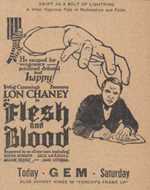
“The Scarlet Car”, a film directed by Herr Joseph DeGrasse, older brother of the actor Sam DeGrasse, who obviously plays a role in this film ( in what is a good example of Amerikan nepotism… ), tells a story about bankers and crooks ( both concepts are synonymous, certainly… ) and murder and matrimony ( include here the same German comments of a moment ago ).

For the aristocracy and silent fans the most interesting aspect of this film is that it is one of Herr Chaney's earliest surviving films.
Herr Chaney has a small but very important and decisive role, playing a bank cashier, Paul Revere Forbes, that works for two crooked bankers, Ernst and Cyrus Peabody ( Howard Crampton and Sam DeGrasse ), father and son respectively; they forge the bank's money and Herr Forbes knows everything about this; in order to have no trouble, the crooked bankers murder Forbes, not knowing that in this way they get involved in more troubles…

Anyway Herr Chaney is so great playing his characters, even the early ones, that he plays dead superbly in the film in order to put things right, incidentally marrying his daughter Beatrice ( Edith Johnson ) to Billy Winthrop ( Franklyn Farnum ), a promising business man.

The film has a certain and delightful scent of the past, including memories of old battles and such typical local customs as tarring and feathering people, peculiar scenes of a small Amerikan village, certainly… this film seems also to be an episode of one of those early silent serials in its concept and with its narrative, including two illuminating flashbacks for the service of a final thrilling climax.

And now, if you'll allow me, I must temporarily take my leave because this German Count must check that the bank accounts of his fat and rich German heiresses are in order.

Herr Graf Ferdinand Von Galitzien

-/-


El filme “The Scarlet Car” fue dirigido por Herr Joseph DeGrasse, hermano mayor del actor Sam DeGrasse el cual, obviamente, participa en dicho filme en lo que es un claro de nepotismo americano… y nos narra una historia acerca de banqueros y ladrones ( ambos conceptos son sinónimos, ciertamente… ) además de asesinatos y matrimonio ( incluir aquí los mismos comentarios germánicos de hace un momento ).

Para la aristocracia y los admiradores del cinema silente, el más interesante aspecto de dicha obra es que se trata de uno de los primeros trabajos de Herr Lon Chaney que han sobrevivido el paso de los tiempos; Herr Chaney tiene un pequeño pero importante papel en dicho filme, interpretando a un cajero de banco, Paul Revere Forbes, que trabaja para dos corruptos banqueros, Ernts y Cyrus Peabody ( Howard Crampton y Sam DeGrasse ) padre e hijo, respectivamente; ambos dos falsificaron dinero del banco y Herr Forbes conoce todos los detalles de tan ilegal operación; para evitar problemas, los banqueros corruptos deciden eliminar a Forbes, sin saber que de esa forma se iban a ver envueltos igualmente en numerosísimos problemas.

Herr Chaney es tan especial interpretando a sus personajes, incluso los primerizos, que incluso hace el muerto de forma gloriosa en dicha obra, un hecho éste que de forma casual ayudará a que finalmente pueda casar a su hija Beatrice ( Edith Johnson ) con Billy Winthrop ( Franklyn Farnum ), un prometedor hombre de negocios.

El filme tiene un cierta y encantadora atmósfera del pasado, además de incluir en sus escenas recuerdos de batallas antiguas y típicas costumbres nativas como emplumar a sus convecinos, peculiar escenas éstas de esos pueblos americanos, ciertamente…
El filme se antoja un episodio de esos primerizos seriales silentes tanto en su concepto como en su narrativa, en los cuales se incluyen dos esclarecedores flashbacks, todo ello al servicio de un emocionante final.

Y ahora si me lo permiten les tengo que dejar momentáneamente, pues este Conde germánico tiene que comprobar que el estado de las cuentas bancarias de sus ricas y gordas herederas teutonas, están en orden.

Herr Graf Ferdinand Von Galitzien

Dienstag, März 20, 2007

Gas: "O Dezaseis"

MEIN GOTT!!!...

A very important German secret has been revealed!!... even worse, a longhaired Amerikan reporter has been given access to the favourite non-German restaurant of this aristocrat, a place in where this Teutonic count goes on any occasion accompanied by his rich and fat heiresses in order that they pay the bill, natürlich!.

Now you know why those heiresses accompanying this German count are fat - and that's the best publicity for "O Dezaseis", certainly.

Herr Graf Ferdinand Von Galitzien

-/-


MEIN GOTT!!!...

Un importantísimo segredo xermánico foi finalmente desvelado!... e ainda moito pior, un xornalista melenudo americano tivo acceso ó restaurante favorito e non xermánico deste aristócrata, un lugar a onde éste Conde teutónico acode sempre que pode e na compaña das súas ricas e gordas herdeiras, pra que éstas últimas paguen a conta, natürlich!.

Agora xa saben vostedes o porqué esas gordas herdeiras están tan gordas, e esa é dende logo a mellor publicidade que se lle pode facer a "O Dezaseis".

Herr Graf Ferdinand Von Galitzien

Montag, März 19, 2007

"The Trap" (1922) By Robert Thornby


Last night, was another silent, bizarre and Teutonic night in the Schloss, a soirée in which “The Trap”, a film directed by Herr Robert Thornby in the silent year of 1922 was shown.

This German count, thanks to his aristocratic breeding, knows very well elegant languages such as German or Teutonic but that wasn’t enough to comprehend the strange language in which were written the majority of the inter-titles of this film (set in the surroundings of Canadian Northwest).

Thanks to an elderly and learned unit specializing in dead Amerikan languages whose specialty it is to decipher such strange and enigmatic letters, the film plot was revealed to this German Count. It depicts the story of Gaspard (Lon Chaney), an innocent and ignorant fur trapper. He owns a mine and loves Thalie (Dagmar Godowsky). However, he will be ultimately fooled by Benson (Alan Hale) who keeps the mine and the girl.

From that moment on, Gaspard only lives for taking revenge on both of them.

In spite the strange language that Gaspard speaks, it wasn’t a problem for this German Count to enjoy another brilliant and classic Herr Lon Chaney performance. “The Trap” is a film in which his many facial expressions and body language are brilliantly displayed.

Gaspard, a good and simple man will be transformed in a fiend with no limits to accomplish his vengeance. As he said to his enemy, again according to the Amerikan dead languages experts unit: “wen you steal my mine, an’ my gal, I t’ink firs’ to keel you, but I know if I keel you quick, you not suffaire lak me.” It seems that inner human transformation is not a problem to Herr Chaney, it’s so easy for the audience to watch his acting merits. Paradoxically, Gaspard finally will be the avenged avenger, the trap trapped.

And now, if you'll allow me, I must temporarily take my leave because this German Count doesn’t talk the same language.

Herr Graf Ferdinand Von Galitzien

-/-

La pasada noche, fue otra noche silente, bizarra y teutónica en el Schloss, una soirée en la cual el filme “The Trap”, dirigido por Herr Robert Thornby en el año silente de 1922 fue exhibido en el teatro aristocrático.

Este Conde germánico, gracias a su educación aristocrática, ha sido educado en idiomas elegantes tales como el germánico o el teutónico, pero de todas formas, esa formación no ha sido suficiente para comprender extrañas lenguas tales como la que se pueden apreciar en el filme anteriormente mencionado y en la cual están escritas prácticamente la mayoría de los intertítulos del filme en cuestión, un filme por cierto, ambientado en los alrededores del noroeste canadiense.

Gracias a los sabios y doctos expertos germánicos especializados en lenguas muertas americanas al servicio de éste Herr Graf, cuya especialidad es descifrar extrañas y enigmáticas letras de aquellos recónditos parajes, la trama del filme fue finalmente descifrada para éste Conde germánico, historia en la cual se nos narra las peripecias de Gaspard ( Lon Chaney ), un inocente e ignorante cazador de pieles que posee una mina en aquellos lejanos parajes y que además ama a Thalie ( Dagmar Godowsky ); el interfecto será finalmente engañado por Benson ( Alan Hale ) el cual se quedará con su mina y con su chica.
Desde ese mismo instante, Gaspard solamente vivirá para vengarse de ambos.

A pesar del extraño idioma que habla Gaspard, ello no fue ningún problema para que este conde germánico disfrutase de otra memorable y clásica interpretación de Herr Lon Chaney; “The Trap” es una obra en la cual el lenguaje corporal y la interpretación del actor americano se expone de forma esplendorosa en el filme.

Gaspard, un hombre bueno e ingenuo, se transformará en una persona malvada que no conocerá límites para llevar a cabo su venganza y así se lo hace saber a su acérrimo enemigo en una secuencia del filme, de acuerdo con los expertos anteriormente citados en lenguas muertas americanas: “Cuando usté me afanó la mina y mi churri, pensé en liquidarlo al instante, pero desa forma usté no sufriría tanto he sufrío llo”.
Esa transformación pérfida y humana, parece no ser ningún problema para Herr Chaney, dándole la impresión al público de que dicha transformación interpretativa parece algo muy sencillo… por cierto, Gaspard finalmente será el vengador vengado, el acosador acosado.

Y ahora si me lo permiten les tengo que dejar momentáneamente, pues este Conde germánico se ha quedado sin palabras.

Herr Graf Ferdinand Von Galitzien

Mittwoch, März 14, 2007

Silent Films Illustrated With Commentaries By:

About Irving Cummings' "Flesh And Blood" (1922)

Silent Guest Star: Rich Wagner

Herr Rich Wagner exclaimed: "Well Herr Graf, you're talking about an old favorite of mine that I must have watched at least a dozen times, but haven't seen in at least eight years. It was the first time that I actually got a good look at 'Herr Chaney's' pitiful and sorrowful facial expressions. No wonder the poor man never got the girl.

My only question to your post was you referring to this innocent man as a criminal? Here's the story from memory, so it might even be better than the film.
An innocent man, caught in the fangs of an unjust world, he's befriended by the Chinese who assist in his escape so he could see his sickly wife, but alas, she has died. Heartbroken and seeking revenge, with the Chinese help, he manages to befriend his own daughter without her even knowing who he was. Just as he's ready to plan his revenge against his former partner, he learns that the man's son is sweet on his daughter. He learns that the former partner is going to destroy the happy couple, so he strikes a deal; your son or your life. The man backs off and the daughter finds happiness in the arms of her lover. What's that saying about the apple not falling too far from the tree?

Anyway, when Herr Gaff wrote about this, the good Count omitted the final intertitle that says something like, "A man can sometimes be free behind bars."
I'm sure that's not correct (perhaps you could post it correctly?), but it was a typical softhearted film, much like many other Chancy films".

Und Herr Graf Ferdinand Von Galitzien answered: "Mein lieber Herr Wagner ( Herr Richard's family, this German Count presumes.. ):
Well, this German count was referring about David Wester ( Herr Lon Chaney ) that he was wrongfully incarcerated for a crime he didn't commit, and probably the right word in this case would be "offence" but in any case this German Count didn't named Herr Chaney a "criminal", heaven forbid!!... Obviously those misunderstandings were due Gunthell's simultaneous translation from German to Amerikan ( can't you hear from there asking his master for mercy?? ... )

Good Wester-Chaney says in the next to last intertitle: "I went out a hunted and marked man; I come back, free!" and the last one says: "Strange are the paths men tread to happiness".

"the good Count"... is this an Amerikan pun??!!

Finally Herr Rich Wagner added: "While it's not an 'Amerikan pun,' it was my rather inept way of trying to get a response to my question. You of course, obliged me with an answer.
Thank you for helping me to recall the final words in an old favorite of mine".


Published in "alt.movies.silent".

Montag, März 12, 2007

"Flesh And Blood" (1922) By Irving Cummings


It is well-know for centuries that the aristocracy have little moods and bouts of indecisiveness; characteristics that are even more pronounced if those aristocrats are Germans (like this Count who besides being German is also Teutonic). Anyway, these contradictions assaulted this German Count while watching “Flesh And Blood,” a film directed by Herr Irving Cummings in the silent year of 1922, starring the great Amerikan actor Herr Lon Chaney.

The film depicts the story of a poor lawyer ( first contradiction or a German pun? ), David Wester ( Lon Chaney ) wrongfully incarcerated for a crime he didn’t commit, his conviction being the fault of a businessman, Fletcher Burton ( Ralph Lewis ) Wester escapes from jail to seek revenge on Burton.

However, aristocrat David Wester’s vengeance is very soft and mild ( the convict will back down from his purpose for the sake of his daughter who is engaged to his enemy’s son ) and because finally the stolen money will be used to build one of those Catholic ( not Lutherans ) missions and what's more, Wester’s daughter does good works there!!… isn’t that enough punishment?...

Another German contradiction for this German count is that even though Wester spent 15 years in jail unjustly, he finally will not be able to clear his name and will passively return to prison; This means the bad ones wins over the honest people; of course that's what may happen in real life, even in the aristocratic life…

Herr Lon Chaney plays one of those villains with a noble heart, a good and sensitive man, certainly but not very ingenious, because when he was hidden in Chinatown in order to go unnoticed he disguises himself as a cripple, a kind of contortionist in crutches instead of wearing one of those typical Chinese garments. The last German contradiction: the detective Doyle ( DeWitt Jennings ) only seems able to spot Chaney's accomplice, Herr Li Fang ( Noah Beery ).

And now, if you'll allow me, I must temporarily take my leave because this German Count feels contrary.

Herr Graf Ferdinand Von Galitzien


-/-


Es de sobra bien conocido desde centurias, que la aristocracia se caracteriza por sus caprichos e indecisiones, cuestiones éstas aún más acentuadas si hablamos de la aristocracia germánica, cómo, por ejemplo, bien le sucede a éste Conde que además de ser germano es también teutón…, en fin, clásicas contradicciones éstas que asaltaron a éste Conde germánico tras haber visto “Flesh And Blood”, un filme dirigido por Herr Irving Cummings en el año silente de 1922, obra protagonizada por el genial actor americano Herr Lon Chaney.

El filme narra la historia de un pobre abogado ( ¿primera contradicción o juego de palabras germánico? ) David Wester ( Lon Chaney ) que es encarcelado de forma injusta por un crimen que no ha cometido, por culpa de un empresario de nombre Fletcher Burton ( Ralph Lewis ); Wester consigue escapar de la cárcel con el único propósito de vengarse de Burton.

Para este Conde germánico la venganza de David Wester es demasiado taimada y débil ( el convicto no llevará finalmente a cabo su propósito para salvar el matrimonio de su hija con el hijo de su enemigo ) aunque pensándolo bien como finalmente el dinero robado y por el cual fue encarcelado Herr David se empleará para la construcción de una de esas católicas, que no luteranas, misiones americanas, además de que la hija de Herr David trabaja allí, ¿acaso no es ese suficiente castigo para su enemigo?.

Otra germánica contradicción para éste Conde, es que a pesar de que Herr Wester se ha pasado quince años en prisión de forma injusta, finalmente el susodicho no restituirá su honor y de forma complaciente volverá a prisión, esto es, confirmando finalmente que los malos siempre triunfan sobre los buenos, un hecho éste real como la vida misma, incluso la aristocrática…

Herr Lon Chaney interpreta a uno de esos villanos de buen corazón, un hombre sensible aunque no demasiado ingenioso, ciertamente, pues durante su estadía en Chinatown tras salir de la cárcel, no se le ocurre mejor forma para pasar desapercibido que disfrazarse de lisiado, un especie de contorsionista con muletas, en vez de llevar uno de esos típicos trajes chinos, por no mencionar ( última contradicción germánica ) que el detective Doyle ( DeWitt Jennings ) no se da cuenta de nada y solamente tiene ojos para el cómplice de Wester, Herr Li Fang ( Noah Beery ).

Y ahora si me lo permiten les tengo que dejar momentáneamente, pues este Conde germánico se halla con su espíritu de contradicción.

Herr Graf Ferdinand Von Galitzien

Freitag, März 09, 2007

"Die Brüder Schellenberg" (1926) By Karl Grune


After “Eifersucht” (1925), a film recently reviewed mercilessly by this German Count, Herr Karl Grune directed “Die Brüder Schellenberg”, his first film to be produced by the Germany’s greatest film company, “UFA”. It’s a film version of Herr Kellermmann’s eponymous novel, was an important big-budget production and was one of the most successful movies of that silent year.

“Die Brüder Schellenberg” depicts the story of two brothers, Michael and Wenzel, both portrayed by Herr Conrad Veidt, who work at the Raucheisen Steel and Gas company. Michael is a secretary and the other is a head of the central plant. When an explosion in the factory takes the lives of 100 people, both brothers will begin different lives. Michael creates a center for needy people and Wenzel becomes a successful stock exchange speculator.

Most of the film is focused on the ambitious Wenzel, obviously because evil people are more interesting than the dull ones. In this way we can see in the film Wenzel’s life full of luxury and parties instead of Michael’s thrilling works for the poor people.

The film is an urban drama and that’s one of the most interesting aspects of the oeuvre; the film shows those complicated and hazardous days in Germany dealing with huge economic crises and millions of people unemployed. So, the story of the Schellenberg brothers is a kind of reflection of the paradox of the early 20’s in Germany and the different ways to subsist and face up to those times. Wenzel is an unscrupulous man and Michael is idealistic.

In parallel to this, there is a love triangle in the film that reflects the same tale from a feminine perspective. It involves Wenzel (obviously Michael has no time for such trifle love matters… ), Dame Esther Raucheisen (Lil Dagover), daughter of Wenzel’s former boss, a capricious woman who has everything in life, and Dame Jenny Florian (Liane Haid), an ordinary girl who sees in Wenzel’s love, her passport to a new and safe life.

The film is resolves its technical aspects especially when both brothers appear at the same time on the screen. Additionally the scenery and that decor so important in a UFA film production are present. It’s typical of that German company that always had a particular and artistic concern to show German social reality, in a subtle or else over-realistic way.

And now, if you'll allow me, I must temporarily take my leave because this German Count has an appointment at half-passed Veidt.

Herr Graf Ferdinand Von Galitzien


-/-


Tras “Eifersucht” (1925), filme recientemente comentado sin compasión por este Conde germánico, Herr Kart Grune realizó “Die Brüder Schellenberg”, su primer filme producido por la más grande compañía cinematográfica alemana, esto es, la “UFA” y basado en la novela homónima de Herr Kellermmann, una importante producción cinematográfica que supuso uno de los éxitos comerciales de aquel año silente.

“Die Brüder Schellenberg” refleja la historia de dos hermanos, Michael y Wenzel, ambos interpretados por Herr Conrad Veidt y que trabajan en la compañía de gas y acero Raucheisen, uno como secretario y el otro como jefe de la planta central; cuando una explosión en la fábrica se cobra la vida de más de 100 personas, ambos hermanos emprenderán nuevas y diferentes vidas: Michael creará un centro para la gente necesitada y Wenzel comenzará una exitosa carrera como especulador bursátil.

La mayor parte del filme está centrado en las peripecias del ambicioso Wenzel y ello es debido, obviamente.., a que la gente pérfida es siempre más interesante que la ordinaria, gracias a ello podemos ver la vida de fiestas y lujo de Wenzel en vez de los excitantes trabajos de Michael para los necesitados.

El filme es un drama urbano y este es uno de los aspectos más destacables de la obra; el filme muestra esos complicados y peligrosos años en Germania, soportando el país una enorme crisis económica, además de millones de desempleados, por esto mismo, la historia de los hermanos Schellenberg es una especie de reflexión paradójica de los convulsos años 20 en Germania o cómo la gente se las ingeniaba para subsistir o hacer frente a tan penosa época, en éste caso Wenzel como un hombre sin escrúpulos y a Michael como un perfecto idealista.

Paralelamente a la historia, se desarrolla un triángulo amoroso que refleja el mismo problema pero desde una perspectiva femenina, en el cual se ven envueltos Wenzel ( obviamente Michael no tiene tiempo para cuestiones amorosas ), Dame Esther Raucheisen ( Lil Dagover ), hija del antiguo jefe de Wenzel, una mujer caprichosa que lo tiene todo en la vida y Dame Florian ( Liane Haid ), una chica ordinaria que ve en el amor de Wenzel su oportunidad para una nueva y segura vida.

El filme está muy logrado es aspectos técnicos como cuando ambos hermanos aparecen al mismo tiempo en la pantalla, además de los grandes escenarios y fastuosos decorados que se le presuponen a una importante producción de la UFA, una compañía germánica ésta nunca tuvo problemas en reflejar la realidad social de su época, sutilmente o de forma realista.

Y ahora si me lo permiten les tengo que dejar momentáneamente, pues este Conde germánico tiene cita con uno de los hermanos Veidt.

Herr Graf Ferdinand Von Galitzien

Montag, März 05, 2007

"Eifersucht" (1926) By Karl Grune


“Eifersucht” is a stylish “Kammerspiel” film, that is to say,one of those German films stark in setting and focused mainly on the psychological aspects of the story. This one was directed by Herr Karl Grune and is a very interesting film that depicts the degradation of a happy marriage, that supposedly solid and old institution that is not as strong or as important as that other fundamental institution, the aristocracy.

A couple are at the theatre watching a play with a friend who is the author of the oeuvre; at the end of the piece, the jealous husband strangles his wife to death. When the play ends, the man ( Herr Werner Krauss ) talks to his friend ( Herr Georg Alexander ) about such a nonsensical finale, telling the author that no man with any sense ever gets jealous enough to choke his wife in these modern times.The author decides to test this supposedly perfect couple about their happy feelings for each other..

Herr Grune considered this film as a “tragicomedy between man and woman” and it admirably depicts the process of suspicion, uncertainty, misunderstanding and obsession that will put finally bring the married couple to the breaking point. The film includes some allegorical technical effects to enrich the story, but the psychological study of the characters is the most important and remarkable aspect. At this point, this German count must say that the story was written by an important German director, Herr Paul Czinner, who knew very well what was “psychological depth” in a film, and chose to have those afflicted characters played by two excellent actors of those silent Teutonic days, Dame Lya de Putti and Herr Werner Krauss.

This German count remembered that when the film was premiered in the remote 1926 year, some longhaired critics criticized the film for being poorly acted, accusing the cast of incompetence… as it happens, the passing of time is the better judge and proves that those critics were absolutely wrong, because the film maintains in these modern days intact its artistic merit and validity.

And now, if you'll allow me, I must temporarily take my leave because this German Count must be aware of some German heiress’s jealous husband.

Herr Graf Ferdinand Von Galitzien


-/-


“Eifersucht” es un elegante “Kammerspiele”, esto es, uno de esos filmes germánicos carente de grandes alharacas escenográficas y más centrados en los aspectos psicológicos de la historia, un filme dirigido por Herr Karl Grune, en el cual se nos muestra la degradación de un feliz matrimonio, esa supuestamente sólida institución que lógicamente no es tan fuerte o importante como otra fundamental e histórica institución, esto es, la aristocracia.

Una pareja se dispone a ver en un teatro la obra de un amigo de ambos y autor de la misma; durante la representación de la obra y al final de la misma, el actor que interpreta al marido, estrangula a su mujer, consumido por los celos.
Al finalizar la obra teatral, el marido ( Herr Werner Krauss ) le comenta a su amigo ( Herr Georg Alexander ) que el final le parece exagerado, pues ningún hombre en su sano juicio estaría tan celoso de su esposa como para estrangularla, incluso en esos tiempos modernos; el autor de la obra decide entonces poner a prueba a esa supuesta pareja perfecta y sus felices sentimientos mutuos.

Herr Grune consideró en su día éste filme como “una tragicomedia entre el hombre y la mujer”, narrando admirablemente el proceso paulatino de sospechas, incertidumbres, malentendidos y obsesiones, que conseguirán finalmente poner al borde del abismo a tan feliz matrimonio; el filme incluye algunos alegóricos efectos especiales para de esa forma enriquecer la historia, pero el estudio psicológico de sus protagonistas es el aspecto más importante y fundamental del filme; sobre este asunto, este Conde germánico tiene que comentar que el guión de “Eifersucht” fue escrito por otro importante director alemán, Herr Paul Czinner, el cual sabía muy bien ya por entonces a lo que se refería al mostrar la “profundidad psicológica” en un filme, destacando igualmente los dos excelentes actores pertenecientes a esos teutónicos días silentes y que interpretan admirablemente a tan atribulados personajes de la obra, Dame Lya de Putti y Herr Werner Krauss.

Este Conde germánico tiene que mencionar que cuando el filme fue estrenado en el remoto año de 1926, algunos críticos melenudos criticaron el filme por estar mal interpretado, además de acusar a todo el elenco de incompetentes… como suele suceder, el paso del tiempo es el mejor juez, probando finalmente que esos críticos estaban absolutamente equivocados, pues el filme mantiene intacto en estos tiempos modernos, su validez y méritos artísticos.

Y ahora si me lo permiten les tengo que dejar momentáneamente, pues este Conde germánico tiene que tener cuidado con un marido celoso de una de sus teutónicas herederas.

Herr Graf Ferdinand Von Galtizien

Freitag, März 02, 2007

"Le Fantôme Du Moulin Rouge" (1925) By René Clair


Herr Julien Boissel ( George Vaultier ) is a wealthy French businessman who is in love with a rich and French heiress, Dame Yvonne ( Sandra Milovanoff ). Both love each one secretly but pretty soon disgrace will interrupt such passionate love because the president of a yellow newspaper is blackmailing Yvonne’s father, a retired Minister of State. Publication of some delicate, incriminating documents would cause such a big scandal and the newspaper editor wants to marry Yvonne, you see.
Herr Julien, now abandoned by his lover, depressed and grieved, decides to spend a night at the joyful “Moulin Rouge” ( a place in where broad-minded girls dances all night long ) trying to forget his pain. There he will meet a doctor who will experiment with him using his new techniques that separate his spirit from his body.

“Le Fantôme Du Moulin Rouge” was the third film directed by Herr René Clair and the first full-length film of his filmography. The early and silent films of this important French director were characterized by their experimentation and avant-garde boldness, not to mention that he was very fond of fantasy films, a film genre in which includes “Le Fantôme…”.

The storytelling of the film is perfect and much elaborated. It depicts a story around what could it be, at first, a simple film anecdote of those classic matters of unrequited love that affects even to the high classes; but it is more thanks to the inclusion in the plot of imaginative and fantastic elements.

Herr Clair uses tricks, visual and special effects with an oneiric depth in order to illustrate the wild doings of the Herr Julien’s freed spirit (and that’s another surprisingly element of this film ). It’s a spirit that doesn’t torture his former earthly body as do the classic spirits that we already know ( don’t tell this aristocrat that you don’t know a spirit in your neighbourhood?!… ). This ethereal spirit prefers to have a carefree and good time around Paris, doing pranks around the city or in the cabarets, leaving those earthly love problems and sorrows for his former body. So this German aristocrat can say that it is a ludic Mr. Hyde, certainly.

Due to these original elements, the film, at first, a kind of “phantasmagorie”, now turns to a delicious “comédie fantastique”, both film genres that Herr René knew by that time very well, including a frantic and soft metaphysical ending that is absolutely remarkable.

And now, if you'll allow me, I must temporarily take my leave because this German Count must toast to his spirit with some spirits.

Herr Graf Ferdinand Von Galitzien


-/-


Herr Julien Boissel ( George Vaultier ) es un joven y adinerado empresario afrancesado, enamorado en secreto de Yvonne ( Sandra Milovanoff ) también afrancesada ella; ambos se aman en secreto pero muy pronto el infortunio interrumpirá tan apasionado amor por culpa del presidente de un periódico sensacionalista, el cual está chantajeando al padre de Yvonne, otrora un importante ministro de Estado, con la publicación de unos delicados documentos que los incriminan, teniendo que conceder la mano de su hija a tan sensacionalista editor si quiere evitar un gran escándalo.
Herr Julien, ahora abandonado por su amante, deprimido y apenado, decide pasar la noche en el alegre “Moulin Rouge” ( un lugar en donde descaradas jóvenes bailan durante toda la noche ) intentado de esa forma olvidar sus penas; será allí en donde se encontrará con un doctor que posteriormente experimentará con él sus nuevas técnicas médicas y que consisten en separar el espíritu de su cuerpo mortal.

“Le Fantôme du Moulin Rouge” fue el tercer filme dirigido por Herr René Clair y el primer largometraje de su filmografía; la primera y silente etapa del realizador galo se caracteriza por su atrevimiento vanguardista y experimentación, sin olvidarse tampoco de su querencia por el cine fantástico, género al cual pertenece esta obra.
La narración del filme está muy elaborada, para una historia que en principio podría parecer una simple anécdota, esto es, esas cuestiones amorosas y amores no correspondidos que incluso afectan a las clases elevadas, pero gracias a la maestría de Herr Clair al incluir en la narración un elemento fantástico, el filme es realmente sorprendente por su originalidad.

Clair emplea trucos de cámara, además de efectos visuales y especiales con un carga onírica ciertamente importante, todo ello para ilustrar las andanzas del espíritu burlón de Julien, un espíritu ( y este es otro aspecto original del filme ) que poco tiene que ver con que habitualmente les son conocidos ( ¡¿no digan a éste aristócrata que ustedes no conocen a un espíritu en su vecindario?! ), pues estamos ante un espíritu etéreo y despreocupado, una especie de lúdico Mr. Hyde, ciertamente, con muchas ganas de divertirse a lo largo y ancho de la ciudad de París, haciendo travesuras en los lugares más diversos incluyendo un peculiar cabaret, dejando de esa forma los problemas, penas y atormentados asuntos para su terrenal cuerpo.

Debido a esos aspectos tan originales mostrados en el filme, la obra en su primera parte es una especie de “phantasmagorie”, tornándose posteriormente en una “comédie fantastique”, géneros estos que ya por entonces dominaba el director francés, además de incluir en su parte final un frenético y pseudo-metafísico final más que destacable.

Y ahora si me lo permiten les tengo que dejar momentáneamente, pues este Conde germánico tiene que brindar con su espíritu del vino.

Herr Graf Ferdinand Von Galitzi
en