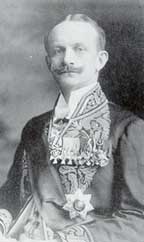

During summertime, German aristocrats are lazier than ever, certainly in comparison with the rest of the year, natürlich. Laziness is unfailingly a part of the almost human aristocratic nature so to spare any extra effort during these hot and terrible times is important.
Having in mind this important seasonal reason, last night was screened at the Schloss theatre a short film, namely “Algie, The Miner”, a perfect film for a small soirée due to its brief running time that can be enjoyed in “petit comité” by any German aristocrat. This allows time to be spent on other trifling things while appreciating this archaeological oeuvre that was recently restored by some hard-working longhaired youngsters beyond the Atlantic sea.
This short film was directed by the frenchified woman film pioneer Dame Alice Guy-Blaché in the silent year of 1912, and though it is somewhat primitive, it has interesting aspects as, for example, different settings ( filmed with a static camera, so don’t ask the impossible... ) but with a perfect film continuity. It is the story of a mild man who must show he has the right stuff if he wants to gain the favour of his father-in-law and consequently be worthy of the hand of his daughter, showing in this way to the whole silent world his newly gained masculinity. Dame Guy-Blaché accepts the terms of that ancient and conservative era but in an interesting way.
Careful bourgeoisie settings, coarse taverns in the wild West, different landscapes and a combination of comedy, adventure and quaint human conduct and it all wraps up in tens minutes, an interesting one-reeler that is perfect to be enjoyed during the lazy summertime.
And now, if you'll allow me, I must temporarily take my leave because this German Count must lay mines around the Schloss in order to keep out the terrible tourist hordes.
Herr Graf Ferdinand Von Galitzien
-/-
Durante la época del estío, los aristócratas se encuentran en un estado, en comparación con el resto del año, mucho más perezoso; bien es cierto que la vagancia es un estado intrínseco de la casi naturaleza humana aristocrática, pero debido a la terrible y calurosa época veraniega, los aristócratas tiene que evitar ciertos esfuerzos extras.
Teniendo en cuenta ésta importante condición estacional, la pasada noche fue proyectado en el teatro del Schloss un cortometraje, más concretamente, “Algie, The Miner”, un filme perfecto para una corta soirée, pues su escaso metraje puede ser disfrutado en “petit comité” por cualquier aristócrata germánico, permitiendo de ésta forma, poder gastar en importantes naderías el tiempo restante, además de apreciar igualmente ésta obra de arqueología silente que recientemente ha sido restaurada por unos esforzados jóvenes melenudos ubicados más allá del océano Atlántico.
“Algie, The Miner” fue dirigido por la pionera y afrancesada directora, Dame Alice Guy-Blaché en el año silente de 1912 y aunque todavía se aprecian en dicha obra ciertos aspectos primitivos, posee el filme interesantes méritos como, por ejemplo, sus cuidados y diferentes escenarios ( rodados con cámara estática, tampoco vayan ustedes ahora a pedir lo imposible… ) y una sólida continuidad cinematográfica, un filme en el cual se nos narra la historia de un joven apocado que debe demostrar sus atributos si finalmente quiere conseguir la aprobación de su suegro para que éste le conceda la mano de su hija, por lo cual deberá exhibir al mundo entero y silente, tras pasar por ciertas peripecias, su recién adquirida masculinidad, filmado todo ello por Dame Guy-Blaché de una forma ciertamente hábil para la época, demasiado conservadora y rígida la de principios del siglo pasado.
Cuidados decorados burgueses, rústicas tabernas del salvaje Oeste, diferentes escenarios en los cuales se combina una parte de comedia, aventura y muestran ciertas conductas humanas, todo ello en tan sólo diez minutos, todo un interesante cortometraje que es desde luego idóneo para ser disfrutado durante la holgazanería veraniega.
Y ahora si me lo permiten, les tengo que dejar momentáneamente, pues este conde germánico tiene que minar las cercanías del Schloss para así mantener a raya a las terribles hordas de turistas.
Herr Graf Ferdinand Von Galitzien
Having in mind this important seasonal reason, last night was screened at the Schloss theatre a short film, namely “Algie, The Miner”, a perfect film for a small soirée due to its brief running time that can be enjoyed in “petit comité” by any German aristocrat. This allows time to be spent on other trifling things while appreciating this archaeological oeuvre that was recently restored by some hard-working longhaired youngsters beyond the Atlantic sea.
This short film was directed by the frenchified woman film pioneer Dame Alice Guy-Blaché in the silent year of 1912, and though it is somewhat primitive, it has interesting aspects as, for example, different settings ( filmed with a static camera, so don’t ask the impossible... ) but with a perfect film continuity. It is the story of a mild man who must show he has the right stuff if he wants to gain the favour of his father-in-law and consequently be worthy of the hand of his daughter, showing in this way to the whole silent world his newly gained masculinity. Dame Guy-Blaché accepts the terms of that ancient and conservative era but in an interesting way.
Careful bourgeoisie settings, coarse taverns in the wild West, different landscapes and a combination of comedy, adventure and quaint human conduct and it all wraps up in tens minutes, an interesting one-reeler that is perfect to be enjoyed during the lazy summertime.
And now, if you'll allow me, I must temporarily take my leave because this German Count must lay mines around the Schloss in order to keep out the terrible tourist hordes.
Herr Graf Ferdinand Von Galitzien
-/-
Durante la época del estío, los aristócratas se encuentran en un estado, en comparación con el resto del año, mucho más perezoso; bien es cierto que la vagancia es un estado intrínseco de la casi naturaleza humana aristocrática, pero debido a la terrible y calurosa época veraniega, los aristócratas tiene que evitar ciertos esfuerzos extras.
Teniendo en cuenta ésta importante condición estacional, la pasada noche fue proyectado en el teatro del Schloss un cortometraje, más concretamente, “Algie, The Miner”, un filme perfecto para una corta soirée, pues su escaso metraje puede ser disfrutado en “petit comité” por cualquier aristócrata germánico, permitiendo de ésta forma, poder gastar en importantes naderías el tiempo restante, además de apreciar igualmente ésta obra de arqueología silente que recientemente ha sido restaurada por unos esforzados jóvenes melenudos ubicados más allá del océano Atlántico.
“Algie, The Miner” fue dirigido por la pionera y afrancesada directora, Dame Alice Guy-Blaché en el año silente de 1912 y aunque todavía se aprecian en dicha obra ciertos aspectos primitivos, posee el filme interesantes méritos como, por ejemplo, sus cuidados y diferentes escenarios ( rodados con cámara estática, tampoco vayan ustedes ahora a pedir lo imposible… ) y una sólida continuidad cinematográfica, un filme en el cual se nos narra la historia de un joven apocado que debe demostrar sus atributos si finalmente quiere conseguir la aprobación de su suegro para que éste le conceda la mano de su hija, por lo cual deberá exhibir al mundo entero y silente, tras pasar por ciertas peripecias, su recién adquirida masculinidad, filmado todo ello por Dame Guy-Blaché de una forma ciertamente hábil para la época, demasiado conservadora y rígida la de principios del siglo pasado.
Cuidados decorados burgueses, rústicas tabernas del salvaje Oeste, diferentes escenarios en los cuales se combina una parte de comedia, aventura y muestran ciertas conductas humanas, todo ello en tan sólo diez minutos, todo un interesante cortometraje que es desde luego idóneo para ser disfrutado durante la holgazanería veraniega.
Y ahora si me lo permiten, les tengo que dejar momentáneamente, pues este conde germánico tiene que minar las cercanías del Schloss para así mantener a raya a las terribles hordas de turistas.
Herr Graf Ferdinand Von Galitzien


