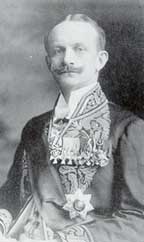
Ferdinand Von Galitzien

#Spreading The Silent News Around The World#

Mein Foto
Name: Ferdinand Von Galitzien

Aristócrata silente teutón.

Samstag, Juli 18, 2009

"Hoodoo Ann" (1916) By Lloyd Ingraham


Whenever silent fans around the world talk about the Amerikan actress Dame Mae Marsh, inevitably the name of Herr D. W. Griffith is part of the silent chatter due to the importance that the Amerikan director had in Dame Marsh’s career, a close and fruitful collaboration indeed. Both silent celebrities started their careers during the pioneers times with Dame Marsh being discovered accidentally by Herr Griffith and then later becoming one of his most distinctive classical heroines.

After having worked with her mentor in the milestone film “The Birth Of A Nation” (1915), Dame Marsh played “Hoodoo Ann” in the silent year of 1916, a film actually directed by Herr Lloyd Ingraham but with a scenario by Herr Griffith.
The Dame Marsh character in this small film production has many recognizable elements of Herr Griffith’s heroines (not surprising considering who did the script) that this count mentioned before: a little orphan girl ( it is well-known that Herr Griffith has a special fondness for little orphans… ), an innocent and long-suffering child who will overcome many problems during her life with her special persistence.

So we have a classic Herr Griffith heroine who is outspoken and encounters some unexpected misfortunes but finds a handsome and rich fiancée who will bring about a happy ending. However, first an intriguing mystery will have to be solved.

But not all the credit of “Hoodoo Ann” should go to the Griffith/Marsh duo; Herr Ingraham did his part too, directing the film with resolute hand, using elaborate film narratives techniques to entwine comedy with tragedy.

In spite of Dame Marsh being too grown up to be playing a little girl, her performance is honest and unpretentious like the film itself. After all, “Hoodoo Ann” is a small film whose principal intention is to entertain, much like what happens when our heroine attends a “moving pitcher” show, in which she can escape from reality, like so many others, and be fascinated by such an odd invention. Surprisingly, the movies play a strong part in resolving the plot when a curious incident happens in the vicinity; after all, reality is stranger than fiction.

And now, if you'll allow me, I must temporarily take my leave because this German Count must act as godfather to a little but rich German orphan.

Herr Graf Ferdinand Von Galitzien

-/-

Cuando los admiradores del cinema silente mencionan a la actriz americana Dame Mae Marsh, siempre sale a colación el nombre de Herr D. W. Griffith, por la gran importancia que tuvo el director americano en la carrera de la susodicha actriz, una cercana y fructífera colaboración artística, ciertamente, pues ambas celebridades silentes comenzaron sus respectivas carreras prácticamente al mismo tiempo durante los inicios del cinema, siendo descubierta de forma accidental Dame Marsh por Herr Griffith, convirtiéndose posteriormente la actriz americana en una de las más destacadas heroínas silentes de los filmes de Herr Griffith.

Tras haber trabajado con su mentor en la histórica producción silente “The Birth Of A Nation” (1915), Dame Marsh protagonizó “Hoodoo Ann” (1916), un filme dirigido por Herr Lloyd Ingraham el cual contaba con la participación de Herr Griffith como guionista de la película.
El personaje de Dame Marsh tiene, en esta pequeña producción silente, muchas de las características de las heroínas de los filmes de Herr Griffith que éste conde germánico había mencionado anteriormente y es que por algo el director americano firma el guión de la película…, esto es, una pequeña huerfanita ( es más que conocida, la querencia que tenía el director americano por esas desamparadas huerfanitas.. ), una inocente y sufrida jovenzuela que tendrá que superar numerosos avatares durante su corta vida con especial persistencia.

Por lo tanto, estamos ante toda una clásica heroína Griffithiana que tendrá que afrontar numerosas penalidades aunque afortunadamente también se topará en su sufrido camino con un guapo y rico novio el cual le proporcionará un final feliz a su existencia, aunque antes habrá que resolver todo un intrigante misterio.

Pero no todos los méritos de “Hoodoo Ann” recaen necesariamente en el célebre dúo Griffith/Marsh, pues Herr Ingraham también tiene su mérito, dirigiendo con mano eficiente dicha producción silente, echando mano de elaboradas técnicas de narración cinematográfica, intercalando comedia y melodrama.

A pesar de que Dame Marsh ya estaba bastante mayorcita para interpretar el papel de huerfanita, su trabajo es honesto y nada pretencioso, acorde con el filme y es que la principal intención de la película es simplemente entretener, tal y como queda reflejado, por ejemplo, durante una escena en la cual nuestra heroína asiste a todo un novedoso invento, “las imágenes en movimiento” o lo que es lo mismo, el cinematógrafo, un lugar en el cual puede escapar de su dura realidad, tal y como le acontecía al numeroso público de entonces que asistía a tan novedoso espectáculo, una escena que tendrá gran importancia en el filme, pues ayudará a resolver un misterio incidente que acontecerá en el vecindario y es que, después de todo, la realidad es siempre mucho más extraña que la ficción.

Y ahora, si me lo permiten, les tengo que dejar momentáneamente, pues este conde germánico tiene que apadrinar a una pequeña y rica huerfanita germánica.

Herr Graf Ferdinand Von Galitzien

Samstag, Juli 11, 2009

"Two Arabian Knights" (1927) By Lewis Milestone


German aristocrats are famous for their stiff Teutonic humour, but at least once a year-no more than one or two days of course-the German mood lightens and it is time for frivolity. One seeks out the company of a rich and fat heiress and when the planets are in rare alignment it is also good to watch an entertaining though unimportant silent film.

But that it is not an easy matter to achieve because, besides classic Teutonic gravitas, there are no insignificant silent films in Germany. Thus it is necessary to turn to developing cultures, particularly Amerika, where there are many light hearted films that can occasionally be enjoyed even by a strict German count.

“Two Arabian Knights” is one such Amerikan film and was directed in the silent year of 1927 by Herr Lewis Milestone. The film tells of the complicated relationship between two Amerikan soldiers as they travel across Europe; an enmity and rivalry that will traverse frontiers and take those strange comrades from France to Northern Germany and then to Turkey and finally to Arabia. In this latter place they will, after being rescued from a shipwreck, fight each other for the favours of Dame Mirza, a mysterious Arabian lady.

As this German count mentioned before, the only purpose of the film is to entertain and certainly that intention is achieved in this conventional adventure silent film that includes the necessary ingredients of those commercial and popular films; that is to say, exotic settings, some action and funny situations. Herr Milestone has not made a milestone silent film though there is some clever camerawork, particularly at the beginning of the film where, from different angles ( up and down ), we see the two men battling each other in a foxhole while astonished German soldiers look on.

The film intertwines World War I sequences (light hearted rather than dramatic)as well as exotic adventures in the East, an East of course that is seen through Western eyes and one that is deliberately frivolous and cliché ridden. It is the perfect fictional setting for these two strong personalities who, in spite of their rivalry, can’t live without each other ( or Dame Mirza, natürlich!.)

And now, if you'll allow me, I must temporarily take my leave because this German Count must continue with the exclusive and aristocratic art of being bored.

Herr Graf Ferdinand Von Galitzien

-/-

Los aristócratas germánicos son conocidos por su escaso sentido del humor, pero a pesar de todo, hay por lo menos durante el año, uno o dos días en los cuales el sentido del humor teutón se relaja y gusta de cierta frivolidad; para esos escasos días, se busca entonces la compañía de una gorda heredera y si la alineación de planetas también es propicia, entonces se decide también contemplar un insignificante y entretenido filme silente.

Pero dicha tarea no es nada fácil, pues debido a la circunspección teutónica, no hay filmes insignificantes en Germania, por lo cual es necesario mirar hacia otras culturas mucho más frívolas como puede ser la americana, lugar en donde se pueden encontrar numerosos e intranscendentes filmes que pueden ser disfrutados incluso y de forma excepcional, por un estricto conde germánico.

“Two Arabian Knights” es uno de esos frívolos filmes americanos, dirigido en el año silente de 1927 por Herr Lewis Milestone; el filme narra la historia de la complicada relación entre dos soldados americanos mientras éstos atraviesan toda Europa, una enemistad y rivalidad que los acompañarán a través de diferentes países, peculiares camaradas que deambularán por Francia, el norte de Germania, Turquía y finalmente Arabia, lugar éste último en donde, después de haber sido rescatada de un naufragio, lucharán ambos por los favores de una misteriosa fräulein árabe y de nombre Mirza.

Como había comentado hace un momento éste conde germánico, el único propósito de éste filme es entretener y ciertamente cumple con dicho propósito, pues estamos ante un convencional filme de aventuras que incluye los necesarios ingredientes que se le presuponen a éstas obras populares y comerciales, esto es, unos escenarios exóticos, algo de acción y situaciones divertidas.
Herr Milestone desde luego no firma una obra memorable silente, pero aún así se pueden encontrar en el filme un hábil uso de la cámara, particularmente al principio del filme, como cuando, por ejemplo, se puede observar un plano rodado desde diferentes ángulos ( desde arriba y abajo ), en el cual se ven a los protagonistas del filme luchando entre ellos dentro del cráter de un obús, mientras son contemplados ambos de forma ciertamente perpleja por unos soldados germánicos.

El filme intercala secuencias ambientadas en la I guerra mundial ( más amables que dramáticas ) y también otras más exóticas de Oriente, un Oriente interpretado por ojos occidentales, deliberadamente frívolo y lleno de tópicos, un escenario ideal para las aventuras de las dos fuertes personalidades que protagonizan el filme y que a pesar de su gran rivalidad, no pueden vivir el uno sin el otro, con el permiso de Dame Mirza, natürlich!.

Y ahora si me lo permiten, les tengo que dejar momentáneamente, pues este conde germánico tiene que continuar con el exclusivo y aristocrático arte de aburrirse.

Herr Graf Ferdinand Von Galitzien

Sonntag, Juli 05, 2009

"Un Chapeau De Paille D'Italie" (1928) By René Clair


“Un Chapeau De Paille D’Italie” can be considered, by this German count’s standards, as a transgressor silent film in spite of its classical conventionalism; this particular Teutonic riddle has a Germanic and even logical explanation that will be understood by the longhaired silent youngsters around the world right now.

“Un Chapeau De Paille D’Italie” was directed by the great but French silent director Herr René Clair in the silent year of 1928, after he had directed important, avant-garde, experimental and overall, non conventional silent oeuvres such “Entr’acte” (1924), “Paris Qui Dort” (1925), “Le Voyage Imaginaire” (1925) or “La Tour” (1928); so, having this in mind, then the Germanic assessment mentioned before by this Herr Graf has a solid basis. “Un Chapeau…” is a completely different and classic film in comparison with those earlier Clair films and this doesn't mean that “Un Chapeau…” is a minor work in Herr Clair ‘s career; on the contrary, the film is a remarkable, stylized and even provocative comedy.

The incident of the Italian straw hat occurs just before our hero marries, and leads to a series of well placed and paced episodes. The elegant and hilarious scenes depicting the troubles and crossed situations among the just married couple and their wedding guests with the adulterous couple, achieve very remarkable moments. The skilful use of the camera emphasizes the rhythm depending the different scenes, and includes the camera tricks and techniques that Herr Clair was so fond of. The result is a vigorous and sophisticated comedy with a irreverent undercurrent subject in the main plot: a just married man must assume the complicated task of protecting an adulterer.

Helping our hero in such a hazardous mission are excellent supporting actors, playing peculiar characters who are involved unnoticed in this peculiar wedding and will suffer the happenings around the Italian straw hat, a hilarious gallery of guests who have had the misfortune to be part of such a troublesome wedding.

The film is placed at the end of the old XIX century probably in order to take advantage of the human behaviours and fashion of those old times in which the ladies wore elegant hats ( those fräuleins of nowadays showing their loose hair in public!, Mein Gott! ). There is a careful atmosphere of ancient and decadent custom ( faithful characteristics, after all, in Herr Clair films ) that suits the film perfectly. Herr Clair has directed a “classic”, stylized and cynical silent comedy that has the same original merits of his most experimental early works.

And now, if you'll allow me, I must temporarily take my leave because this German Count must find his Prussian helmet in order to eat his breakfast properly.

Herr Graf Ferdinand Von Galitzien

-/-

“Un Chapeau De Paille D’Italie”, según los parámetros de éste conde germánico, puede ser considerado como un filme trasgresor a pesar de su clásico convencionalismo… este particular enigma teutón tiene una explicación germánica e incluso lógica que será bien entendida por todos los jovenzuelos melenudos silentes del mundo entero dentro de un momento.

“Un Chapeau De Paille D’Italie”, fue dirigido por el gran, aunque afrancesado director, Herr René Clair, en el año silente de 1928, después de haber dirigido el susodicho filmes tan importantes, vanguardistas, experimentales y sobretodo, nada convencionales, como “Entr’acte” (1928), “Paris Qui Dort” (1925), “Le Voyage Imaginare” (1925) o “La Tour” (1928), por lo tanto, teniendo en cuenta estas especiales referencias silentes, la aseveración germánica expuesta unos párrafos más arriba posee entonces una base bien sólida, esto es…, pues “Un Chapeau…” es también una obra totalmente diferente y bien clásica en comparación con las anteriormente citadas y esto no implica que dicho filme sea una obra menor, todo lo contrario, pues “Un Chapeau…” es un filme muy destacable, toda una estilizada y provocativa comedia silente.

El incidente que provoca un sombrero de paja italiano justo antes de que el protagonista del filme contraiga matrimonio, dará lugar a una serie de episodios muy bien ambientados, elegantes e hilarantes escenas que reflejan los problemas y situaciones cruzadas entre la pareja protagonista de recién casados con sus invitados y con la pareja adúltera, consiguiendo momentos realmente memorables.
El hábil uso de la cámara, ayuda a resaltar el ritmo del filme dependiendo de las escenas en cuestión, incluyendo además la película trucos de cámara de esos que Herr Clair tanto gustaba, consiguiendo finalmente y en su conjunto, una vigorosa y sofisticada comedia con una irreverente y subyacente trama en su historia, esto es, el que un hombre recién casado tenga la difícil tarea de encubrir un adulterio.

Como ayudantes para tan complicada tarea, nuestro protagonista cuenta con la ayuda de unos excelentes actores secundarios, personajes que se ven envueltos sin darse cuenta en una boda bien particular, además de sufrir los susodichos las consecuencias de los sucesos a los que dará lugar la búsqueda del sombrero de paja italiano, toda una hilarante galería de invitados que tienen la desgracia, a su pesar, de formar parte de tan problemática boda.

El filme está ambientado a finales del viejo siglo XIX, seguramente para aprovecharse de ciertas conductas humanas de dicha época y sobre todo sus modas, en la cual las señoritas llevaban elegantes sombreros, nada que ver con esas fräuleins de hoy en día que lucen, descaradas ellas, sus melenas, MEIN GOTT!!... ¡al viento!, lo que da lugar a que la película tenga un cierto aire decadente y añejo ( por otra parte, características éstas, bastantes habituales en las obras primerizas de Herr Clair ), que le sienta muy bien, por cierto, al filme, consiguiendo finalmente dicho director afrancesado una clásica, estilosa y cínica comedia silente que posee los mismo méritos artísticos que sus más experimentales y tempranas obras.

Y ahora si me lo permiten, les tengo que dejar momentáneamente, pues este conde germánico tiene que buscar su casco prusiano y así poder desayunar de forma correcta.

Herr Graf Ferdinand Von Galitzien

Samstag, Juni 27, 2009

"Die Austernprinzessin" (1919) By Ernst Lubitsch


“Die Austernprinzessin”, a film directed in the silent year of 1919 by the great German director Herr Ernst Lubitsch, is a very suitable silent film for a decadent Teutonic aristocrat because it is a superb collection of excesses and obviously where there are excesses, there is a German aristocrat.

“Die Austernprinzessin” is a mad Teutonic comedy, absolutely brilliant in its artifice. It tells the frantic story of Dame Ossi ( Dame Ossi Oswalda, who played the German flapper roles in Herr Lubitsch’s early comedies like this one ) the whimsical daughter of Herr Quaker ( Herr Victor Janson ), the Amerikan oyster king. He and Dame Ossi are well aware that the shoe cream king’s daughter has married a count ( that fräulein has style, ja wohl! ), so Dame Ossi must, at any cost , at least find a prince to wed ( tsk, tsk, tsk…) This is the beginning of a peculiar film full of hilarious, grotesque, surreal and inventive scenes. Of course, by the end of the film, Dame Ossi achieves her matrimonial goal.

Herr Lubitsch spared no effort to accomplish his artistic goals; in the oeuvre there are astounding and modernistic settings by Herr Kurt Richter that give the film an atmosphere of exaggerated grandiloquence revolving around the daily lives of the main characters. The luxurious art direction reflects the luxurious and carefree style of those nouveau rich ( and what can be worse than money at the service of bad taste?), exaggerated to the point of fantasy; for example, the bath scene in which Dame Ossi needs a lot of servants in order to take a bath properly, or the wedding banquet scene in where there are as many servants as different dishes, including one for desserts, coffee and cigars. Such shameless opulence in those hard Weimar days aims at getting the audience to briefly forget their troubles and laugh out loud at Herr Lubitsch’s wildly nonsensical ideas.

There is a curiosity in “Die Austernprinzessin”; at the end of the film, Herr Lubitsch betrays his most sacred film precept, in the scene where Herr Quaker spies on his just married daughter through the bedroom door keyhole. Herr Lubitsch, fortunately wouldn’t repeat this mistaken voyeurism later in his career because the great German director came to know very well that malicious suggestion is preferable to showing plainly what happens behind a closed door…

And now, if you'll allow me, I must temporarily take my leave because this German Count must eat two dozen oysters while being careful not to swallow the pearls inside.

Herr Graf Ferdinand Von Galitzien

-/-

“Die Austernprinzessin”, filme dirigido por el gran director germánico Herr Ernst Lubitsch en el año silente de 1919, es un filme idóneo para un decadente aristócrata teutón debido a su excelente colección de excesos y obviamente, en donde haya excesos, ahí tendrán ustedes siempre a un aristócrata teutón.

“Die Austernprinzessin” es una loca comedia teutónica, absolutamente brillante dentro de su artificio; el filme narra la historia de Dame Ossi ( Dame Ossi Oswalda, actriz germánica que interpretaba el papel de “flapper” teutónica en las primeras comedias de Herr Lubitsch ), caprichosa hija de Herr Quaker ( Herr Victor Janson ) el rey de las ostras en Amerika.
Ambos dos tienen noticia de que la hija del rey de la crema para el calzado se ha casado con un conde ( desde luego esa fräulein tiene mucho estilo, ja wohl! ), por lo cual Dame Ossi quiere casarse, por lo menos y a cualquier precio, con un, tst, tst, tst… príncipe; éste será el principio de un peculiar filme repleto de hilarantes, grotescas, surrealistas e imaginativas escenas, hasta que al final del mismo, Dame Ossi consigue finalmente, ¡faltaría más!, sus propósitos matrimoniales.

Herr Lubitsch no escatimó en gastos para conseguir sus intenciones artísticas, pues en el filme se pueden apreciar los sorprendentes y modernistas decorados a cargo de Herr Kart Richter, los cuales les dan al filme una atmósfera de exagerada grandilocuencia para la vida diaria de los principales protagonistas del filme.
La lujosa dirección artística refleja igualmente el lujoso y despreocupado estilo de vida de esos nuevos ricos ( ¿acaso hay algo más terrible que el dinero al servicio del mal gusto? ), exageraciones con cierta fantasía, como por ejemplo durante la escena del baño en cual Dame Ossi necesita un gran número de sirvientes para poder tomarse un baño como Gott manda, o la escena del banquete nupcial en la cual se necesitan tantos sirvientes como diferentes platos del menú nupcial, incluyendo postres, café y puro… tanta desvergonzada opulencia durante esos primeros años de la república de Weimar ayudaban, por lo menos, al público asistente a olvidarse de las penurias que sufrían en sus vidas cotidianas, riéndose despreocupadamente de las disparatadas ocurrencias de Herr Lubitsch.

Se puede apreciar, por cierto, una curiosidad en “Die Austernprinzessin; al final del filme, Herr Lubitsch traiciona uno de sus máximos preceptos durante la escena en la cual Herr Quaker espía, a través del ojo de la cerradura, la habitación matrimonial de su hija, para saber qué está aconteciendo dentro.
Herr Lubitsch, afortunadamente, no volvería a cometer tan craso error voyeurístico durante su carrera cinematográfica, pues el gran director germánico sabe muy bien que siempre es mucho mejor sugerir de forma maliciosa que mostrar abiertamente lo que acontece tras una puerta cerrada.

Y ahora si me lo permiten, les tengo que dejar momentáneamente, pues este conde germánico tiene que comerse un par de docenas de ostras, teniendo mucho cuidado de no tragarse ninguna de esas molestas perlas que siempre encuentra dentro.

Herr Graf Ferdinand Von Galitzien

Freitag, Juni 19, 2009

"Salome" (1923) By Charles Bryant


Sometimes there is a weird silent film production very difficult to classify after so many years have passed since its premiere; this is true even for this German count, a strange fact given that the aristocracy are accustomed to unusual subjects.

This silent controversy is true of “Salome”, a strange oeuvre that even nowadays shocks the audience by its eccentricity and singularity. It was directed by Herr Charles Bryant in the silent year of 1923, and starred his wife ( or something like that because they lived in sin during many years… ) the also unclassifiable Dame Nazimova.

Filmed in an unique and theatrical set ( there are few different shots outside the main setting ), this extravagant oeuvre was the first film adaptation of the great writer Herr Oscar Wilde’s play,which tells of the capricious and ill fated infatuation between Dame Salomé and Herr Jokanaan .

Many adjectives comes to this German count’s mind watching this peculiar silent film production, a baroque oeuvre with bizarre costumes inspired by the great Herr Aubrey Beardsley illustrations together with suggestive décors that are outstanding for their originality and the same time modernity ( the “Art Nouveau” is the inspiration) and stilted performances that give the film an atmosphere of careful theatricality that fits well with its artistic and original intentions. It is of course, an adaptation of a biblical story though with a decadent touch.

Obviously Herr Charles Bryant’s “Salome” is not one of those DeMille’ biblical productions in content and form ( thank Gott! ); Dame Nazimova gives to the oeuvre a perverse sensuality and creates a lustful atmosphere hanging over the other characters. The film plays with ambiguity and loose-living, an interesting combination of hedonism and lechery.

“Salome” is a capricious, original silent film rarity which is outstanding in its artifice and mannerisms at the service of an exuberant staging and is intentionally overacted. It is an audacious and controversial film even after so many years.

And now, if you'll allow me, I must temporarily take my leave because this German Count must do a belly dance for one of his Teutonic rich heiress.

Herr Graf Ferdinand Von Galitzien

-/-

De vez en cuando aparece alguna rara producción silente muy difícil de catalogar para éste conde germánico, incluso después de haber transcurrido muchos años desde su estreno original, un extraño acontecimiento éste, ciertamente, pues la aristocracia está más que acostumbrada a hechos peculiares.

Esta controversia silente viene a cuento del filme “Salome”, una rara obra muda que incluso hoy en día sigue sorprendiendo al público por su excentricidad y singularidad; el filme fue dirigido por Herr Charles Bryant en el año silente de 1923 y protagonizado por su esposa ( o algo parecido a ello, pues ambos dos vivieron en pecado durante muchos años ) la también inclasificable Dame Nazimova.

Filmado en un único y teatral decorado ( en el filme se pueden apreciar unos pocos planos rodados fuera del escenario original ), esta extravagante película fue la primera adaptación que se hizo para el cinematógrafo de la obra homónima del gran escritor Herr Oscar Wilde, en la cual se narra la caprichosa y malograda relación entre Dame Salome y Herr Jokanaan.

Numerosos adjetivos acuden a la mente de éste conde germánico mientras se contempla tan peculiar producción cinematográfica, pudiendo definir dicho filme como una barroca obra a juego con un peculiar vestuario inspirado éste por las excelsas ilustraciones de Herr Aubrey Beardsley, además de también tener el filme unos sugerentes decorados que sobresalen por su originalidad además de su modernidad ( inspirados claramente en el “Art Noveau” ), incluyendo también unas estiradas interpretaciones, consiguiendo finalmente y en su conjunto, un filme con una cuidada atmósfera teatral que encaja muy bien para sus originales intenciones artísticas, toda una peculiar adaptación bíblica poseedora de un toque ciertamente decadente.

Con tales referencias, ésta “Salome” de Herr Bryant no se parece en nada, gracias a Gott… a esas celebérrimas producciones bíblicas de Herr DeMille, tanto en forma como en contenido, además Dame Nazimova impregna el filme de una perversa sensualidad, creando una lujuriosa atmósfera que contagia a los demás personajes del filme, un filme de una cierta ambigüedad y sobre la vida disipada, toda una interesante combinación de hedonismo y lascivia.

“Salome” es una extravagante, caprichosa obra silente en la cual sobresale su artificio y manierismo puesto éste al servicio de una exuberante puesta en escena intencionalmente exagerada, toda una audaz y controvertida obra que mantiene dichas cualidades incluso después de haber transcurrido muchos años desde su estreno original.

Y ahora si me lo permiten, les tengo que dejar momentáneamente, pues este conde germánico tiene que interpretar la danza del vientre a una de sus ricas herederas teutónicas.

Herr Graf Ferdinand Von Galitzien

Freitag, Juni 12, 2009

"Die Gezeichneten" (1922) By Carl Theodor Dreyer


Russia was in the silent year of 1905, at the dawn of its first revolution; the historic upheavals to come were already beginning but in the meantime, the population was still full of resentments, in particular towards the Jewish minority. That is why the Jewish youngster Dame Hanna Segal leaves her village hoping to find refuge with her brother Jakow, a rich lawyer who was converted to Christianity, in the city Saint-Petersburg.

In that city Dame Hanna will find an old friend of hers, Sascha, who has joined a group of revolutionaries; among the radicals is Herr Rylowitsch, who later denounces his companions to the Russian authorities and who, dressed as an itinerant monk, begins making anti-Semitic speeches. Herr Rylowitsch with the support of Herr Fedja, once Dame Hanna’s childhood playmate, will provoke a pogrom against the Jewish population in Dame Hanna’s village.

“Die Gezeichneten” was the fourth film directed by the Danish Herr Carl Theodor Dreyer in the silent year of 1922; it is not a well-known film but has survived in different prints in four different silent archives around the silent world.
The film was a German production and had the participation of many international actors ( including the Polish film director Herr Richard Boleslawski who would later have a career in Amerika ) although Herr Dreyer preferred Russian actors for the main characters of the film because he thought that they were better than the German actors ( this is one of the reasons for the eternal enmity among those countries… ).

This Herr Von would like to highlight overall two interesting aspects about this film; the first one is that the oeuvre was based in a successful novel written by Herr Dreyer’s countryman, Herr Aage Madelund, a writer who lived through the horrors of the Russian pogrom. This background is evident during the first part of the film because Herr Dreyer gives much importance to the details of the social facts and the origins of the pogrom ( discrimination, prejudices, defamation ) and how this affected our heroine’s daily life and her surroundings, first in her village town and then in Saint Petersburg . The consequences are carefully depicted in the film.

The other striking element of the film is at the end when the tension towards the Jews finally explodes during the pogrom sequences, astonishing the audience with the vitality of the images ( excellent montage ),and the realism of the violence and brutality where the fury of the masses toward the Jews is shown mercilessly; a powerful meeting of film and history.

And what’s in the middle??... well, the usual tempered pace typical of Dreyer probably due to Herr Dreyer’s interest in being faithful to the novel but the film seems excessively literary during that part, and there are too many intertitles explaining those complicated social and political facts. Still, the action picks up as the narrative proceeds.

Obviously “Die Gezeichneten” is not a perfect Dreyer film for this German count… it seems too ambitious, uneven, wandering in a monotonous way, especially in the middle of the film, as this Herr Graf mentioned above. In spite of these flaws, it is, after all, an interesting early oeuvre of the Danish director with many remarkable moments that any silent film fan around the world would appreciate to watch.

And now, if you'll allow me, I must temporarily take my leave because this German Count must dance the horah with a Jewish heiress.

Herr Graf Ferdinand Von Galitzien

-/-

En el año silente de 1905, Rusia estaba al comienzo de su primera Revolución, convulsiones históricas que se hallaban en sus inicios, mientras cierta población, estaba repleta de resentimientos, en particular hacia la minoría judía, motivo éste por el cual la joven judía Dame Hanna Segal deja su pueblo natal esperando encontrar refugio junto a su hermano Jakow, el cual es todo un rico abogado que se ha convertido al catolicismo, en la gran ciudad de San Petersburgo.

En esta ciudad, Dame Hanna se encontrará con un viejo amigo, Sascha, que recientemente se ha adherido a un grupo de revolucionarios; entre los radicales esta también Herr Rylowitsch, el cual denunciará a las autoridades rusas a sus compañeros, además de comenzar a difundir discursos antisemitas por los alrededores disfrazado como un monje ambulante.
Herr Rylowitsch, contando con el apoyo de Herr Fedja, un amigo de la infancia de Dame Hanna, provocarán finalmente un pogromo en la ciudad natal de Dame Hanna en contra de su población judía.

“Die Gezeichneten” fue el cuarto filme dirigido, en el año silente de 1922, por el director danés Herr Carl Theodor Dreyer; no estamos ante una de sus obras más conocidas debido a que hasta cuatro copias diferentes del mismo nitrato original se encontraban dispersas en otras tantas filmotecas alrededor del mundo silente.
El filme es una producción germánica que cuenta con la participación de numerosos actores internacionales, entre los cuales se encuentra el director polaco Herr Richard Boleslawski, el cual posteriormente desarrollaría su carrera cinematográfica en Amerika, destacando además que Herr Dreyer prefirió contar para los papeles principales del filme, con actores rusos, pues consideraba que éstos eran mucho mejores que los teutones… ahora comprenden ustedes el porqué de la eterna enemistad entre ambos dos países…

Éste Herr Von quería destacar dos interesantes aspectos del filme, siendo el primero el que la obra está basada en un exitosa novela escrita por el compatriota de Herr Dreyer, Herr Aage Madelund, un escritor que vivió de primera mano los horrores del pogromo antisemita ruso; estas referencias históricas son evidentes durante la primera parte del filme pues Herr Dreyer da mucha importancia a los detalles y gestación de los acontecimientos sociales y los orígenes de dicha persecución ( discriminación, prejuicios, difamación ) y cómo éstos afectan a la vida diaria de nuestra heroína y en su más cercano entorno, primero en su pueblo natal y posteriormente en San Petersburgo, consecuencias éstas que se desarrollan con especial detalle en el filme.

El segundo interesante aspecto del filme se encuentra al final del mismo, cuando la tensión acumulada hacia los judíos finalmente explota durante las secuencias del pogromo, sorprendiendo éstas al público por la vitalidad de sus imágenes ( un excelente montaje ) y el realismo de su violencia, la brutalidad de unas masas enfurecidas que descargan su ira sin compasión hacia la población judía, una poderosa combinación de cinematografía e historicismo.

¿Y que tenemos en la mitad del filme?... pues el habitual, típico y temperado estilo de Herr Dreyer; probablemente el interés que demuestra el director danés en ser fiel al espíritu de la novela en la cual se basa el filme, semeja demasiado “literario” durante buena parte del mismo, mostrando demasiados intertítulos en los cuales se narran los hechos y ciertos aspectos sociales de dichos acontecimientos, de todas formas, la narración cinematográfica finalmente va progresando al mismo tiempo que la acción.

Obviamente “Die Gezeichneten” no es una obra redonda para éste conde germánico, el filme semeja demasiado ambicioso, desigual, errático y algo monótono, especialmente durante la mitad del filme tal y como éste Herr Graf ha mencionado anteriormente; a pesar de dichas imperfecciones, “Die Gezeichnenten” es una interesante y temprana obra de Herr Dreyer, la cual cuenta con numerosos y destacados momentos que cualquier fan silente del mundo entero sabrá apreciar.

Y ahora si me lo permiten, les tengo que dejar momentáneamente, pues este conde germánico tiene que bailar el horah con una heredera judía.

Herr Graf Ferdinand Von Galitzien

Freitag, Juni 05, 2009

"Romola" (1924) By Henry King


During the early silent cinema history, historic or costume films were in fashion among audiences around the world; people liked very much to watch all those dressed up characters playing epic adventures and recreating historical events through times in old Europe.

Herr Henry King directed “Romola” in the silent year of 1924 just after the excellent “The White Sister” which was filmed entirely in Italy as was “Romola”, so the Amerikan director thought that for the cost of one film, why not to have two?... And of course staying in Italy provided more time for producers and cast to be tourists through the beautiful capital city of the region of Tuscany, Florence and surroundings.

The story is set in Florence when the splendorous Italian city was ruled by the Medici, that is to say, it’s a tale of ambition, political intrigues along with a love story and images of the beautiful city. Unfortunately, “Romola” is not a very inspired work; a very strange case this because with such elements and the Medici’s spirit around, Herr King should have made a more interesting oeuvre. On the contrary, “Romola” is a wizened film, older in style than the Medicis themselves.

The most interesting aspect of the film are the actresses and actors. The Gish sisters have the leads and, while they are not at their best certainly, it is always a pleasure to watch Dame Lillian and Dorothy playing their conventional heroines so common in these historical productions. As for the actors, well, to watch Herr William Powell and Herr Ronald Colman wearing those unbecoming hairdos together with stretched tights without losing their dignity is a very remarkable and important event in itself, ja wohl…

And now, if you'll allow me, I must temporarily take my leave because this German Count must try to cram his plump Teutonic body into one of those fashionable tights.

Herr Graf Ferdinand Von Galitzien

-/-

A principios de la era del cinema silente, los filmes históricos o de época estaban de moda entre el público del mundo entero; la gente gustaba mucho contemplar a esos emperifollados personajes interpretando épicas aventuras en donde se recreaban acontecimientos históricos que abarcaban diferentes épocas de la vieja Europa.

Herr Henry King dirigió “Romola” en el año silente de 1924, justo después de su excelente filme “The White Sister”, película que fue rodada en Italia, así como también “Romola” y es que, debió pensar el director americano: ¿por qué no tener dos filmes por el mismo precio?... sin olvidarse igualmente que esa estadía en Italia les proporcionó más tiempo, tanto a los productores como a los actores de dicho filme, para hacer un poco de turismo por Florencia y sus alrededores, la región italiana de Toscana.

La historia de “Romola” está ambientada en Florencia cuando tan esplendorosa ciudad italiana estaba gobernada por los Medici, por lo cual el filme narra una historia sobre la ambición, intrigas políticas además de incluir una historia de amor y bonitos planos de tan bella ciudad.
Desafortunadamente “Romola” no es una obra demasiado inspirada, un hecho bastante extraño éste, pues con tan interesantes ingredientes además de contar con el espíritu de los Medici en las inmediaciones, Herr King pudo realizar un filme muchísimo más interesante, teniendo como resultado final una acartonada y anticuada obra más vieja que los mismísimos Medici.

Lo más interesante del filme recae en sus actores y actrices; las hermanas Gish son las protagonistas y aunque no son éstas unas de sus mejores interpretaciones, siempre es todo un placer contemplar a Dame Lillian y a Dame Dorothy interpretar sus convencionales heroínas silentes tan habituales en esas producciones históricas.
Y hablando de los actores, en fin…, contemplar a Herr William Powell y a Herr Ronald Colman luciendo unas muy poco favorecedoras pelucas además de unos ajustadísimos leotardos y no perder ambos su dignidad, ya es en sí todo un hecho éste más que destacable, ja wohl!...

Y ahora si me lo permiten les tengo que dejar momentáneamente, pues este conde germánico tiene que intentar encajar su orondo cuerpo germánico en una de esas mallas tan de moda.

Herr Graf Ferdinand Von Galitzien