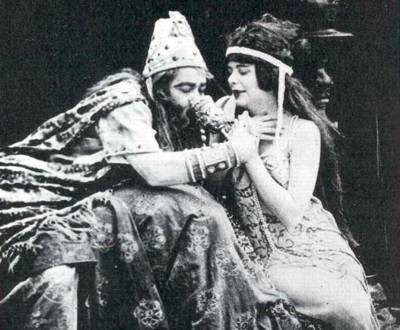

The relationship between this Herr Graf and Herr D. W. Griffith has been always complicated, even tumultuous through the years due to artistic considerations and differences. These disputes don’t of course lessen the Amerikan director’s fundamental importance in cinema history for this German count.
The basic problem with Herr Griffith is that he is sometimes simplistic in his stories and often paternalistic combining religion and conservative values that make some of his work seem very dated.
“Hearts Of The World” has many of those irreconcilable artistic differences for this German count. The film depicts the loves and sorrows of two American citizens in France ( Why do they have to be Americans? Surely there were lovers in France) and their families in a little town during WWI.
During the first part of the film, Herr Griffith depicts the idealized and tranquil lives of the two sweethearts, their families and their neighbours, all in the typical and sentimental Herr Griffith style. There is so much sweetness in the air that this Herr Graf found himself looking forward anxiously to the arrival of Germans. Arrive they finally do, invading the village and poisoning the idyllic life with their brutality and bad manners.
The basic problem with Herr Griffith is that he is sometimes simplistic in his stories and often paternalistic combining religion and conservative values that make some of his work seem very dated.
“Hearts Of The World” has many of those irreconcilable artistic differences for this German count. The film depicts the loves and sorrows of two American citizens in France ( Why do they have to be Americans? Surely there were lovers in France) and their families in a little town during WWI.
During the first part of the film, Herr Griffith depicts the idealized and tranquil lives of the two sweethearts, their families and their neighbours, all in the typical and sentimental Herr Griffith style. There is so much sweetness in the air that this Herr Graf found himself looking forward anxiously to the arrival of Germans. Arrive they finally do, invading the village and poisoning the idyllic life with their brutality and bad manners.
“Hearts Of The World” it is not a pacifist film; it is true that in 1918, the date of the film’s release, the world was still licking its wounds after such a big disaster but the end of the war was in sight and new perspectives were emerging making the film’s lopsided and patriotic approach seem out of date.
Obviously “Heart Of The World” is a fictional film not a documentary ( although the film includes real war sequences besides a prologue for the British release in which Herr Griffith himself appears in the war trenches and at 10 Downing Street; a good example of Griffith’s sense of self importance ) nor does it need to be one but the story lacks interesting and realistic characters.
As this Herr Graf mentioned before, the typical Herr Griffith mannerisms don’t reduce his artistic accomplishments and there is much narrative vigor in this film, especially during the war sequences. It has a number of strong scenes, including one wherein our hero is paying a visit to his sweetie ( well, he’s on some sort of secret mission while his comrades are being killed trying to retake the village). There is also a beautiful sequence showing our suffering heroine, temporarily deranged, and wandering in the field camp looking for her fiancée. Also outstanding are the decors and the skilful combination of fictional and real war sequences; splendid editing gives motion and emotion to those scenes.
The actors do their best within the limits of Herr Griffith’s particular artistic interests; Herr Douglas Gordon Hamilton does well as the handsome hero, a promising bourgeoisie writer before the war. Frau Lillian Gish and her curls, is the typical Herr Griffith heroine, conservative and candid. She will lose her innocence during wartime but emerge the stronger for it. Meanwhile Frau Lillian Gish’s sister, Frau Dorothy, playing the Little Disturber overacts painfully while the German actors play their characters as America saw Germans, brutal and ruthless, utterly indifferent to the pain of others.
“Hearts Of The World” is a Herr Griffith film that devotees of the Amerikan film director will enjoy a lot and those who have many differences with the Griffith style, will still appreciate it to some extent if they put aside the Amerikan director’s conventional and dated approach to the story and characters.
And now, if you'll allow me, I must temporarily take my leave because this German Count must attend a soirée full of heartless Teutonic aristocrats.
Herr Graf Ferdinand Von Galitzien
-/-
La relación entre éste Herr Graf y Herr D. W. Griffith ha sido siempre bastante complicada, incluso tumultuosa durante todos éstos años, debido a ciertas discrepancias y diferencias artísticas, disputas éstas que sin embargo no impiden que éste conde germánico reconozca la gran importancia que tiene el director americano en la historia del cinematógrafo.
El gran problema con Herr Griffith es que a menudo sus historias adolecen de cierto simplismo y paternalismo, combinado éste con ciertos valores conservadores y religiosos, que consiguen finalmente que muchos de sus filmes resulten hoy en día demasiado anticuados.
“Hearts Of The World” posee esas diferencias artísticas irreconciliables para éste conde germánico, un filme en el cual se narra los amores y las penas de dos ciudadanos americanos en Francia ( como si no hubiese suficientes amantes franceses en dicho país para protagonizar éste filme… ) y sus familias, en un pequeño pueblecito durante la primera guerra mundial.
Durante la primera parte del filme, Herr Griffith nos muestra la idealizada y tranquila vida de los dos tortolitos, sus familias y buena parte del vecindario, todo ello con el sello característico de Herr Griffith; hay tan alto grado de cursilería en el aire que éste Herr Graf estaba deseando ansiosamente la llegada de los teutones, llegada que finalmente se produce invadiendo los germanos el pueblo, emponzoñando tan idílica y cursi atmósfera gracias a su brutalidad y malos modos.
“Hearts Of The World” no es desde luego un filme pacifista; bien es cierto que en el año 1918, año de producción de la película, el mundo entero todavía se estaba recuperando de las graves heridas producidas por tan grave desastre bélico, aunque también hay que mencionar que una vez finalizado el conflicto, una nueva perspectiva acerca del mismo sería bastante oportuna y no ésta visión patriótica y añeja por la cual se decanta Herr Griffith.
Obviamente “Hearts Of The World” es una obra de ficción y no un documental ( aunque el filme incluye imágenes reales del conflicto además de un prólogo para la versión británica del filme en el cual se puede ver a Herr Griffith en persona tanto en las trincheras cómo en el número 10 de “Downing Street”; un buen ejemplo de la gran consideración que se tenía a si mismo el director americano ) y aunque desde luego no era necesaria una producción realista , la historia adolece de cierto interés y personajes creíbles.
Cómo éste Herr Graf ha mencionado anteriormente, los típicos manierismos de Herr Griffith no restan importancia a ciertos logros artísticos del filme, como por ejemplo el vigor narrativo que posee la película, especialmente destacable durante muchas de sus escenas bélicas, tal y como acontece cuando nuestro héroe visita a su novia ( aunque él mencione que está allí por una especie de misión secreta como espía, mientras sus camaradas están siendo masacrados durante la reconquista del pueblo… ), o escenas ciertamente conmovedoras como en la cual nuestra sufrida heroína, temporalmente trastornada, vaga por el campo de batalla en busca de su amado.
Hay que destacar también los decorados del filme y la hábil combinación de imágenes reales con las de ficción, un espléndido montaje que da emoción y ritmo a la película.
Los actores dan lo mejor de si mismos dentro de las limitaciones de los particulares intereses artísticos de Herr Griffith; Herr Douglas Gordon Hamilton es el perfecto y atractivo héroe, además de ser todo un prometedor escritor burgués antes de la guerra y Frau Lilian Gish y sus rizos, como la típica heroína Griffithiana, conservadora y cándida a la vez, la cual perderá su inocencia durante el conflicto bélico, emergiendo tras tanto sufrimiento, una mujer mucho más fuerte.
Frau Dorothy Gish, hermana de Frau Lilian, interpreta, de forma dolorosamente sobreactuada a una joven bastante alborotadora, mientras los actores que encarnan a los teutones interpretan a éstos vistos con ojos americanos, esto es, brutales y despiadados, profundamente indiferentes ante el dolor ajeno.
“Hearts Of The World” es un filme que los partidarios del director americano gustarán especialmente y los que mantienen ciertas diferencias con el estilo de Herr Griffith apreciarán en justa medida si consiguen olvidarse de sus convencionalismos y anticuados personajes.
Y ahora si me lo permiten, les tengo que dejar momentáneamente, pues este conde germánico tiene que asistir a una soirée repleta de crueles aristócratas teutones.
Herr Graf Ferdinand Von Galitzien