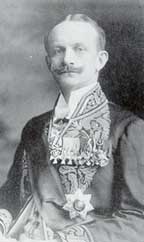
This German count said recently about Herr André Antoine's "L'Hirondelle Et La Mésange" that "the Cinémathèque Française found six hours of rushes of the film, and under the direction of André Antoine himself, the film was restored and finally released after sixty years"... well, that's not exactly true... this German count, probably due to his Alzheimer problems..., has expressed himself wrongfully..., the naked truth is that Herr Philippe Esnault finds Herr Grillet's script together with Herr Antoine's precise film documents about the film but it was finally Herr Henri Colpi who edited the film following those Herr Antoine film documents as he would had liked it.
Herr Graf Ferdinand Von Galitzien
Sonntag, Januar 20, 2008

Samstag, Januar 19, 2008
"L'Hirondelle Et La Mésange" (1920) By André Antoine

Herr Pierre Van Groot ( Herr Louis Ravet ) owns two barges; Van Groot, together with his wife, Marthe ( Dame Maguy Deliac ) and his sister-in-law, Griet ( Dame Jane Maylianes ) navigates along the north channels between Belgium and France. Herr Pierre transports construction material in his barges but he earns extra francs trafficking in diamonds which he hides in the boat’s rudder whenever he reaches the borders of those two countries. Pierre engages a new first mate, Michel ( Herr Pierre Alcover ) but he doesn’t know that Michel is wise to the diamond smuggling and, pretty soon many problems develop.
“L’Hirondelle Et La Mésange” is an excellent, dark, dramatic and violent silent film directed by Herr André Antoine in 1920 but it was not released theatrically until 1982!; The French distributor of the oeuvre, Charles Pathé, considered in those early times that the film was too much like a documentary ( a characteristic of Herr André Antoine films, by the way… ) and for this reason, “L’Hirondelle Et La Mésange” was forgotten in a gloomy French cellar until the Cinémathèque Française found six hours of rushes of the film, and under the direction of André Antoine himself, the film was restored and finally released after sixty years.
After such a long time, silent film fans had the chance to enjoy an interesting film that obviously didn't deserve such treatment and oblivion. The film has an important documentary aspect that fascinates the audience immediately. It was filmed entirely outdoors and the audience travels with Herr Pierre and his family, sharing the hardships of their lives along the channels both in their hard work ( navigation manoeuvres, heaving, transporting ) and their leisure time( visiting the cities that they pass by and attending their public festivities).
So, the film combines documentary ( old European cities and their way of life of the past century ) and realism ( a piece of real life that doesn’t exist any more ) in an effective way in its first part but then the mood changes when the drama develops and the end of the film is both unexpected and disturbing ( for its lack of remorse ).
The film flows like the river; strongly, constantly and without looking back, a fascinating film fortunately recovered from oblivion.
And now, if you'll allow me, I must temporarily take my leave because this German Count must navigate in trouble Teutonic waters.
Herr Graf Ferdinand Von Galitzien
-/-
Herr Pierre Van Groot ( Herr Louis Ravet ) es el propietario de dos barcazas y al lado de su mujer, Marthe ( Dame Maguy Deliac ) y su cuñada Griet ( Dame Jane Maylianes ), navegan a lo largo de los canales norteños situados entre Bélgica y Francia; Herr Pierre transporta material de construcción en sus barcazas aunque también consigue ganarse unos francos extra traficando con diamantes, los cuales esconde hábilmente en el timón de la barcaza, una vez que se acercan e intentan traspasar la frontera entre los dos países.
Recientemente, Herr Pierre acaba de contratar a un nuevo marinero, Michel ( Herr Pierre Alcocer ) sin saber que el susodicho está al corriente de su contrabando de diamantes, motivo por el cual muy pronto surgirán problemas entre ambos.
“L’Hirondelle Et La Mésange” es un excelente, oscuro, dramático y violento filme silente dirigido por Herr André Antoine en el año 1920 aunque no fue exhibido éste hasta el año melenudo de ¡1982!; el distribuidor afrancesado del filme, Herr Charles Pathé, consideró en su día, que el filme tenía un aspecto demasiado documental ( una característica de los filmes de Herr André Antoine, por cierto… ) y por dicho motivo “L’Hirondelle Et La Mésange” fue completamente olvidado en un tenebroso sótano francés hasta que la “Cinématèque Française” encontró seis horas de nitratos de dicho filme y con la ayuda del mismo Herr Antoine, el filme fue restaurado y finalmente exhibido públicamente tras haber transcurrido más de sesenta años de su rodaje.
Tras tan largo tiempo, los admiradores del silente tienen, por fin, la oportunidad de disfrutar de un filme realmente interesante, el cual, obviamente, no merecía tanto ostracismo y olvido; el filme tiene, efectivamente, un importante aspecto documental que fascina al público de forma inmediata; “L’Hirondelle Et La Mésange” fue rodado completamente en exteriores, viajando los espectadores y compartiendo con Herr Pierre y su familia, la dureza de sus vidas ( planos de complejas maniobras de navegación y trasporte pesado ), a lo largo de los canales, disfrutando también de su escaso tiempo libre durante el cual visitan las ciudades por las cuales pasan, asistiendo también a sus fiestas locales.
Por lo tanto el filme combina aspectos documentales ( viejas ciudades europeas y un estilo de vida propios del siglo pasado ) y realismo ( un trozo de una forma de vida que prácticamente ha dejado de existir ) de una forma efectiva durante la primera parte del filme, pues el ambiente de la obra cambia de forma inesperada, cuando el drama se instala en la obra y se va desarrollando hasta que acontece un inesperado y perturbador ( por la falta de remordimientos ) final.
“L’Hirondelle Et La Mésange” fluye como el río, de forma constante, poderosa y sin mirar hacia atrás, un filme fascinante recientemente y afortunadamente, recuperado del olvido.
Y ahora si me lo permiten les tengo que dejar momentáneamente, pues este Conde germánico tiene que navegar por las procelosas aguas teutónicas.
Herr Graf Ferdinand Von Galitzien
Sonntag, Januar 13, 2008
"Monte Cristo" (1929) By Henri Fescourt

At this stage of the century, this German Count thinks that it is not necessary to detail the novel written by the frenchified writer Herr Alexander Dumas Sr. “Le Comte de Monte-Cristo”, the story about a cold revenge by Edmond Dantès, is a great classic well-known by everybody for centuries around the world and adapted many times for the cinema. Probably the one directed by Herr Henri Fescourt is the best one done ever.
For those who ignore the adventures of Edmond Dantès ( probably many of you dangerous longhaired youngster, are among those specimens that prefer to wait to see an film adaptation than to read the original book itself, SIGH!... unfortunately, that’s the sign of this terrible and illiterate times… ), “Monte Cristo” is the right film to know and enjoy such adventures.
And that’s due to Herr Henri Fescourt’s greatness. His adaptation and directing of Herr Alexander Dumas novel in its magnificence; “Monte Cristo” was considered as probably one of the last super productions of the silent era. Those critiques are near to the truth; in nearly four hours, the film enhances for the screen the virtues of the literary work that are not noticed for the audience.
It is a classic adventure film in major concept; wonderful outdoor sceneries, splendorous settings, luxurious customs, everything directed masterly by Herr Fescourt. It is exemplary the way that Herr Fescourt elaborated and controlled the mystery in order to get, “in crescendo” the thrilling ending with many important scenes of the film. There are superb film moments as the murder of the jeweller Johannes ( clearly influenced by Expressionism style ) or the Opera scene, skilfully filmed with a camera that is in constant movement thus emphasizing different aspects or characters of the story in a moody way. And there is exemplary editing that many of the times no needs intertitles in order to explain what happens or what will happen. Summing up, “Monte Cristo” had that forgotten wonderful atmosphere of the classic adventure stories besides a masterly film direction absolutely brilliant and imaginative.
As it happens with the last Schloss film showing, “Monte Cristo” was recently restored and broadcasted by the German-frenchified t.v. channel “ARTE” ( the film was considered lost until recent years - a tragedy that the world did not get a chance to re-see this wonderful oeuvre sooner ). It is another silent treasure, and an excellent way to begin another terrible and uncertain year of this new century.
And now, if you'll allow me, I must temporarily take my leave because this German Count must to talk from Count to Comte to Herr Dantès.
Herr Graf Ferdinand Von Galitzien
-/-
A estas alturas del siglo, éste conde germánico no considera necesario tener que narrar en detalle la novela escrita por el escritor afrancesado Herr Alejandro Dumas, padre, “Le Comte de Monte-Cristo”, esa historia acerca de la fría venganza llevada a cabo por Herr Edmond Dantès, pues se trata de todo un clásico más que conocido por todo el mundo desde centurias y que ha sido adaptado para la pantalla en numerosas ocasiones, siendo, probablemente, ésta versión dirigida por Herr Henri Fescourt, la mejor de todas ellas.
Para todos aquellos que ignoran las aventuras de Edmond Dantés ( es más que probable que muchos de ustedes, SIGH!... peligrosos y melenudos jovenzuelos, pertenezcan a esos especimenes que prefiere esperar a ver la adaptación cinematográfica de una obra antes que leer la novela original en la cual se basa… desafortunadamente, así son éstos terribles e iletrados tiempos… ) “Monte Cristo” es la obra perfecta para conocer y disfrutar de dichas aventuras.
Y ello se debe a la grandeza de Herr Henri Fescourt; su adaptación y dirección de la novela de Herr Alejandro Dumas es magnífica; “Monte Cristo” fue considerada en su época como una de las últimas grandes superproducciones de la era silente y esos críticos estaban realmente en lo cierto, pues durante las casi cuatro horas de duración de la obra, imperceptibles para el espectador, el filme muestra en la pantalla todas las virtudes de la obra literaria.
Se trata de todo un clásico de aventuras con mayúsculas; maravillosas localizaciones, esplendorosos decorados, lujoso vestuario, todo ello dirigido magistralmente por Herr Fescourt, siendo especialmente ejemplar la forma en la cual el director elabora y dosifica el misterio en el filme durante numerosas escenas e ir consiguiendo, de esta forma, un emocionante “in crescendo” final.
Magníficos momentos en la obra tales como el asesinato del joyero Johannes ( claramente influenciado por el estilo Expresionista ) o la escena que transcurre en la Ópera, cuidadosamente filmada ésta con una cámara que con su constante movimiento resalta diferentes aspectos acorde con lo que va aconteciendo en escena, corroboran lo afirmado por éste Herr Graf, sin olvidarse del excelente montaje que consigue que los rótulos sean innecesarios para explicar que sucede o porqué suceden diferentes aspectos de la historia, consiguiendo finalmente que “Monte Cristo” posea esa maravillosa y casi olvidada atmósfera de los filmes clásicos de aventuras de antaño, además de una dirección magistral absolutamente brillante e imaginativa.
Tal y como viene sucediendo con las últimas obras exhibidas en el Schloss, “Monte Cristo” también ha sido recientemente restaurada y emitida por el excelso canal germano-afrancesado “ARTE” ( el filme estaba considerado como perdido hasta hace poco, una enorme tragedia ésta si el mundo finalmente no hubiese tenido la oportunidad de volver a ver ésta magnífica obra ); un gran tesoro silente y una magnifica forma de comenzar otro terrible e incierto año melenudo de esta nueva centuria.
Y ahora si me lo permiten les tengo que dejar momentáneamente, pues este conde germánico tiene que hablar de Conde a Comte con Herr Dantès.
Herr Graf Ferdinand Von Galitzien
For those who ignore the adventures of Edmond Dantès ( probably many of you dangerous longhaired youngster, are among those specimens that prefer to wait to see an film adaptation than to read the original book itself, SIGH!... unfortunately, that’s the sign of this terrible and illiterate times… ), “Monte Cristo” is the right film to know and enjoy such adventures.
And that’s due to Herr Henri Fescourt’s greatness. His adaptation and directing of Herr Alexander Dumas novel in its magnificence; “Monte Cristo” was considered as probably one of the last super productions of the silent era. Those critiques are near to the truth; in nearly four hours, the film enhances for the screen the virtues of the literary work that are not noticed for the audience.
It is a classic adventure film in major concept; wonderful outdoor sceneries, splendorous settings, luxurious customs, everything directed masterly by Herr Fescourt. It is exemplary the way that Herr Fescourt elaborated and controlled the mystery in order to get, “in crescendo” the thrilling ending with many important scenes of the film. There are superb film moments as the murder of the jeweller Johannes ( clearly influenced by Expressionism style ) or the Opera scene, skilfully filmed with a camera that is in constant movement thus emphasizing different aspects or characters of the story in a moody way. And there is exemplary editing that many of the times no needs intertitles in order to explain what happens or what will happen. Summing up, “Monte Cristo” had that forgotten wonderful atmosphere of the classic adventure stories besides a masterly film direction absolutely brilliant and imaginative.
As it happens with the last Schloss film showing, “Monte Cristo” was recently restored and broadcasted by the German-frenchified t.v. channel “ARTE” ( the film was considered lost until recent years - a tragedy that the world did not get a chance to re-see this wonderful oeuvre sooner ). It is another silent treasure, and an excellent way to begin another terrible and uncertain year of this new century.
And now, if you'll allow me, I must temporarily take my leave because this German Count must to talk from Count to Comte to Herr Dantès.
Herr Graf Ferdinand Von Galitzien
-/-
A estas alturas del siglo, éste conde germánico no considera necesario tener que narrar en detalle la novela escrita por el escritor afrancesado Herr Alejandro Dumas, padre, “Le Comte de Monte-Cristo”, esa historia acerca de la fría venganza llevada a cabo por Herr Edmond Dantès, pues se trata de todo un clásico más que conocido por todo el mundo desde centurias y que ha sido adaptado para la pantalla en numerosas ocasiones, siendo, probablemente, ésta versión dirigida por Herr Henri Fescourt, la mejor de todas ellas.
Para todos aquellos que ignoran las aventuras de Edmond Dantés ( es más que probable que muchos de ustedes, SIGH!... peligrosos y melenudos jovenzuelos, pertenezcan a esos especimenes que prefiere esperar a ver la adaptación cinematográfica de una obra antes que leer la novela original en la cual se basa… desafortunadamente, así son éstos terribles e iletrados tiempos… ) “Monte Cristo” es la obra perfecta para conocer y disfrutar de dichas aventuras.
Y ello se debe a la grandeza de Herr Henri Fescourt; su adaptación y dirección de la novela de Herr Alejandro Dumas es magnífica; “Monte Cristo” fue considerada en su época como una de las últimas grandes superproducciones de la era silente y esos críticos estaban realmente en lo cierto, pues durante las casi cuatro horas de duración de la obra, imperceptibles para el espectador, el filme muestra en la pantalla todas las virtudes de la obra literaria.
Se trata de todo un clásico de aventuras con mayúsculas; maravillosas localizaciones, esplendorosos decorados, lujoso vestuario, todo ello dirigido magistralmente por Herr Fescourt, siendo especialmente ejemplar la forma en la cual el director elabora y dosifica el misterio en el filme durante numerosas escenas e ir consiguiendo, de esta forma, un emocionante “in crescendo” final.
Magníficos momentos en la obra tales como el asesinato del joyero Johannes ( claramente influenciado por el estilo Expresionista ) o la escena que transcurre en la Ópera, cuidadosamente filmada ésta con una cámara que con su constante movimiento resalta diferentes aspectos acorde con lo que va aconteciendo en escena, corroboran lo afirmado por éste Herr Graf, sin olvidarse del excelente montaje que consigue que los rótulos sean innecesarios para explicar que sucede o porqué suceden diferentes aspectos de la historia, consiguiendo finalmente que “Monte Cristo” posea esa maravillosa y casi olvidada atmósfera de los filmes clásicos de aventuras de antaño, además de una dirección magistral absolutamente brillante e imaginativa.
Tal y como viene sucediendo con las últimas obras exhibidas en el Schloss, “Monte Cristo” también ha sido recientemente restaurada y emitida por el excelso canal germano-afrancesado “ARTE” ( el filme estaba considerado como perdido hasta hace poco, una enorme tragedia ésta si el mundo finalmente no hubiese tenido la oportunidad de volver a ver ésta magnífica obra ); un gran tesoro silente y una magnifica forma de comenzar otro terrible e incierto año melenudo de esta nueva centuria.
Y ahora si me lo permiten les tengo que dejar momentáneamente, pues este conde germánico tiene que hablar de Conde a Comte con Herr Dantès.
Herr Graf Ferdinand Von Galitzien
Sonntag, Januar 06, 2008
"Der Steinerne Reiter" (1923) By Fritz Wendhausen

In a distant Teutonic village, people dance and drink merrily celebrating a wedding feast. However, an elderly man tells the villagers that the valley where they live wasn’t always happy but sorrowful. This was due to the tyranny of the master of the mountains ( Herr Rudolf Klein-Rogge as wild as his hairdo ) who ruled the valley despotically.
He lived in a Schloss up the mountains, whipped his servants for any reason (Sound familiar?) and when a wedding was going to be celebrated, he descended into the valley asking for his “droit de seigneur”.
During one such encounter, a young bride is accidentally killed by the groom who was trying to protect her from the claws of the master of the mountains. The girl's sister vows revenge and journeys to the Schloss with the intention of killing the tyrant.
It is very strange that this remarkable film, “Der Steinerne Reiter”, directed by Herr Fritz Wendhausen, has not received the attention its many merits deserve, especially considering its Expressionist touches.
Outstanding are the settings included in this film, particularly the gloomy Schloss carved out of the mountains contrasting with the idyllic village that lies below. The sense of constant menace is pervasive, exemplified by the superb shot when the master of the mountains approaches the village and his shadow as a rider darkens the town. And of course there are quaint customs to observe( presumed typical but at the same time extravagant, perfect for Expressionism mode ), and there's a fantastic and supernatural ending which fits the pitch dark mood perfectly, all put together in a script by the well known Dame Thea von Harbou.
Another interesting aspect of the story is a twist in the middle of the oeuvre; the master is redeemed by love but his serfs turn cruel when they take justice into their own hands blurring the thin line between good and evil.
And now, if you'll allow me, I must temporarily take my leave because this German Count must complain to his imitator, the master of the mountains, about copyright infringement.
Herr Graf Ferdinand Von Galitzien
-/-
En una lejana villa teutónica, la gente baila y bebe alegremente pues se está festejando una boda, cuando un anciano del lugar les comienza a relatar a sus convecinos que sus antepasados no siempre vivieron felices en dicha villa, más bien temerosos debido a la tiranía que ejercía el amo de las montañas ( Herr Rudolf Klein-Rogge, tan indomable como su peinado ) el cual gobernaba el valle de forma despótica.
El susodicho vivía en un Schloss arriba en las montañas, daba de latigazos a sus sirvientes a la mínima ocasión ( ¿no les suena familiar? ) y cuando se iba a celebrar una boda, descendía desde las montañas hacia el valle, para reclamar el derecho de pernada.
En una ocasión, una joven novia es asesinada accidentalmente por su novio al intentar éste protegerla de las garras del amo de las montañas; tras gran grande desgracia, la hermana de la novia jura venganza y se dirige al Schloss con la intención de matar al tirano.
Es realmente extraño que un filme tan destacable como es “Der Steinerne Reiter”, una obra dirigida por Herr Fritz Wendhausen, no haya recibido la atención y reconocimiento que desde luego se merece, un grave hecho éste pues dicha obra tiene destacables detalles Expresionistas.
Sorprendentes son los decorados de este filme, en especial el sombrío Schloss esculpido en las montañas y el contraste del mismo con el idílico pueblo situado en el valle; la sensación de una amenaza constante en el pueblo es omnipresente, quedando magníficamente expuesta ésta en un excelente plano en el cual la sombra del amo de las montañas a caballo, oscurece toda la villa al dirigirse al mismo; no hay tampoco que olvidarse de los singulares vestuarios que se pueden ver en el filme ( presuntamente típicos aunque al mismo tiempo extravagantes, perfectos, entonces, para la moda Expresionista ) y el fantástico y sobrenatural final que encaja con el permanente ambiente sombrío del filme, todo ello surgido de un guión de la conocidísima Dame Thea von Harbou.
Otro interesante aspecto de la historia es el giro que se puede apreciar hacia la mitad del filme; el amo será finalmente redimido por amor pero sus siervos será aún más crueles que el susodicho al tomarse la justicia por sus callosas manos, sugerente reflexión sobre la imperceptible delgada línea que hay entre el bien y el mal.
Y ahora si me lo permiten les tengo que dejar momentáneamente, pues este Conde germánico tiene que exigirle a ese amo de las montañas, derechos de imagen por su burda imitación.
Herr Graf Ferdinand Von Galitzien
Mittwoch, Januar 02, 2008
"Bach Films"

The Frenchified modern disc company called "Bach Films" ( they are French, but in spite of that they know the style and elegance of naming their company with such an important German authority... ) has released, with a reasonable price as usual, ten interesting silent and even not well-known films by Herr Cecil B. de Mille, an excellent chance for longhaired silent collectors and decadent Teutonic aristocrats to watch Herr de Mille's film history without painless money sacrifices at the beginning of this modern year.
Herr Graf Ferdinand Von Galitzien
-/-
A compañía afrancesada de discos modernos denominada “Bach Films” ( a pesares de seren franceses, saben onde se atopa o xeito e a elegancia ó denominar á súa compañía con tan importante nome xermánico… ) está distribuíndo, cun prezo razoable coma é habitual, dez interesantes e non moi coñecidas obras de Herr Cecil B. de Mille, unha excelente oportunidade pra coleccionistas melenudos e tamén pra decadentes aristócratas teutóns, o feito de poder ollar e completar filmografía do devandito director, sen ter que facer grandes sacrificios económicos no comezo deste novo ano moderno.
Herr Graf Ferdinand Von Galitzien
Montag, Dezember 31, 2007
Lektüre für ein gutes neues Jahr 2008

Meine lieben jungen langhaarigen Freunde,
Ein neues Jahr steht vor der Tür und der Graf wünscht sich, dass viele Stummfilme aufgefunden und im nächsten Jahr zur Aufführung in seinem Schlosstheater gelangen mögen; eine kleine Laune des Aristokraten wohl, doch ebenso bedeutsam, wie weiterhin alle in der Welt zerstreuten Langhaarigen, die von der Pracht des stummen Kinos begeistert sind, an seinen stummen Kommentaren teilhaben und geniessen zu lassen.
Ein neues Jahr steht vor der Tür und der Graf wünscht sich, dass viele Stummfilme aufgefunden und im nächsten Jahr zur Aufführung in seinem Schlosstheater gelangen mögen; eine kleine Laune des Aristokraten wohl, doch ebenso bedeutsam, wie weiterhin alle in der Welt zerstreuten Langhaarigen, die von der Pracht des stummen Kinos begeistert sind, an seinen stummen Kommentaren teilhaben und geniessen zu lassen.
Herr Graf Ferdinand Von Galitzien
Dienstag, Dezember 25, 2007
"Staroye I Novoye" (1929) By S. M. Eisenstein

Due to some common interests between German and Russian aristocracy ( the Russians even had aristocrats in their past not to mention they had an Empress called Catherine the Great, as great as this German count’s heiresses… ), it is not strange that this Teutonic count has understood and even enjoyed Herr S. M. Eisenstein’s “Staroye I Novoye”.
It is not very usual that for the aristocracy to enjoy Bolshevist films full of proletarian demands that put private property at risk or as it happens in this case, a film about the Communist Party’s policy on the subject of the collectivization of the Soviet agriculture. Normally this would be perfect gibberish for this German count, but thanks to Herr Eisenstein 's greatness and directorial talent, the hardships of the heroine of the film, Dame Marfa ( Dame Marfa Lapkina ) breached even the thick aristocratic Schloss walls.
And that’s one of the first remarkable aspects of this oeuvre; in spite of the political subject of the film, the powerful images and lyricism ( astonishing and beautiful shot compositions ), especially during the first part of the movie, preserve the artistic merits entirely while serving a propaganda purpose. The second remarkable aspect of the film is the dichotomy between the old and new, the fight to improve the lot of Dame Marfa and her countrymen. There are many discussions because it is not easy even in Russia to change ancient and conservative customs. There are superb metaphors and social criticism ( illiteracy, bureaucracy, religiosity ) which perfectly fit the film, and last but not least, “Staroye I Novoye”, is a kind of archaic documentary about ancient customs established deeply in old Russia, those ones that our heroine must fight against. And there is also a lot about agriculture ( very enlightening for this German count), especially about harvesting and how to fatten Russian cows or pigs ( literally, no pun here… ).
Herr Eisenstein had to bear during the last era of his film career, unbelievable censorship and mutilation of his work, as happens with “Staroye I Novoye”. The film was reedited and Eisenstein accused of sympathizing with Trostky’s policies but fortunately the film was restored and showed by the German-frenchified t.v. channel “ARTE”, natürlich!, including an evocative music score by Herr Taras Bujewski, that fits superbly Herr Eisenstein primal artistic interests.
And now, if you'll allow me, I must temporarily take my leave because this German Count must buy a tractor for one of his Teutonic heiress.
Herr Graf Ferdinand Von Galitzien
-/-
Debido a intereses comunes de antaño entre la aristocracia rusa y germana ( los rusos tuvieron aristócratas en su pasado e incluso una emperatriz denominada como Catalina “la grande”, tan grande ésta como cualquiera de las herederas de éste conde germánico… ), por dichos motivos no es extraño que este conde teutónico haya entendido e incluso disfrutado el filme “Staroye I Novoye”, dirigido por Herr S. M. Eisenstein.
Ciertamente, no es habitual que la aristocracia guste de filmes bolcheviques repletos éstos de reivindicaciones proletarias que ponen en peligro la propiedad privada tal y como sucede en este caso, al tratarse de un filme acerca de la política de la colectivización de la agricultura soviética impulsada ésta por el partido comunista, un perfecto galimatías para éste conde germánico, pero gracias a la grandeza y talento de Herr Eisenstein, los sufrimientos de la heroína de la obra, Dame Marfa ( Marfa Lapkina ) han conseguido traspasar los gruesos y aristocráticos muros del Schloss.
Y éste es el primer aspecto más destacado de esta obra, pues a pesar de su temática política, las poderosas imagines y lirismo ( sorprendentes y bellísimas composiciones de sus planos ), especialmente durante la primera parte del filme, preservan sus méritos artísticos estando igualmente al servicio propagandístico.
El segundo aspecto destacable de este filme es la dicotomía entre lo nuevo y lo viejo, la lucha de Dame Marfa y sus paisanos por mejorar en la vida, una ardua tarea conseguida tras muchas discusiones, pues no es fácil incluso en Rusia, el cambiar antiguas y conservadoras costumbres; sobre este aspecto se incluyen excelentes metáforas además de crítica social ( analfabetismo, burocracia, religiosidad ), encajando ambas perfectamente en la obra y sin olvidarnos finalmente que “Staroye I Novoye”, es también una especie de arcaico documental acerca de esas antiguas tradiciones tan arraigadas en la vieja Rusia, ésas contra las que tendrá que luchar nuestra heroína, además de incluir el filme un amplio muestrario sobre agricultura ( muy esclarecedor para éste conde germánico ), acerca de cómo cosechar o cebar vacas y cerdos rusos ( literalmente, sin dobles sentidos… ).
Herr Eisenstein tuvo que soportar durante la última etapa de su carrera, increíbles mutilaciones en su obra además de férrea censura, tal y como le sucedió con “Staroye I Novoye”; el filme fue reeditado y Herr Eisenstein acusado de simpatizar con ideas Trotskistas, pero afortunadamente y recientemente, éste filme fue restaurado y emitido por el canal televisivo germano-afrancesado “ARTE” ( natürlich! ), el cual además incluye una evocadora banda sonora compuesta por Herr Taras Bujewski, una partitura que se adecua a los originales intereses artísticos de Herr Eisenstein.
Y ahora si me lo permiten les tengo que dejar momentáneamente, pues este conde germánico tiene que comprarle un tractor a una de sus herederas teutónicas.
Herr Graf Ferdinand Von Galitzien
Samstag, Dezember 22, 2007
Modernen Disk, That Is To Say, DVD Release Of Herr Borzage's "Seventh Heaven" (1927)

"Suevia Films" is a Spanish DVD company well-know among the longhaired silent fans and even, ehem... silent aristocrats for their awful, terrible DVD releases; many times the blurry archaeological silent nitrates stored in the Schloss cellar, have better image quality that those supposedly "new" modernen disk editions, but if the reputable Amerikan newspaper "The New York Times" says that the newly "Suevia Films" edition of Herr Borzage's "Seventh Heaven" is a "decent DVD release", then you should consider to sacrifice your scarce Christmas wages for the purchase of this excellent silent film.
Herr Graf Ferdinand Von Galitzien
Montag, Dezember 17, 2007
"Abwege" (1928) By G. W. Pabst

“Abwege”, a film directed by Herr G. W. Pabst, demonstrates the most representative and important artistic merits of the oeuvre of this great German director during his silent period. Expressionism and Psychology are both intertwined without distinction in this film so we could say that the film is an Expressionistic film as well as a profound study of the psychology of the main characters, or a film about a marriage in crisis in which the troubled relationship of the couple is worked out in an oppressive setting.
In its visual aspects, “Abwege” is an astounding film with important and decisive cinematography by Herr Theodor Sparkuhl. The different settings that are showed in the film superbly illustrate the different moods suffered by its main characters. This is demonstrated in an astonishing early scene when Herr Thomas Beck ( Herr Gustav Diessl, perfect as the boring and upset husband ) is depressed, sitting on the sofa the in their bedroom in front of an open window waiting in vain for his wife, Dame Irene ( Dame Brigitte Helm, more feline and cold than ever ) The different way of lighting the apartments of the various characters or those wonderful and thrilling shadows in the stairs, are a good examples of the virtuosity of Herr Theodor.
Complicated, controversial and at the same time, successful, is the psychological study of the different personalities of that marriage, a couple in crisis characterized by continuous ups and downs, incomprehension, monotony, and lack of understanding. They are two very different people with different ways of living and they must take on the hard task of finding common ground, an effort that seems to doomed to fail. Herr Pabst falters at the end of the film when he resorts to an unconvincing happy ending as well as doing some unnecessary moralizing.
There is a part of “Abwege” that this German count especially loves and it is the one that happens in the Klub… can you imagine, this film gives the chance to watch a genuine, decadent German night-Klub of the Weimar era!!!... It’s is a great present for decadent Teutonic aristocrats who in this way can remember the crazy nights of their youth, where many good times were spent in such gorgeous dens of iniquity. There the vicious and idle clients could find the vice of their choice: alcohol, drugs, tobacco and, the most terrible of all, Latin dancers!…
And now, if you'll allow me, I must temporarily take my leave because this German Count must return urgently to the Klub.
Herr Graf Ferdinand Von Galitzien
-/-
“Abwege”, filme dirigido por Herr G. W. Pabst, es un buen ejemplo de los importantísimo méritos artísticos que posee la obra de este gran director alemán durante su periodo silente; Expresionismo y psicología se entrelazan en esta obra la cual podría ser definida como un filme expresionista con un profundo estudio psicológico de sus principales protagonistas o bien, un filme acerca de un matrimonio en crisis en el cual dicha complicada relación de pareja, se desarrolla en un escenario opresivo.
En sus aspectos visuales, “Abwege” es un filme sorprendente en el cual destaca la importante y decisiva fotografía de Herr Theodor Sparkuhl; los diferentes escenarios mostrados en el filme ilustran a la perfección el estado anímico que sufren los protagonistas, resumido, por ejemplo, al principio del filme durante una brillante escena en la cual Herr Thomas Beck ( Herr Gustav Diessl, perfecto como el aburrido y preocupado marido ), yace deprimido en el sofá del dormitorio familiar en frente de una ventana abierta esperando en vano por su esposa, Dame Irene ( Dame Brigitte Helm, más felina y fría que nunca ) o las diferentes formas de iluminar los apartamentos de los personajes que aparecen en el filme, esas maravillosas sombras amenazadoras en el rellano de la escalera…, son buenos ejemplos del virtuosismo de Herr Theodor en esta obra.
Complicado, controvertido y al mismo tiempo, muy conseguido, es el estudio psicológico de las diferentes personalidades de dicho matrimonio, una pareja en crisis caracterizada por sus continuos altibajos, incomprensión, monotonía y falta de entendimiento; estamos ante dos personas con diferentes formas de vida, las cuales intentan continuamente buscar un punto de encuentro para ambos, un esfuerzo condenado al fracaso.
Por dicho motivo, Herr Pabst, falla al final del filme al incluir una especie de final feliz moralizante, que resulta ser poco convincente.
Hay una parte de “Abwege” que este conde germánico gusta especialmente y es la que se desarrolla en el Klub… ¡¿pueden creérselo?!... ¡este filme ofrece la oportunidad de contemplar un auténtico y decadente Klub nocturno de la época de Weimar!.
Un gran regalo para éste para aristócratas teutónicos decadentes pues de esta forma pueden rememorar las noches locas de su juventud en esos antros de perdición en los cuales se pasaron memorables noches; en dicho local, los viciosos y ociosos clientes del mismo, tienen acceso a drogas, alcohol, tabaco, además de una pareja de ¡bailarines latinos!, lo más pernicioso del local, ciertamente…
Y ahora si me lo permiten les tengo que dejar momentáneamente, pues este Conde germánico tiene que volver urgentemente al Klub.
Herr Graf Ferdinand Von Galitzien
Sonntag, Dezember 09, 2007
"Polikushka" (1922) By Aleksandr Sanin

Herr Polikushka is a poor Russian servant with a huge family and a special fondness for vodka, that is to say, a Bolshevist paradigm; He works for a noblewoman who, after so many problems with him in the estate (ah, the eternal problems with the servants; Russia is no different from Germany in that respect ), decides to put him to a test: She entrusts him to go to a certain merchant in the next town and collect- MEIN GOTT!!- a very important sum of money!.
“Polikushka” was the only film directed by Herr Aleksandr Sanin, one of Moscow Art Academic Theatre’s founders, and is based on Herr Lev Tolstoy’s homonym short story. In spite the many differences between the literary oeuvre and its film adaptation ( Tolstoy’s short story includes valuable social aspects about Polikushka's background that help to comprehend and understand his actions ) it is a remarkable work that is outstanding for its depiction of the cruel realities of Russian society -the harsh life condition of its main character and his family in contrast to the wealth of his mistress; the daily life at the marketplace or the outcasts in their lodgings. Thus in addition to its artistic merit, the film has the opportunity to denounce injustices and the submission of the lower classes.
The film as the story leaves no room for hope, redemption or a glimpse of a better future life for Polikushka, although the film includes at the end a slight chance of revenge for its main character. Still, Polikushka is condemned to a life of endless misery. Remarkable is Herr Ivan Moskvin performance as Polikushka; he plays that innocent servant and his particular fall to hell with total conviction, sharing his miseries with the audience in every scene. Probably, the fact that Herr Moskvin was a Herr Stanislavsky follower helped him to get into his character so successfully.
In spite the many difficulties that the crew suffered during the filming, ( shooting during winter in Russia with scarce resources is a terrible thing even for people who are long used to it ) “Polikushka” had international success and was considered as one of the most important films of that year, a fair reward for a film that implicitly offers the audience the most classical and artistic virtues of the genuine Russian culture.
And now, if you'll allow me, I must temporarily take my leave because this German Count must talk with that Russian mistress about the best Teutonic way to deal with the servants.
Herr Graf Ferdinand Von Galitzien
-/-
Herr Polikushka es un pobre criado ruso con cierta querencia por el vodka y con una enorme familia a la que mantener, esto es, el paradigma de todo un bolchevique; el susodicho trabaja para una aristócrata, la cual, tras haber tenido diferentes problemas con él ( ¡ah, los eternos problemas de la aristocracia con el servicio!... cómo se puede comprobar ni siquiera Rusia es diferente a Germania al respecto ), decide ponerlo a prueba encargándole una especial misión: tendrá que desplazarse al pueblo más próximo y recoger de un comerciante una importante, MEIN GOTT!!!... ¡cantidad de dinero!.
“Polikushka” fue el único filme dirigido por Herr Alexandr Sanin, uno de los fundadores del teatro de arte de Moscú, filme basado en un relato corto homónimo de Herr León Tolstoy.
A pesar de las evidentes diferencias entre la obra literaria y su adaptación cinematográfica ( en el relato de Tolstoy se tiene acceso a valiosos aspectos sociales y antecedentes de Polikushka que ayudan a comprender el porqué de sus acciones posteriores ), se trata de una obra más que apreciable en la cual hay que destacar el reflejo en el filme, de la cruel realidad social de la sociedad rusa de entonces ( como por ejemplo, las difíciles condiciones de vida de sus protagonistas en contraste con la opulencia de su ama, la vida cotidiana en el mercado o los desarrapados del albergue ), a la cual hay que añadir, además de sus méritos artísticos, la oportunidad que ofrece el filme para denunciar la injusticia y la opresión que sufren esas clases bajas.
En el filme, como sucede con el relato, no hay lugar para la esperanza, redención y por supuesto, ni siquiera la opción de un futuro mejor para Polikushka, aunque el filme añada en su parte final la oportunidad de una nimia venganza de su protagonista, pues Polikushka está condenado irremediablemente a una vida de interminables sufrimientos.
Hay que destacar la interpretación de Herr Ivan Moskvin, un actor que interpreta a ese sirviente fiel de forma más que convincente, haciendo partícipes a los espectadores en cada escena de los avatares del protagonista; quizás el hecho de que Herr Moskvin fuese uno de los partidarios de las técnicas interpretativas de Herr Stanislavsky, le ayudaron al susodicho a involucrarse en su personaje de forma tan exitosa.
A pesar de los enormes contratiempos sufridos durante el rodaje por todo el equipo ( rodar durante el crudo invierno con escasos medios y en Rusia, es toda una ardua tarea incluso para los naturales de dicho país ), “Polikushka” tuvo gran éxito internacional e incluso fue elegida como una de las películas más importantes del año, una justa recompensa para un filme que ofrece al público, de forma implícita, todo el clasicismo y las virtudes de la más genuina cultura rusa.
Y ahora si me lo permiten les tengo que dejar momentáneamente, pues este Conde germánico tiene que tener una charla con esa aristócrata rusa acerca de cómo debe tratar a sus sirvientes usando las técnicas teutónicas.
Herr Graf Ferdinand Von Galitzien
Sonntag, Dezember 02, 2007
"Anna Boleyn" (1920) By Ernst Lubitsch

Continuing with the exclusive film programme about complicated relationships in some European courts, last night in the Schloss theatre was shown “Anna Boleyn”, a film directed by the great Teutonic film director Herr Ernst Lubitsch. The film depicts the terrible story of the Queen consort of the British King Henry VIII. She was executed by her husband ( well, not exactly, the King ordered the executioners to do his dirty work) not to mention that this marriage caused an important political and religious historical event, the English Reformation.
The film stars Dame Henny Porten, Germany’s first screen superstar during those early years and Herr Emil Jannings, Germany’s fattest actor in that silent era. Both play their characters in a suitable way; Dame Porten as an innocent aristocrat who becomes progressively interested in the power that the court offers her and Herr Jannings as the unscrupulous, whimsical and womanizing British monarch, a character very suitable for this German actor who overacts appropriately, given the extravagance and excessive personality of the character himself.
In the early film period Herr Lubitsch was known for his outstanding costume films, colossal productions with big budgets ( “Anna Boleyn” cost about 8 million marks, a fortune even for this German count ) taking great care in magnificent decors as can be seen during the coronation procession in Westminster Abbey scene which employed 4.000 extras ( idle Germans of that time were used, causing revolutionary workers to create a fuss when German President Friedrich Ebert visited the set during filming).
Besides the spectacle, one of the most important aspect of this and every film of Herr Lubitsch, even during his epic period, is the complex relationship between the main characters. We experience a game of different interests, double meanings, and the complicated art of flirting but what is treated lightly at first ends in tragedy. The importance of those historical facts is brought to bear in an effective way but Lubitsch is really more interested in the changing relationship between Henry VIII and Anna Boleyn.
And now, if you'll allow me, I must temporarily take my leave because this German Count must take care that one of his fat and rich heiress doesn't lose her head for this Teutonic aristocrat.
Herr Graf Ferdinand Von Galitzien
-/-
Continuando con el exclusivo ciclo cinematográfico acerca de las complicadas relaciones personales en diferentes cortes europeas, la pasada noche se exhibió en el Schloss el filme “Anna Boleyn”, obra dirigida por el gran director teutónico Herr Ernst Lubitsch, en el cual se narra la terrible historia de la reina consorte del rey británico Enrique VIII, la cual fue ejecutada por su marido ( bueno, no exactamente, el rey ordenó a los verdugos hacer el trabajo sucio ), sin olvidarse igualmente que este matrimonio fue la causa principal de un importante hecho religioso e histórico: el cisma de la iglesia de Inglaterra.
El filme está protagonizado por Dame Henny Porten, la primera gran estrella del cinematógrafo alemán y Herr Emil Jannings, el actor más gordo de la primera época silente germánica, ambos interpretan sus personajes de una forma realmente convincente, Dame Porten como la inocente aristócrata que de forma progresiva se va interesando en los privilegios que la corte le ofrece y Herr Jannings como el monarca sin escrúpulos, caprichoso y mujeriego que resulta ser perfecto para el actor germánico el cual sobreactúa de forma comedida y muy ajustada para las extravagancias y excesiva personalidad del personaje que interpreta.
Durante la primera etapa silente de la carrera de Herr Lubitsch, este estaba muy reconocido por sus filmes de época, colosales producciones con enormes presupuestos ( “Anna Boleyn” costó unos 8 millones de marcos, toda una fortuna incluso para éste conde germánico ), en las cuales se cuidaban muchísimo la dirección artística, como los excepcionales decorados que se puede apreciar durante la escena de la coronación en Westminster Abbey, escena en la cual se emplearon a más de 4.000 extras, ociosos germanos de la época , revolucionarios trabajadores los cuales provocaron un tumulto cuando el presidente alemán Herr Friedrich Ebert visitaba el rodaje del filme.
Además del gran espectáculo visual, uno de los más importantes aspectos de este y todos los filmes de Herr Lubitsch, incluida su etapa silente, reside en el retrato de las complicadas relaciones personales entre los personajes principales, mostrando un variado juego de diferentes intereses entre ambos, dobles sentidos y el complicado arte del coqueteo, tratado en esta ocasión al principio del filme, de forma ligera y desembocando en su parte final, en tragedia.
La importancia de los hechos históricos se tratan en el filme de forma efectiva aunque lo que realmente le interesa a Herr Lubitsch, son las variables relaciones entre Enrique VIII y Ana Bolena.
Y ahora si me lo permiten les tengo que dejar momentáneamente, pues este conde germánico tiene que prevenir que una de sus ricas y gordas herederas no pierda la cabeza por éste aristócrata teutón.
Herr Graf Ferdinand Von Galitzien
Montag, November 26, 2007
Silent Films Illustrated With Commentaries By:
About Sven Gade & Heinz Schall's "Hamlet" (1921)
Silent Guest Stars: Dame Suellen Aucejo, Dame Mary Mallory, Herr Robert Birchard, Herr Dennis Doros und James Bazen
Dame Suellen Aucejo wrote: "That must be interesting!
But I have a question...If Herr Hamlet is, in this version, Dame Hamlett, what is Ophelia? Is she a Herr or a dame too?...
If she is a dame too, that would be even more interesting to watch! I'd love to see how they dealt with the most controversial of topics in history, which is homosexuality, or if they did adapt for Ophelia too and transformed her in a boy, how did he/she die drawned by his/her dress...
This seems extremelly complcated after all! LOL
Does anyone know?".
Und Dame Mary Mallory said: "I and two other women who saw this at UCLA in August loved it. We were mesmerized, moved, and thought itbeautifully shot. We loved Nielsen's performance, finding her strong yet vulnerable and very androgynous. It makes the film more interesting from a sexual identity/gender role perspective, in that Hamlet has feelings for a male friend but can't reveal them, while Ophelia (female) has feelings for Hamlet and has no idea why he's not interested. We are seeking out photos and images from the film".
Herr Graf Ferdinand Von Galitzien added: "One of the most interesting aspects of this German version of "Hamlet" is the "new" relevance of the sufferings of Ophelia; this German count could say that she is the most harmed in this special Danish "mènage a trois".
Her feelings for Hamlet are sincere, pure and innocent and she doesn't understand why the Prince rejects her. Meanwhile, Hamlet is more interested in Horatio but that special relationship never can come to fruition because Horatio is interested exclusively in comradeship. Hamlet realizes of course that the role he/she must play makes any love relationship a farce.
In the midst of all this turmoil is Ophelia who will be sacrificed for both, becoming mentally unbalanced and taking her own life because of her unrequited love.
Suddenly Herr Robert Birchard commented: "The film is played with Asta as a man--except for the fact that periodically she covers her chest with her hand when someone gets too close and might discover that she has breasts. The big reveal is at the end of the picture as Hamlet kicks the bucket.
This is purely stunt casting, and I think the only reason that Hamlet is ultimately revealed to be a woman is that Asta N. is totally unconvincing as a man.
I disagree with the person who found it a handsome production. It was not especially well made, performances were so-so, and the overall picture was rather tedious".
And then Herr Dennis Doros added: "Bob, I think you must have missed the beginning which explains that Hamlet's father is falsely pronounced dead on the battlefield and because of this, the mother is forced to announce that the new baby girl is a boy to keep the lineage going. So all along, Hamlet is a girl who's forced to play dress-up and can't pull it off. Ophelia is hot for Hamlet while he/she has feelings for his/her college friend (was it Horatio?). The movie is based on a late 19th century German novel of Hamlet rather than directly from Shakespeare's play itself. I always thought the homo-eroticism and role-playing makes this version one of the most psychologically interesting variations of Shakespeare around.
That, and the fact that former Milestoner Anke Mebold restored the film, made it a special experience to see it last year".
Und Herr Robert Birchard replied: "Well, Dennis, yes, I guess I did miss the beginning, but even with the explanation it still doesn't change my opinion of the picture. It always seems that there's some obscure German novel to back these sorts of experiments up, but in every other way but the transgender gimmick, the film owes its storyline and characters to old Bill S. I saw Hamlet on a double bill with the Mabel Normand film "Head Over Heels", which in many ways was a terrible film, but which impressed me for the way it was staged with a bit of wit and energy and for the way Mabel Normand's personality came across. Asta Nielsen, by contrast, had next to no screen presence and Hamlet was staged like a stage pageant. For me it was a pretty dull and lifeless affair, and as I say, even with the explanation, it still comes off to me as a stunt. The more interesting psychological aspects all take place in the mind of the audience, not really in the intentions of the filmmakers. I'm glad I saw it (or, most of it, anyway), because it was a film I had long wanted to see, but having seen it I'll check it off the list and be glad I'll never have to look at it again. It, for me, was a dreary exercise at best".
Last but not least, Herr Dennis Doros added: "Certainly not denying that you can dislike a film or that one of us is right or wrong. There's just a whole heritage of variations on Shakespeare (who based his career on adaptations as well) and this one happens to be based on a then-popular German one. As much as I like Joseph Papp's productions, I rarely found his attempts at placing Shakespeare in a different time or place as psychologically interesting as this version of Hamlet and the concept of what made H. the melancholy Dane. After that, whether it's a good film or a bad one is subjective".
Finally, Herr James Bazen said: "Yes, I agree. I've seen the okay-quality, untranslated German titled Peter Kavel VHS copy and thought it was one of the most fascinating films I've seen and Asta was excellent. I hope one day someone puts this on DVD as it really is an impressive film. In fact, if Kino would ever decide to do a follow-up of their gay themed German film set, this would be an excellent candidate".
Published in Silent Films Yahoo Newsgroup
Silent Guest Stars: Dame Suellen Aucejo, Dame Mary Mallory, Herr Robert Birchard, Herr Dennis Doros und James Bazen
Dame Suellen Aucejo wrote: "That must be interesting!
But I have a question...If Herr Hamlet is, in this version, Dame Hamlett, what is Ophelia? Is she a Herr or a dame too?...
If she is a dame too, that would be even more interesting to watch! I'd love to see how they dealt with the most controversial of topics in history, which is homosexuality, or if they did adapt for Ophelia too and transformed her in a boy, how did he/she die drawned by his/her dress...
This seems extremelly complcated after all! LOL
Does anyone know?".
Und Dame Mary Mallory said: "I and two other women who saw this at UCLA in August loved it. We were mesmerized, moved, and thought itbeautifully shot. We loved Nielsen's performance, finding her strong yet vulnerable and very androgynous. It makes the film more interesting from a sexual identity/gender role perspective, in that Hamlet has feelings for a male friend but can't reveal them, while Ophelia (female) has feelings for Hamlet and has no idea why he's not interested. We are seeking out photos and images from the film".
Herr Graf Ferdinand Von Galitzien added: "One of the most interesting aspects of this German version of "Hamlet" is the "new" relevance of the sufferings of Ophelia; this German count could say that she is the most harmed in this special Danish "mènage a trois".
Her feelings for Hamlet are sincere, pure and innocent and she doesn't understand why the Prince rejects her. Meanwhile, Hamlet is more interested in Horatio but that special relationship never can come to fruition because Horatio is interested exclusively in comradeship. Hamlet realizes of course that the role he/she must play makes any love relationship a farce.
In the midst of all this turmoil is Ophelia who will be sacrificed for both, becoming mentally unbalanced and taking her own life because of her unrequited love.
Suddenly Herr Robert Birchard commented: "The film is played with Asta as a man--except for the fact that periodically she covers her chest with her hand when someone gets too close and might discover that she has breasts. The big reveal is at the end of the picture as Hamlet kicks the bucket.
This is purely stunt casting, and I think the only reason that Hamlet is ultimately revealed to be a woman is that Asta N. is totally unconvincing as a man.
I disagree with the person who found it a handsome production. It was not especially well made, performances were so-so, and the overall picture was rather tedious".
And then Herr Dennis Doros added: "Bob, I think you must have missed the beginning which explains that Hamlet's father is falsely pronounced dead on the battlefield and because of this, the mother is forced to announce that the new baby girl is a boy to keep the lineage going. So all along, Hamlet is a girl who's forced to play dress-up and can't pull it off. Ophelia is hot for Hamlet while he/she has feelings for his/her college friend (was it Horatio?). The movie is based on a late 19th century German novel of Hamlet rather than directly from Shakespeare's play itself. I always thought the homo-eroticism and role-playing makes this version one of the most psychologically interesting variations of Shakespeare around.
That, and the fact that former Milestoner Anke Mebold restored the film, made it a special experience to see it last year".
Und Herr Robert Birchard replied: "Well, Dennis, yes, I guess I did miss the beginning, but even with the explanation it still doesn't change my opinion of the picture. It always seems that there's some obscure German novel to back these sorts of experiments up, but in every other way but the transgender gimmick, the film owes its storyline and characters to old Bill S. I saw Hamlet on a double bill with the Mabel Normand film "Head Over Heels", which in many ways was a terrible film, but which impressed me for the way it was staged with a bit of wit and energy and for the way Mabel Normand's personality came across. Asta Nielsen, by contrast, had next to no screen presence and Hamlet was staged like a stage pageant. For me it was a pretty dull and lifeless affair, and as I say, even with the explanation, it still comes off to me as a stunt. The more interesting psychological aspects all take place in the mind of the audience, not really in the intentions of the filmmakers. I'm glad I saw it (or, most of it, anyway), because it was a film I had long wanted to see, but having seen it I'll check it off the list and be glad I'll never have to look at it again. It, for me, was a dreary exercise at best".
Last but not least, Herr Dennis Doros added: "Certainly not denying that you can dislike a film or that one of us is right or wrong. There's just a whole heritage of variations on Shakespeare (who based his career on adaptations as well) and this one happens to be based on a then-popular German one. As much as I like Joseph Papp's productions, I rarely found his attempts at placing Shakespeare in a different time or place as psychologically interesting as this version of Hamlet and the concept of what made H. the melancholy Dane. After that, whether it's a good film or a bad one is subjective".
Finally, Herr James Bazen said: "Yes, I agree. I've seen the okay-quality, untranslated German titled Peter Kavel VHS copy and thought it was one of the most fascinating films I've seen and Asta was excellent. I hope one day someone puts this on DVD as it really is an impressive film. In fact, if Kino would ever decide to do a follow-up of their gay themed German film set, this would be an excellent candidate".
Published in Silent Films Yahoo Newsgroup
Donnerstag, November 22, 2007
"Hamlet" (1921) By Sven Gade & Heinz Schall

Even the most dangerous longhaired youngsters know the story of the heir to the throne of Denmark ( that European country in which kings measure their kingdoms by the number of horses ) who lived some centuries ago and was called Herr Hamlet. His was a tale full of crime, vengeance, pain and suffering ( standard for aristocratic families ) The story of this tormented soul was written by Herr William Shakespeare and this very free film adaptation, is entitled “Hamlet”, natürlich!. The film was directed by Herr Sven Gade und Herr Heinz Schall and starred the great, obviously… Danish actress, Dame Asta Nielsen.
Ja, mein liebers, you’ve read it correctly and you're not just suffering a hangover from last night; this German film version of “Hamlet” stars Dame Nielsen, a fräulein , so that in order to amaze the audience, this time Herr Hamlet became Dame Hamlet.
The film was inspired by the British scientist Herr Edward P. Vining’s theory that the Danish prince was an adrogyne princess so this explains the reason for his/her's torment; as if it wasn’t enough for him/her t to know that your uncle killed your father, married your mother and seized the Danish throne that belonged to you…
The film is an outstanding production ( it was one of the most successful German films of that era ) ,shot with superb scenery in Goslar, a medieval German gothic village that had, besides lots of Germans, a spectacular imperial ball room that was used in the film. The movie was produced by “Art-Film” a film company created for the occasion by Dame Nielsen.
The Danish actress shines especially in his film; her Hamlet is superb, with memorable moments in which her presence dominates powerfully the screen, as when “Hamlet” returns to the court to see that her mother is celebrating her wedding at the same as her father’s funeral . Particularly strong is Hamlet’s death scene ( in spite the novelties included in the story, mein liebers, “Herr “Hamlet dies at the end of the film ) which is beautifully filmed. Dame Nielsen shows admirably the terrible sufferings of her character ( unrequited and forbidden loves, not to mention her family problems that lead her to pretend insanity in order to unmask her uncle ) in a restrained way, a very modern performance that outshines the “classical” performances of the other actors.
The film was recently restored by the “Deutsches Filminstitut-DIF” ( a complete and tinted nitrate that was shown in the early silent times in German theatres ) and broadcast by the German-French TV. channel “ARTE”, a delightful present for all the silent film fans around the world; one that shows them why Dame Nielsen was one of the most important actress of the silent era and the significance of the German film industry in those times.
And now, if you'll allow me, I must temporarily take my leave because this German Count must decide whether to be or not to be.
Herr Graf Ferdinand Von Galitzien
-/-
Incluso los más peligrosos jovenzuelos melenudos, conocen la historia del heredero al trono de Dinamarca ( ese país europeo por el cual los reyes valoran sus reinos según el número de sus caballos ) que vivió hace algunas centurias y de nombre Herr Hamlet; su historia está repleta de crímenes, venganzas, dolores y sufrimientos varios, algo, por otra parte, habitual entre las familias aristocráticas.
El relato de tan atormentada alma fue escrito en su día por Herr William Shakespeare, siendo el filme que ha contemplado éste conde teutón, una libre adaptación del mismo y titulado “Hamlet”, natürlich!, un filme dirigido por Herr Sven Gade y Herr Heinz Schall y protagonizado por la gran actriz danesa ( obviamente ), Dame Asta Nielsen.
Ja, mein liebers, han leído ustedes bien a pesar de la resaca que aún padecen de la pasada noche, esta versión alemana de “Hamlet” está protagonizada por Dame Nielsen, toda una fräulein, pues para epatar al público, en esta ocasión Herr Hamlet se convierte en Dame Hamlet.
Este filme se inspiró en la teoría del científico británico Herr Edward P. Vining, el cual mantenía que ese príncipe danés era en realidad una princesa andrógina y así de esta forma poder comprender el porqué de su atormentada existencia, como si no fuese bastante el saber que tu tío ha asesinado a tu padre, se casa con tu madre y se apodera a continuación del trono danés que te pertenecía…
Estamos ante una sobresaliente producción cinematográfica ( este fue uno de los más exitosos filmes germánicos de la época ), rodada en magníficos escenarios tales como la villa medieval gótica de Goslar, en la cual, además de estar repleta de teutones, también posee un espectacular salón de baile el cual fue empleado en el filme; la película fue producida por “Art-Film”, compañía cinematográfica creada para la ocasión por Dame Nielsen.
La actriz danesa brilla en todo su esplendor en esta obra; su interpretación de Hamlet es magnífica, con memorables momentos en los cuales su presencia domina poderosamente la pantalla, como cuando Hamlet vuelve a la corte y se encuentra a su madre celebrando sus nuevas nupcias al mismo tiempo que el funeral de su padre o la soberbia escena de la muerte de Hamlet ( a pesar de las novedades incluidas en esta adaptación, Herr Hamlet finalmente también muere al final de la obra, mein liebers ) excelentemente rodada.
Dame Nielsen expresa de forma admirable los grandes sufrimientos que va atravesando su personaje ( amores prohibidos y no correspondidos, además de sus problemas familiares que le llevan a fingir locura para de esta forma desenmascarar a su tío ), de una forma comedida, una interpretación moderna que destaca sobre las “clásicas” interpretaciones del resto del elenco del filme.
“Hamlet” fue recientemente restaurado por la “Deutsches Filminstitut-DIF” ( una completa y tintada copia igual a la que en su día fue exhibida en los teatros germánicos ) y emitida también recientemente por la cadena televisiva franco-alemana “ARTE”, un gozoso regalo para todos los amantes del cine silente del mundo entero en el cual se puede apreciar porqué Dame Nielsen fue una de las más importantes actrices de la época, además de constatar la importancia de la industria cinematográfica germana de entonces.
Y ahora si me lo permiten les tengo que dejar momentáneamente pues este Conde germánico tiene que decidir si ser o no ser.
Herr Graf Ferdinand Von Galitzien
Mittwoch, November 14, 2007
"L'Atlantide" (1921) By Jacques Feyder
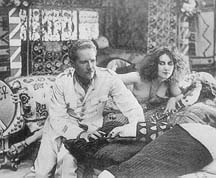
Longhaired youngsters tend to believe that the aristocratic life is dissipated, eccentric and decadent and although that usual thinking is almost true, this German count finds life very hard, especially when it comes to combining his love of silents and his fondness for drinking. Such complications!
However, sometimes, among the nitrates settled at the Schloss cellar, a superb silent film comes along that gives the chance for this German count to enjoy, finally and the same time, both his beloved hobbies. One such film is “L’Atlantide”, directed by Herr Jacques Feyder ( the perfect reason to enjoy this silent film ). The film tells the story of two French officers, Captain Morhange ( Herr Jean Angelo ) and Lieutenant Saint-Avit ( Herr Georges Melchior ) who get lost in the Sahara desert ( giving this German count the excuse to drink cocktails nonstop because of the dry setting ) and become the prisoners of the mysterious Queen of Atlantis, Dame Antinea ( Dame Stacia Napierkowska ).
This excellent film, directed by one of the most important silent French directors of his time, is full of mystery, comradeship, unrequited loves and jealousies, not to mention that it is a superb adventure film based on the successful novel by Herr Pierre Benoît and mixes all the ingredients successfully.
The story of the film is related as a long flashback ( as long as the oeuvre, almost 3 hours but the audience doesn't notice ) in which strange happenings and mysterious adventures will be suffered by our heroes in the desert ( Herr Feyder filmed in the Sahara desert itself, an audacious move for those early times ) and in the mysterious Atlantis.
Besides the enthralling Sahara scenery ( a main character in itself ) the film also had lavish settings that give the kingdom of Atlantis a fascinating and at the same time a dangerous feeling . And of course there is the cruel Queen Antinea, a kind of mantis whose charms no man can resist ( well, Herr Morhange seems more interested in his companion that in the exuberant Queen… ).
Some compelling moments, such as the death of Captain Morhange and the inevitable disappearance of the city of Gôa, give the film a lyrical and disturbing atmosphere of misfortune that fits perfectly. “L’Atlantide” emerges as a film about earthly but lost paradises, especially with that evocative and magnificent scene that closes the film.
And now, if you'll allow me, I must temporarily take my leave because this German Count must fall into the arms of that wicked Queen.
Herr Graf Ferdinand Von Galitzien
-/-
Entre los jóvenes melenudos se tiene la creencia de que la vida aristocrática es disipada, excéntrica y decadente, pero aunque dichas creencias suelen ser bastante reales, este conde germánico lleva una vida repleta de dificultades, como cuando intenta combinar su amor por el cine silente con su querencia por la bebida, ¡ah, que vida mas dura!.
De todas formas, a veces, entre los nitratos ubicados en el sótano del Schloss, surge un excelente filme silente que ofrece la oportunidad a éste Conde germánico de poder disfrutar conjuntamente y al mismo tiempo, esas aficiones anteriormente citadas; el filme que ofreció tal oportunidad fue “L’Atlantide”, obra dirigida por Herr Jacques Feyder, una más que perfecta excusa para disfrutar de esta obra silente.
La película narra la historia de dos oficiales franceses, el capitán Morhange ( Herr Jean Angelo ) y el teniente Saint-Avit ( Herr Georges Melchior ) los cuales se pierden en el desierto del Sáhara ( siendo esos secos escenarios, la excusa perfecta para éste Conde germánico, para beber consecutivos cocktails durante la proyección ); siendo posteriormente hechos prisioneros, por la misteriosa reina de la Atlántida, Dame Antinea ( Dame Stacia Napierkowska ).
Esa excelente obra dirigida por uno de los más importantes directores franceses de la época, está repleta de misterio, camaradería, amores no correspondidos y celos, además de ser un magnífico filme aventuras el cual está basado en la exitosa novela escrita por Herr Pierre Benoît, en la cual se mezclan todos esos ingredientes de forma más que satisfactoria.
La historia del filme está expuesta en un largo flashback ( casi tan largo como el filme en sí, de una duración cercana a las tres horas y que pasa imperceptible para el público ) durante el cual extraños sucesos y misteriosas aventuras serán vividas por nuestros héroes en el desierto ( Herr Feyder rodó la película en el mismísimo desierto del Sáhara, todo un atrevimiento para la época ) y posteriormente en la inquietante Atlántida.
Además de los cautivadores escenarios desérticos ( todo un personaje principal en el filme ) la obra también dispone de lujosos decorados que consiguen dotar al reino de la Atlántida, de un aspecto fascinante y al mismo tiempo peligroso, sin olvidarnos de que allí habita la cruel reina Antinea, una especie de mantis a cuyos encantos ningún hombre puede resistirse, aunque parece ser que en esta ocasión Herr Morhange está más interesado en su compañero de fatigas que en tan exuberante reina…
Fascinantes secuencias como la muerte del capitán Morhange o la inevitable desaparición de la ciudad de Gôa, otorgan al filme momentos de gran belleza además de una atmósfera perturbadora e inquietante que encajan perfectamente, pudiendo definir “L’Atlantide”, por todo lo anteriormente citado, como un filme acerca de paraísos perdidos tal y como refleja la evocadora y soberbia última escena del filme.
Y ahora si me lo permiten les tengo que dejar momentáneamente, pues este Conde germánico tiene que caer en los brazos de esa malvada reina.
Herr Graf Ferdinand Von Galitzien
Dienstag, November 06, 2007
"La Dame De Monsoreau" (1923) By René Le Somptier

It is well-known that French love matters make for a very complicated subject to understand, especially for a German and conservative aristocrat. Having this in mind , it was a hard task to watch in the Schloss theatre a film like “La Dame De Monsoreau”, ( directed by Herr René Le Somptier, based in a novel by Herr Alexandre Dumas Sr.) which goes into specific details about French love affairs in the time of Henri III, a French king, natürlich!. The story concerns Dame Diane de Méridor who is kidnapped by the Count of Monsoreau who finally marries her ( A strange French marriage custom, this, very different from the usual Teutonic reasons for marriage, as the marriage of convenience or companionate marriage.. ). However, Dame Diane loves another count, the count of Bussy ( what’s the point of this aristocratic loving reiteration? ), not to mention that the King himself and a Duke, d’Anjou , have different interests in Dame Diane and her circumstances.
This French show of aristocratic love matters was directed by Herr René Le Somptier, Frenchman director with a special likeness for romanticism and aestheticism in his early work as exemplified by this beautiful film. This is an artistic production filmed in the surroundings of the château ( a strange and French name for a Schloss, certainly… ) d’Urville-Nacqueville. The set design is superb and there are gorgeous costumes too, not to mention that this oeuvre was released in a hand tinted version, the one that survives till today, released two years after its black and white prémiere.
So in its global concept, “La Dame de Monsoreau” could be considered as a “film d’Art”, a film with historical background and careful production. Alas, in this case it is thrilling to look at but static, like a series of illustrations. The actors don't help to raise the interest of the film thanks to their stilted performances including Dame Geneviève Félix as Diane de Méridor. The result is a polished but soulless French film.
And now, if you'll allow me, I must temporarily take my leave because this German Count must resume his conservative Teutonic love matters.
Herr Graf Ferdinand Von Galitzien
-/-
Es de sobra conocido que las cuestiones amorosas afrancesadas son temas muy complicados para ser entendidos y más especialmente para un conservador y germano aristócrata, por lo tanto y teniendo esto en cuenta, fue una tarea bastante difícil el asistir en el teatro del Schloss a la proyección de la obra “La Dame De Monsoreau”, filme dirigido por Herr René Le Somptier, la cual está basada en una novela de Herr Alexandre Dumas padre, pues dicha obra refleja de forma detallada, esos asuntos amorosos afrancesados en tiempos de Enrique III, un rey también francés éste, natürlich!.
La obra se centra en Dame Diane de Méridor la cual es secuestrada por el conde de Monsoreau para finalmente esposarse con la susodicha ( otro extraño hábito afrancesado de casamiento, muy diferente de los habituales entre teutónicos, como pueda ser el matrimonio de conveniencia o los matrimonios amañados… ); pero Dame Diane ama a otro conde, el conde de Bussy ( ¿a qué viene esta reiteración amorosa aristocrática? ), aunque también el mismísimo rey y un duque, D’Anjou, también mantienen diferentes intereses hacia Dame Diane y sus circunstancias.
El director de este catálogo de los asuntos amorosos de los aristócratas franceses, Herr René Le Somptier, tenía cierta predilección por el romanticismo y cierto esteticismo, en sus primerizos filmes, tal y como queda reflejado en este bella ( en su acepción más literal ) obra; se trata entonces de una producción artística filmada en las cercanías del château ( extraña forma francesa para denominar a todo un Schloss, ciertamente… ) d’Urville-Nacqueville; lógicamente la dirección artística del filme es excelente, además de sus esplendoroso vestuario, sin olvidarse también que esta obra fue distribuida en una versión coloreada a mano ( la que ha sobrevivido hasta nuestros días ), dos años después de su estreno original en blanco y negro.
Por lo tanto y globalmente, “La Dame De Monsoreau” puede ser considerado como un “film d’Art”, una de esos filmes con trasfondo histórico y cuidada producción artística, aunque lamentablemente en este caso, se trate de un filme tan emocionante como el contemplar estáticas ilustraciones, no ayudando tampoco a elevar el interés del mismo las estiradas actuaciones de sus actores, incluyendo a Dame Geneviève Félix como Diane de Méridor, teniendo como resultado final un cuidado aunque monótono filme afrancesado.
Y ahora si me lo permiten les tengo que dejar momentáneamente, pues este Conde germánico tiene que retomar sus conservadores asuntos amorosos teutónicos.
Herr Graf Ferdinand Von Galitzien
Samstag, November 03, 2007
Warning!

In the never neverland of cyberspace, you can be whoever you want to be but impersonating someone else is another matter entirely. Identity theft is still theft, even on the Internet. That's why I was shocked to see some coarse commoner passing himself off as Graf Ferdinand Von Galitzien on “YouTube”.
This fake uses a small v for the “von” but otherwise tries to imitate the inimitable Graf himself. Surely though people must realize that the real Graf Ferdinand would never lower himself to squinting at the tiny blurred images on Youtube when he has the magnificent schloss theater at his disposal. This fake count apparently has not posted any films or comments thus far but if he does, please be aware that this impostor has no connection to Graf Ferdinand Von Galitzien who, with his aristocratic comments on the silent era, has entertained and informed so many on alt.movies.silent and other newsgroups.
Accept no substitutes! Let this “von” fellow return to the stables where he belongs, perhaps to write comments for “Youtube” on kung fu movies and spaghetti westerns. Leave the magnificent silent era to those with breeding enough to appreciate it.
Herr Graf Ferdinand Von Galitzien
-/-
En el mundo imaginario del ciberespacio, ustedes pueden pretender ser quienes quieran, pero hacerse pasar por alguien en particular ya es asunto de otro costal; el robo de personalidad sigue siendo un delito incluso en Internet y por dicho motivo éste conde germánico se ha escandalizado al comprobar como un vulgar plebeyo se hace pasar por este Herr Graf Ferdinand Von Galitzien en “YouTube”.
Dicho farsante emplea una v minúscula para el gentilicio “von” pero aún así persiste en su intento de imitar el inimitable estilo personal de éste Herr Graf; obviamente muchos melenudos se darán cuenta de que el auténtico Herr Graf Ferdinand Von Galitzien jamás se rebajaría a mirar de soslayo esas pequeñas y borrosas imagines de “YouTube”, al disponer en su magnífico Schloss de todo un auténtico teatro para sus veladas cinematográficas y aunque en principio el farsante de éste Conde, aparentemente no ha publicado comentarios acerca de ningún filme en particular, en caso de que así lo hiciese, deberían ustedes tener en cuenta que dicho impostor no tiene ninguna relación con éste Herr Graf Ferdinand Von Galitzien, cuyos genuinos comentarios acerca del cinema silente, intentan entretener e informar a melenudos en foros tales como “alt.movies.silent” y otros grupos de noticias.
¡No acepten imitaciones!, dejen que ese “von” de pacotilla vuelva al establo al cual pertenece, seguramente para escribir comentarios acerca de filmes de artes marciales y películas del oeste de procedencia itálica, dejando que la magnífica época del cinema silente sea para todos aquellos con suficiente pedigrí y educación necesaria ésta, para su total disfrute.
Herr Graf Ferdinand Von Galitzien
This fake uses a small v for the “von” but otherwise tries to imitate the inimitable Graf himself. Surely though people must realize that the real Graf Ferdinand would never lower himself to squinting at the tiny blurred images on Youtube when he has the magnificent schloss theater at his disposal. This fake count apparently has not posted any films or comments thus far but if he does, please be aware that this impostor has no connection to Graf Ferdinand Von Galitzien who, with his aristocratic comments on the silent era, has entertained and informed so many on alt.movies.silent and other newsgroups.
Accept no substitutes! Let this “von” fellow return to the stables where he belongs, perhaps to write comments for “Youtube” on kung fu movies and spaghetti westerns. Leave the magnificent silent era to those with breeding enough to appreciate it.
Herr Graf Ferdinand Von Galitzien
-/-
En el mundo imaginario del ciberespacio, ustedes pueden pretender ser quienes quieran, pero hacerse pasar por alguien en particular ya es asunto de otro costal; el robo de personalidad sigue siendo un delito incluso en Internet y por dicho motivo éste conde germánico se ha escandalizado al comprobar como un vulgar plebeyo se hace pasar por este Herr Graf Ferdinand Von Galitzien en “YouTube”.
Dicho farsante emplea una v minúscula para el gentilicio “von” pero aún así persiste en su intento de imitar el inimitable estilo personal de éste Herr Graf; obviamente muchos melenudos se darán cuenta de que el auténtico Herr Graf Ferdinand Von Galitzien jamás se rebajaría a mirar de soslayo esas pequeñas y borrosas imagines de “YouTube”, al disponer en su magnífico Schloss de todo un auténtico teatro para sus veladas cinematográficas y aunque en principio el farsante de éste Conde, aparentemente no ha publicado comentarios acerca de ningún filme en particular, en caso de que así lo hiciese, deberían ustedes tener en cuenta que dicho impostor no tiene ninguna relación con éste Herr Graf Ferdinand Von Galitzien, cuyos genuinos comentarios acerca del cinema silente, intentan entretener e informar a melenudos en foros tales como “alt.movies.silent” y otros grupos de noticias.
¡No acepten imitaciones!, dejen que ese “von” de pacotilla vuelva al establo al cual pertenece, seguramente para escribir comentarios acerca de filmes de artes marciales y películas del oeste de procedencia itálica, dejando que la magnífica época del cinema silente sea para todos aquellos con suficiente pedigrí y educación necesaria ésta, para su total disfrute.
Herr Graf Ferdinand Von Galitzien
Samstag, Oktober 27, 2007
"Le Chant De L'Amour Triomphant" (1923) By Viktor Tourjansky

Fabio, Muzio and Valeria are three youngsters living in the Italian area of Ferrara; in that place there is also a duke of Ferrara… natürlich!, who likes to celebrate balls…, natürlich!, for his aristocratic countrymen.
At one of these balls, Fabio and Muzzio will both fall desperately in love with the Valeria beauty but in order to preserve their friendship, they make an oath: the loser in this competition for her love will accept her choice without complaint.
Finally and with the help of Valeria’s mother ( actually, it will be Valeria’s mother who will choose her daughter's fiancé…a busybody Italian mother, obviously ), Fabio will be selected and accepting the pact both friends made, Muzzio will go beyond the sea, actually to India, but when he returns four years later, problems will happen in the Ferrara region.
“ Le Chant De L’Amour Triomphant” is a film directed by the Russian émigré Herr Viktor Tourjansky and was based on a short story by the (also Russian) writer Herr Ivan Turgenev, Herr Tourjansky was fond of adventure and action films in his early silent period which can be verified by this film although this time he skilfully combines the adventure with drama and a classical recreation of sixteenth century Italy, alternating both genres and different film narratives in an excellent and balanced way. So in this way, we are watching a classic adventure and exotic oeuvre in which neither of those film genres dominates the other, not an easy formula to achieve successfully but Herr Tourjansky emerges triumphant in his efforts.
The result is two different and imaginative film narratives, intertwined and interplayed; when the action occurs in Ferrara, we can see gorgeous courts, grandiloquent scenes with everything filmed and shown in a classical and conservative way but when Muzzio appears, the placidity that the happy couple was enjoying will be threatened and the menacing whirlpool that develops is shown by very interesting technical aspects ( a moving camera, many travelling shots or multiexposed images ). Especially striking is the beautiful scene where Muzzio is playing on the violin the song of the triumphant love (“Le Chant de L’Amour Triomphant” ) a paradigm of the perfect mixture of such technical and lyrical merits.
And now, if you'll allow me, I must temporarily take my leave because this German Count must come back from Italy make his triumphal return to the Schloss .
Herr Graf Ferdinand Von Galitzien
-/-
Fabio, Muzzio y Valeria, son tres jovenzuelos que viven en la región italiana de Ferrara; en dicho lugar también se halla un duque, de Ferrara, natürlich!, el cual gusta celebrar bailes, natürlich!, para sus paisanos aristócratas.
En uno de esos bailes, Fabio y Muzzio se enamoran locamente de la belleza de Valeria y para preservar su amistad, deciden hacerse un juramento entre ambos: el perdedor en la competición por el amor de Valeria, acatará, sin opción a ninguna queja, la decisión que tome la susodicha.
Finalmente y con la ayuda de la madre de Valeria ( para ser exactos, será la madre de Valeria quien elija el novio de su hija, una entrometida madre italiana, ciertamente… ), Fabio será el elegido y aceptando el pacto que ambos amigos habían hecho, Muzzio se embarcará hacia tierras remotas, la India más concretamente, pero cuando el susodicho vuelve al hogar cuatro años más tarde, importantes problemas acontecerán en la región de Ferrara.
“Le Chant De L’Amour Triomphant”, filme dirigido por el exiliado ruso Herr Victor Tourjanksy, está basado en un relato corto del también ruso, aunque escritor, Herr Ivan Turgenev; Herr Tourjansky gustaba realizar filmes de aventuras durante su primeriza carrera cinematográfica silente, tal y como se constata en este filme, aunque en esta ocasión el director afrancesado combina de forma eficiente el drama con una clásica recreación de la Italia del siglo XVI, alternando ambos géneros y diferentes narrativas cinematográficas de una equilibrada y excelente forma, consiguiendo así un filme de aventuras de corte clásico y exótico contenido, en donde ninguno de dichos géneros prevalece el uno sobre el otro, una fórmula nada fácil para salir airoso del intento, aunque finalmente Herr Tourjansky triunfa en su esfuerzo por conseguir sus propósitos cinematográficos.
El resultado son dos diferentes e imaginativas narraciones cinematográficas que se entrelazan e interactúan entre sí; cuando la acción acontece en Ferrara, el espectador puede ver fastuosas cortes y grandilocuentes escenarios, filmado todo ello de una forma convencional, conservadora incluso y acorde con la historia, pero cuando Muzzio aparece en escena, la placidez que la feliz pareja venía disfrutando, se verá amenazada, una vorágine de acontecimientos que se va desarrollando de una forma muy interesante en cuando a aspectos técnicos ( una cámara nada estática, variados travellings o imágenes sobreimpresionadas en la pantalla ), tal y como acontece durante la bella escena en la cual Muzzio interpreta al violín el canto del amor triunfante ( “Le Chant De L’Amour Triomphant” ), resultando ser ésta escena, el paradigma de este filme, esto es, una perfecta mezcla de habilidades técnicas y méritos narrativos.
Y ahora si me lo permiten les tengo que dejar momentáneamente, pues este Conde germánico tiene que volver desde Italia a su Schloss de forma triunfante.
Herr Graf Ferdinand Von Galitzien
Freitag, Oktober 19, 2007
"Il Quadro Di Osvaldo Mars" (1921) By Guido Brignone
“Il Quadro Di Osvaldo Mars” is a very interesting and remarkable film directed by Herr Guido Brignone, an Italian director with a long and extensive career. The star is Dame Mercedes Brignone, an Italian diva of the early days; that is to say, one of those actresses with a hieratic glance and a special likeness for black veils.
The film depicts the story of the Countess of San Giusto, an idle woman (standard for aristocrats, even the Italian ones ) who likes to celebrate soirées at home. She is, however, not happy at being used as the model for a portrait of Salome made by the artist Osvaldo Mars . Evil rumors in aristocratic Italian circles whisper the Countess has had an affair with Herr Mars but she not actually met him personally. Distressed at this rumor, the Countess decides to pay a visit to Herr Mars who later will be found dead and our heroine is subsequently accused of his murder.
The film is a mixture of early “giallo” ( Italian police film genre ) and melodrama ( the quintessential Italian film genre of those early days ) that develops the story in a very remarkable way. This German count was impressed with the film continuity, excellent and very modern, and which includes such technical aspects as camera tricks, animated scenes, flashbacks ( many of them, probably repetitive at the end of the story when the murder mystery is being solved ) and close-ups that emphasize and dramatize the story “in crescendo”. There's also a final twist.
The set design is also remarkable ( not to mention the evocative external shots ) and Herr Anchise Brizzi's cinematography includes delicate “chiaroscuro” shots which go well with the mystery. The different atmospheres depicted in the film are achieved, on the whole, very well by Herr Brignone. It's an excellent oeuvre with great artistic interest and highly superior to many Italian film productions of those early days.
And now, if you'll allow me, I must temporarily take my leave because this German Count must be portrayed as a Prussian on horseback.
Herr Graf Ferdinand Von Galitzien
-/-
“Il Quadro Di Osvaldo Mars” es un destacable e interesantísimo filme dirigido por Herr Guido Brignone, director italiano éste poseedor de una extensa carrera cinematográfica; siendo la estrella de dicha obra, Dame Mercedes Brignone, una de esas divas italianas de tiempos pasados, esto es, una de esas actrices de mirada hierática y con cierta predilección por los velos negros.
El filme narra la historia de la condesa de San Giusto, un señorita ociosa ( algo habitual entre los aristócratas, incluso los italianos ) que gusta celebrar “soirées” en su mansión y la cual últimamente no está nada contenta con el hecho de haber sido usada como modelo para un lienzo del artista Osvaldo Mars, en el cual ha sido retratada como Salomé; malvados rumores comienzan a circular por esos círculos aristocráticos italianos, comentando que la condesa ha tenido un “affaire” con Herr Mars, aunque nuestra heroína no ha tenido el placer de conocerlo personalmente; para acallar tan malvados rumores, la condesa decide visitar a Herr Mars; cuando posteriormente es encontrado muerto el pintor, nuestra heroína se convierte en la principal sospechosa de dicho asesinato.
El filme es una mezcla de primitivo “giallo” ( género policial italiano ) y melodrama ( paradigmático género italiano de esos tiempos pioneros silentes ) en el cual la intrigante historia se va desarrollando de una forma ciertamente destacable; este conde germánico quedó impresionado con la excelente y moderna continuidad de la obra, en la cual se incluyen tan interesantes aspectos técnicos como trucos de cámara, escenas animadas, “flashbacks” ( muchos de ellos, probablemente, demasiados repetitivos hacia el final de la obra, cuando se esclarece el misterioso asesinato ) y primeros planos que enfatizan y dramatizan una historia que se va desarrollando “in crescendo”, además de poseer el filme una sorpresa final.
Los decorados del filmes son igualmente excepcionales ( sin olvidarse de los evocadores escenarios exteriores ) además del delicado “chiaroscuro”( perfecto para los variados ambientes y misteriosos escenarios del filme ) de la fotografía a cargo de Herr Anchise Brizzi, consiguiendo finalmente, Herr Brignone y en su conjunto, una excelente obra de gran interés artístico y superior a muchas de las producciones pioneras silentes italianas de la época.
Y ahora si me permiten les tengo que dejar momentáneamente, pues este Conde germánico tiene que ser retratado como Prusiano a caballo.
Herr Graf Ferdinand Von Galitzien
Sonntag, Oktober 14, 2007
"Heimkehr" (1928) By Joe May
 The first film chosen to inaugurate the Schloss silent autumn-winter season, is the revisiting of Herr Joe May’s “Heimkehr”. The title means “Homecoming” in the longhaired language. So, for this reason, it was the perfect choice in order to express what this German aristocrat felt once Günthell extinguished the spirit lamp (once his master drank the spirits) of the Schloss theatre and another silent show began after so much time.
“Heimkehr” it is a superb masterpiece, a beautiful and bitter film that depicts a love triangle during the World War I post-war period. It’s an oeuvre that this German count likes particularly since he saw it during the Weimar era for the first time. In the film, Herr May’s skilfulness and craftsmanship are showed superbly in many technical aspects. These include the developing of the film’s love story that shows the prompt and personal consequences of the disasters of war that the main characters suffer. They are played by three very important German silent actors of that time, Herr Lars Hanson (Richard), Dame Dita Parlo ( her first film )(Anna) und Herr Gustav Fröhlich (Karl).
Remarkable use of camerawork is used in order to depict time passing inexorably and in different ways for their two main characters. Flashbacks and shots with combined images or in real time are incorporated with parallel stories that join together in a dramatic manner. Varying different sceneries, Hamburg and Siberia, are shown in a remarkable way with varied nuances. For example, the thrilling urban life of Hamburg is combined with the Anna’s ordinary life in her neighbourhood (an excellent example of those Weimar films where the hard daily nature are shown without false embellishments). Contrasting are the cold and deserted Siberian sceneries combined with the prisoners’ hard labour in the mine. They match perfectly and dramatically for a story in where human basic impulses (those that this German aristocrat lacks) such as instinct for survival, sexual desire, becomes a major theme in this film.
Unfortunately it seems that this film only has survived in a very poor condition and this German count wouldn’t mind to donate his fat heiress’ fortunes in order to restore and clean up this nitrate. Then in would be possible to appreciate the full-length original quality of the magnificence of this film.
And now, if you'll allow me, I must temporarily take my leave because this German Count must to whip again his servants now that it’s very homely here.
Herr Graf Ferdinand Von Galitzien
-/-
El primer filme elegido para la inauguración de la temporada silente de otoño-invierno en el Schloss, fue la revisitación del filme dirigido por Herr Joe May, “Heimkehr; el título de dicha obra viene a significar en el lenguaje melenudo, “vuelta al hogar”, por lo que como pueden comprobar, se trataba del filme perfecto a la hora de expresar lo que sintió este aristócrata germánico, una vez que Günthell apagó la lámpara de alcohol de la sala de proyecciones del Schloss ( una vez bebido el alcohol por su amo ) y una nueva sesión silente comenzaba después de tan largo tiempo.
“Heimkehr” es una maravillosa obra maestra, un amargo y bello filme en el cual se nos narra un triángulo amoroso que trascurre tras la I guerra mundial; es este un filme que éste conde germánico gusta especialmente desde que lo contempló por primera vez durante los tiempos de la República de Weimar.
En el filme, la habilidad y artesanía de Herr May se muestra de forma excepcional en numerosos aspectos técnicos, destacando también el desarrollo de la historia de amor de sus protagonistas y las inmediatas y personal consecuencias de los desastres de la guerra que dichos personajes sufren, personajes interpretados por tres importantes actores silentes germánicos del momento, Herr Lars Hanson ( Richard ), Dame Dita Parlo ( es éste su primer filme ) ( Anna ) und Herr Gustav Fröhlich (Karl ).
Hay que destacar el uso de la cámara a la hora de reflejar el inexorable paso del tiempo y sus variadas consecuencias para los dos principales personajes de la obra, haciendo uso de “flashbacks” o planos con diferentes imágenes sobreexpuestas, además de secuencias que se van desarrollando de forma paralela y que confluyen finalmente de una forma dramática.
Se intercalan diferentes escenarios, Hamburgo y Siberia, los cuales aportan de forma destacable diferentes matices a la historia, como pueda ser, por ejemplo, la excitante vida urbana de Hamburgo y la anodina existencia de Anna en su vecindario ( una buena muestra de esos filmes realizados durante la época de Weimar, en donde la dura vida diaria es mostrada sin falsos adornos ), o el contraste de las fríos y áridos escenarios siberianos con la dura vida minera de los prisioneros de guerra, perfectas combinaciones dramáticas para una historia en la cual los más primarios sentimientos humanos ( esos que éste conde germánico carece ), tales como el instinto de supervivencia o los deseos sexuales, son grandes temas en este filme.
Lamentablemente parece ser que este filme ha sobrevivido hasta nuestros días en unas condiciones lamentables, por lo que a este conde germánico no le importaría donar las fortunas de sus gordas herederas y así restaurar y adecentar este nitrato, para que de esta forma fuese posible apreciar en todo su esplendor la gran calidad de este filme.
Y ahora si me lo permiten les tengo que dejar momentáneamente, pues este Conde germánico tiene que volver a dar latigazos a sus sirvientes y así sentirse de nuevo como en casa.
Herr Graf Ferdinand Von Galitzien
Montag, Oktober 08, 2007
Aristocratic Réentration

In attention to Dame Frederica and all those Americans who are not bilingual (it is strange… don't you have and use two eyes, two ears so why not two tongues, then??... ) this German Count gladly offers you an English version of his first post after the terrible summertime season and to avoid misunderstandings as happened with the illustrious President of Daughters Of Naldi, who thought that this German aristocrat was talking (in his first autumn post) about cruciform vegetables. This is absolute nonsense because is well known that the German aristocracy prefers choucrutte before greenness, not to mention that in Transylvania the Romanian aristocracy are allergic to that ordinary food with such a strange shape…
Ah, mein liebers!... how many time has passed since the last aristocrat communiqué!... an unforgivable delay that was due to the tightly packed ( as a teutonic heiress' girdle ) Herr Von’s agenda. The summer full of insignificant ceremonies that prolonged the ordinary summer season until the coming of the cold and cosy autumn, that beautiful season of returns and reunions with varied “affaires”, among them the glorious Schloss silent shows, those archaeological performances that this German count will resume pretty soon for your pleasure or your pain.
And in order to begin this new autumn-winter silent season, this Herr Graf suggests to you an interesting silent DVD sporting modern and almond-shaped eyes, because in far away Japan, a longhaired enterprise by the hieroglyphic name of “Digital Meme”, has edited two discs that included youthful works of filmmakers as important as Herr Mizoguchi,. The restoration is accompanied by the comments ( or not ) of Herr Benshi, that nice narrator who likes so much to bother the audience with his incomprehensible comments that the West audience can’t understand without a knowledge of exotic languages.
So, waste your scarce wages, (now that you have also had resume your frantic and wretched work life) buying those Eastern silent editions, here for our pleasure thanks to capitalism. Herr Graf will take advantage of this proletarian solidarity, as a teutonic vulture by replacing his blurry copies of those films for this new bright and immaculate longhaired silent edition.
And now, if you'll allow me, I must temporarily take my leave because this German Count must reopen and tidy up the decadent Schloss theatre.
Herr Graf Ferdinand Von Galitzien
Abonnieren
Posts (Atom)
