Sonntag, August 12, 2007

Ordinary Summertime

As probably those longhaired silent film fans around the ordinary world (those who usually are interested in this German count's comments on silents and other aristocratic subjects), have noticed that during the last weeks no silent films have been shown at the Schloss theatre. The reason for this terrible fact is another and even more terrible one: this Herr Graf is enjoying the decadent and leisure time so characteristic of the aristocratic people in the summertime; that is to say, sleeping at the Bayreuth Opera festival, drinking non-stop cocktails and flirting with fat Teutonic heiresses, and everything at the same time in the same place...

It will be in September when this Herr Graf comments will appear again in his modern diary but don't take this definitely because, as probably by now you already know, a German aristocrat likes to confound the ordinary people.

Herr Graf Ferdinand Von Galitzien

Mittwoch, Juli 25, 2007

Von Galitzien's Silent Day


É tempo de festa xermánica, tempo de reinvindicación silente ( é mesmo tempo de apropiarse dos berros e balbordos melenudos por parte das clases diletantes aristocráticas... ), por iso mesmo, cando as calores estiváis e estes dias feriados comezan a aparecer e mesmo a ser sofridas alén do aristocrático Schloss, é tempo de que este Herr Graf percure eses destinos xeados, ignotos e tranquilos ( dos que terán vostedes boa conta ) e a tono coas suas gordas e ricas herdeiras xermánicas, unha perfecta desculpa, ésta, pra alongar o tempo de folgamento anual aristocrático asemade prolongar o pracer de partillar con todos os vostedes nun futuro teutón, eses filmes silentes que tanto nos asombran, maravillan e surprenden despois de transcorridos máis de 100 anos.

Herr Graf Ferdinand Von Galitzien

Dienstag, Juli 17, 2007

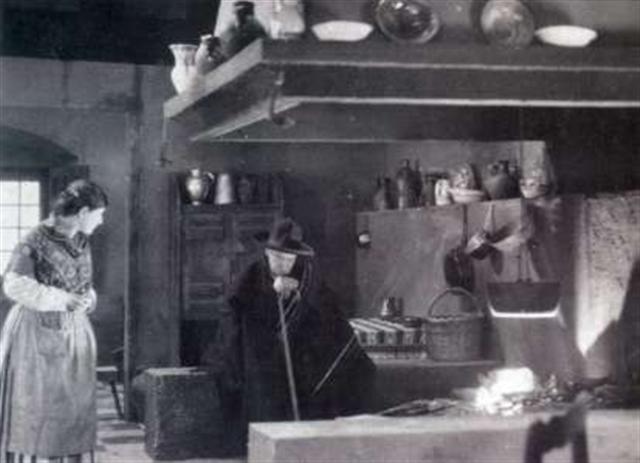
"Rasputins Liebesabenteuer" (1928) By Martin Berger


The aristocracy has had to suffer with various problems and menaces from the early silent age…even from remote, suspicious countries like Russia, a land that sometime ago, besides having Cossacks and vodka (synonymous words) also had genuine and local aristocrats called Tsars (a hard to believe fact, certainly).

The Tsar and especially the Tsarina, as it happened with their European relatives, had bizarre amusements in order to bear their boring and luxurious lives (the summon of a genuine aristocrat). One of them was a fondness for the greedy quack called Rasputin. That’s what the film “Rasputins Liebesabenteuer”, directed by Herr Martin Berger, a German director with a leftist background, addresses.

In spite of a German film production depicting Russian facts (a risky business, certainly) many technical and stylish film aspect of the oeuvre has cross-influences with Russian films. They include fast editing (the dance scene) and close-ups that scrutinizes those rough Bolshevist faces. These remind this German count of the superb and Russian silent films of that era.

Many important German actors of those silent times - including the mysterious Herr Max Schreck perform the film. Especially remarkable is the Russian actor Herr Nikolai Malikoff who plays Rasputin in a very convincing way (drunkenness including). Although finally and in spite of being formally a fine and carefully made film production, it lacks interest, emotion and needs more depth. Examples from this German count are in the historical background and life in the Russian court. Depth is lacking for such important historical characters; the film does not study them enough psychologically in order to know the intrigues and Russian ambitions that, in turn, would finally enrich the story and the film as a whole.

And now, if you'll allow me, I must temporarily take my leave because this German Count must ask for the Tsar whom this aristocrat has not seen in a long, long time.

Herr Graf Ferdinand Von Galitzien


-/-


La aristocracia ha tenido que soportar problemas y amenazas varias desde tiempos inmemoriales e incluso desde remotos, sospechosos países como Rusia, una tierra en la cual hace cierto tiempo, además de cosacos y vodka ( palabras sinónimas, ciertamente ) habitaban en dichas tierras genuinos y locales aristócratas, conocidos allí como Zares ( un hecho increíble, bien es cierto ).

El Zar y especialmente la Zarina, como le acontecían a sus familiares europeos, se caracterizaban por sus extraños divertimentos con los cuales sobrellevaban sus aburridas y lujosas vidas ( el summun de un auténtico aristócrata ) y una de dichas excentricidades fue el aprecio que sentían hacia un curandero avaricioso de nombre Rasputín, hechos éstos que, precisamente, nos narra el filme “Rasputins Liebesabenteuer”, un filme dirigido por Herr Martin Berger, un director germánico con cierto bagaje izquierdista.

A pesar de ser una producción germánica en la cual se reflejan acontecimientos rusos ( todo un hecho arriesgado, ciertamente ) numerosos aspectos tanto técnicos como de estilo tienen, para este Conde germánico, influencias notorias de las obras silentes rusas de la época, tales como ese montaje acelerado tan peculiar ( la escena de baile ) o esos primeros planos que escrutan las rudas caras bolcheviques.

Varios actores silentes germánicos de renombre, incluyendo al misterioso Herr Max Schreck, protagonizan el filme y especialmente destacable es la interpretación del actor ruso Herr Nikolai Malikoff en su papel de Rasputin, el cual es interpretado de una forma muy convincente ( borracheras incluídas ).
A pesar de ser una producción muy cuidada en aspectos técnicos y formales, el filme padece de cierta falta de interés, emoción, necesitando en muchos la obra, de momentos con más profundidad narrativa, destacando este Conde germánico dichas carencias sobretodo en los aspectos históricos del filme o el ambiente de la corte rusa, centrándose en tan importantes personajes históricos, pues evita estudiarlos los suficiente impidiendo conocer el porqué de tantas intrigas y ambiciones rusas en dicha corte, carencias que de ser suplidas, habrían enriquecidos muchísimo la historia y por lo tanto el filme en su conjunto y resultado final.

Y ahora si me lo permiten les tengo que dejar momentáneamente, pues este Conde germánico tiene que preguntar por el Zar al cual éste aristócrata hace mucho, mucho tiempo que no sabe nada de él.

Herr Graf Ferdinand Von Galitzien

Montag, Juli 09, 2007

Ein Gespräch mit Herrn Buchwald


Herr Günter A. Buchwald, einer der bedeutendsten Stummfilmkomponisten Deutschlands, hat kürzlich das Schloss des Herrn Grafen besucht, und ihm in einer dekadenten Soirée einen Einblick in seine Musik gegeben. Am Ende dieser grandiosen Show hat der deutsche Aristokrat nicht die Gelegenheit ausgelassen, mit seinem Landsmann über dessen faszinierende Arbeit zu plaudern.

1) Wie erklären Sie Ihre besondere Beziehung zum Stummfilm, auch im Anbetracht dessen, dass Sie im Alter von 29 Jahren damit begannen, Musik für Stummfilme zu komponieren?

Wahrscheinlich damit:
Ich lernte Musik durch das Hören. (z.B. kannte ich Mendelssohn e-moll Violinkonzert bevor ich es studierte.

Es gab in den 50er Jahren nur einen Sender, den wir hörten, den Südwestfunk. Dieser strahlte alle Arten von Musik aus. Samstag morgens Schlager von Conny Froboess u.a. Ich sang Lieder von Georges Brassens und Edith Piaf bevor ich auch nur eine Idee von „Französische Sprache“ hatte. Der Sonntag Mittag brachte Konzerte, Opern, dann Operetten, dann Jazz...allerdings wurde bei Bebop abgeschaltet. Ebenso hörten wir das Sonntag Nachmittag Märchen

Meine älteren Schwestern spielten Flöte und Klavier. Also spielte ich Klavier lange bevor ich Unterricht hatte.
Meine erste Komposition war die Vertonung des Schrittes eines gehbehinderten Mannes, den ich auf unserer Strasse beobachtet hatte.

Ich habe wohl ein gutes Personen-Augengedächtnis. Ich erkenne Menschen nach 30 Jahren wieder.
Ich erinnere mich, dass ich im Alter von 4 oder 5 Jahren in einem Kasten, der eine Lampe hatte, und in den man einen Streifen legte, Bilder sehen konnte. Drehte man an der Kurbel flog Hans Albers (wie ich heute weiss) als Münchhausen auf einer Kugel durch den Raum.

Eine meiner Tanten war Berufsfotografin. Ich besass eine Agfa-Box, mit der ich mit 6 Jahren begann, (gute) Bilder zu knipsen.
Ich improvisiere Musik in allen Stilen und spielte als Geiger von irischer und ungarischer Volksmusik über Jazz alle „klassischen“ Musikgattungen von Mittelalter bis Ligeti....und liebe alle Musik, solange sie „gut“ ist .

2) Können Sie kurz den Prozeß erläutern, wie eine neue Stummfilmkomposition zustande kommt, und was ist dabei für einen Komponisten das Schönste und vielleicht auch das Schwierigste?

Kompositionen sind meist Aufträge von Filmarchiven, Fernsehanstalten, oder Kulturinstituten, mit Bedingungen z.b. so und so viele Musiker, live aufführbar.

Das Schönste: es redet kein anderer drein. Für einen Tonfilm strich mir ein Regisseur soviel Anteile an der Melodie, dass ich meine Musik nicht wiedererkannte !
Das Schwierigste: nun bin ich aber selbstverantwortlich. Musik kann einerseits dem Bild helfen, es andererseits auch zerstören. Musik und Bild ist wie eine gute Ehe: das Verhältnis zwischen beiden Ebenen muss fliessend sein in der Nähe und in der Ferne. Sind beide stets zu nah, werden bei zu gegenseitigen Sklaven. Sind sie stets zu weit auseinander, geht die Liebe verloren. Sie werden sich zerstören. Meine Metapher für das Vertonen lautet: Die Musik darf nicht lauter sein als das Bild.

3) Für welchen Stummfilm gestaltete sich die Komposition für Sie am schwierigsten? Mit welchem Stummfilmscore sind Sie am meisten zufrieden, und warum?

La Vocation d´André Carel (CH, 1925) gestaltete sich äusserst schwierig aus vielen Gründen: (so geschieht es oft:
In der Nacht, in der ich zu komponieren anfing wurde meine jüngste Tochter Emily geboren !

Die Videokopie kam verspätet. Es blieben nur noch 6 Wochen Zeit für das Abliefern der fertigen Partitur, und dies für 84 Minuten Orchestermusik.
Der Film möchte alles sein: Dokumentarfilm, Komödie, Tragödie, Impressionismus, Expressionismus, Literatur, international, engagiert. Worauf den Fokus legen? Und wenn alles unter einen Hut gebracht werden soll, wie integriert man dies in der Musik ?

Der Film hat, bei alles Ästhetik , formale Schwächen. Das Timing ist unterschiedlich gut gelungen, ebenso die Montage, der Schnitt.
last, but not least: meine Komposition ging von der Bildfrequenz der Videoabtastung aus. Bei der Musikeinspielung musste aber alles ca. 10% schneller gespielt werden. Einige Passagen waren dadurch unspielbar !!

DAS MÄDCHEN SUMIKO („naniga kanojo o sosaseta ka“), damit bin ich sehr zufrieden. Ich schrieb die Musik ebenfalls innerhalb von 6 Wochen; nachts, denn mittags und abends hatte ich schon einen Vertrag für zwei Vorstellungen in einer Zirkusband. Ich schrieb wie in Trance, solange improvisierend zum Film, bis es mir gefiel; und: ich legte all mein Wissen über das Begleiten von Stummfilmen hinein.

4) Gibt es Unterschiede bei der Komposition für Stummfilme aus dem Fernen Osten und der westlichen Welt, oder kommt es auf das jeweilige Genre des Films an?

Japanische Stummfilme sind ungewöhnlich international in ihrem Stil, ihrer Symbolik, auf der Höhe der Zeit, denn die japanischen Regisseure kannten, was weltweit auf dem Markt war. Einige von ihnen hatten in Paris oder Berlin gelebt !

Da, wo sie „typisch japanisch“ sind wirken sie modern in dem Sinne, dass „zeitlos“ erscheinen. Man beachte, dass manche japanische Kaiservilla (in der Nähe von Kyoto) aus dem 16. Jahrhundert Vorbild für das BAUHAUS im 20. Jahrhundert wurde.
Rhythmisch sind sie lebhaft, melodisch lässt sich manche „Debussy´sche Harmonik“ verwenden. Aber da berühren sich eben die Welten. KURUTTA IPEIJI, ein Meisterwerk des Surrealistischen Films von Kinugasa, kann mit modernsten Klängen leben, aufleben, verstanden werden.

5) Als Experte für den japanischen Stummfilm und jetzt speziell zu Shigeyoshi Suzuki’s “Nani Ga Kanojo O So Saseta Ka”, zu dem Sie die Musik beigetragen haben, und der dieses Jahr auf DVD erscheinen soll: Bedeutete es für Sie als Komponisten ein Handicap, dass der Film nur unvollständig erhalten ist, vor allem in Bezug auf den Rhythmus des Films und seine Höhepunkte?.

So kurios es klingen mag:
Es war eine grosse Herausforderung, die fehlenden Teile, erzählt durch Zwischentitel, programmmusikalisch in aller Kürze anzudeuten.
Das Fehlen des Bildes zu Anfang und am Schluss gibt aber der Musik eine grosse Chance, quasi als Ouvertüre und Finale zu agieren, so dass die Unvollständigkeit des Bildes von mir nie als Mangel empfunden wurde. Auf den Rhythmus des Filmes hat das Fehlen keinen Einfluss, ausser – vielleicht – dass es die Erzählung strafft.

6) Wie beurteilen Sie die Bedeutung des Stummfilms in der heutigen Zeit, auch hinsichtlich öffentlicher Aufführungen. Können Sie einzelne Stummfilmsfestivals empfehlen?

An den Stummfilmen können alle Regisseure und, die die es werden wollen, nur lernen: eine Geschichte in Bildern erzählen, den Dialog auf das wesentliche beschränken. F.W. Murnau kommt in seinem Film „Der Letzte Mann“ mit einem (!) Zwischentitel aus !
Film als Ereignis, Ort der Begegnung und des Gesprächs, des Neuentdeckens eines Filmes, weil er beim zweiten oder dritten Aufführen, mit einer anderen Musik zumal, völlig neue Sichtweisen eröffnen kann.
Musik – live gespielt – gibt dem Film einen Hauch von realem Atem. Das ist keine Konserve, eingelegt Ware. Der Raum resoniert ( Resonanz, dann Räsonanz), regt an, humanisiert.

FESTIVALS:

BONNER SOMMERKINO (immer im August, open air) mit, in der Regel, immer den besten zugänglichen Kopien, sorgfältig gewählter Filmgeschwindigkeit, beste Stimmung unter den meist 1000 Zuschauern, 20 Filme an 10 Sommer- abenden. Wird ebenso, mit kleinerem Programm, gespielt im FILMPODIUM ZÜRICH (Mitte August), und im

FILMMUSEUM MÜNCHEN (Ende August/Anfang September

GIORNATE DEL CINEMA MUTO. Pordenone/Italien (immer zweite Oktoberwoche) Hunderte von Filmen in einer Woche mit unterschiedlichen Schwerpunkten, aber immer mit D.W.Griffith. Ort der Begegnung mit Zeitzeugen, Filmwissenschaftlern, Musikern, und einem wissenschaftlichen Collegium Pordenese

CINEMA RITROVATO, Bologna/Italien (Anfang Juli), meist ein Schwerpunkt mit Charles Chaplin

SLAPSTICK SILENT, Bristol, UK. Engagierte Filmclub, lebendiger Conference (Paul Merton), Zeitzeugen der Comedy, Calston Hall, da traten schon The Beatles, Louis Armstrong, Ella Fitzgerald, The Who und andere auf.

RETROSPEKTIVE BERLIN FILMFESTSPIELE, (im Februar), nicht jährlich, aber dann Themen bezogen (z.B. LUBITSCH, MURNAU, LANG, CITY GIRLS, KOMIKER, HAL ROACH,

BRITISH SILENT, Nottingham (April) Dokumentarfilme, englische Filme im europäischen Verbund, Spielfilme, alles wissenschaftlich, aber auch unterhaltsam präsentiert, sehr familiär, abends dann im ältesten Pub des ganzen Königreiches „OLD JERUSALEM“.

KYOTO FILMFESTIVAL, (Oktober, alle zwei Jahre), Internationales Filmfestival mit einem Retrospektivenanteil mit japanischen Stummfilmen und anderen.

TOKYO, National Film Archive, Reihen mit Schwerpunkten Stummfilmen, unregelmässig.
SAN FRANCISCO, NEW YORK, SODANKYLÄ(Suomi)...

BORDEAUX, CENTRE JEAN VIGO (Mai, jährlich) Das Festival, das eher von der Musik ausgeht: unterschiedlichste musikalische Formationen ( wir spielten im Trio (SILENT MOVIE MUSIC COMPANY) in einer Kirche zu LULU, anderntags spielte ein Hiphop Band in einem U-Boot Hangar zu ASPHALT (?), eine Sinfonieorchester begleitete Chaplin mit dessen Orginalmusik...

Jetzt halte ich inne. Es gibt erfreulicherweise inzwischen eine ganze Reihe von FILM KONZERTEN, Improvisationsgelegenheiten, Kompositionsaufträge...

Im übrigen spiele ich jetzt in der 30. Saison in Freiburg i. Br. wo einmal im Monat zwei Wochenendvorstellungen dem Stummfilm gewidmet sind.

Freiburg 2.7.2007
Günter A. Buchwald

© Herr Graf Ferdinand Von Galitzien, 2007


-/-


Herr Günter A. Buchwald, one of the most important and remarkable silent film composers in Germany, recently visited this Herr Graf’s Schloss in order to play his beautiful music at a decadent soirée; at the end of the superb show this German aristocrat talked with his countryman about his fascinating work.

1. How did your musical interest begin, a talent that lead you to composing for silents at the early age of 29?

By hearing; for example I knew Mendelssohn violin concert before I started studying.
There was only one radio station in the 1950's; the South-West Station. There they had each kind of music, hits; for example Conny Froboess etc.
I sang songs by Georges Brassens and Edith Piaf before I even had an idea of the French language. On Sundays there were Operas, Concerts and Jazz. Yet we switched off when there was Bebop. Also we heard the Sunday Afternoon Fairy Tale.

My older sister played flute and piano. So I played the piano long before I took lessons.
My first composition was music/setting that demonstrated the steps of a hampered man whom I saw on the streets. I guess I have a good memory for faces. I recognize people after 30 years.

I remember when I was 4 or 5 I had a box. Within there was a lamp, and on a stripe there were pictures. When I activated the winder one was able to see Hans Albers flying through the room (He means Albers in the film MÜNCHHAUSEN).
One of my aunts was a professional photographer. I had an AGFA camera, and I started to shot photos when I was about 6 years old.

I improvise music of all styles, and I played Irish and Hungarian folk music on the violin, also Jazz and all classic kinds of music, from Middle Age style to Ligeti. I love music as long it is a "good" one.

2. Which is the process of composing a music score for a silent film and what’s the most remarkable or complicated subject about this for a classical music composer?

Often compositions are assignments by film archives, TV stations, or cultural institutes. Often there are conditions, for example: the number of bandsman, or whether it's possible to play the music "live".
The nicest thing is, when nobody else talks about how I have to do it. Once for a talkie there was a director who cancelled that much of my music that I hardly recognized my own composition!.

The most difficult thing, well, I am responsible for the music. Music can help the image; on the other side it can destroy it. Music and image is kind of a good marriage: the proportion between on both levels must be fluent, as for the nearness, and as for the distance: if they are too close, both become each others slaves, and if they are too far away, love goes lost. They'd destroy each other. My metaphor for composing on images is: Music mustn't be "louder" than the image.

3. Which was the most complicated or satisfactory, for any reason, silent music score that you’ve composed?.

It was difficult for many reasons to compose music for “La Vocation d´André Carel”: The night I started composing, my youngest daughter Emily was born!
The video copy came not in time, and there were just 6 weeks left for composing an 84 minutes orchestra score.
This film wants to be everything: documentary, comedy, tragedy, impressionism, expressionism, literature, international and deeply committed. So the question was on what to put the focus. And how to fill this to a music score?.
No doubt, this film is aesthetic, but there's also a structural weakness. The timing does not always fit well, also the montage and editing.

So last but not least my score proceeded only from the rate/frequency of the frame (frame rate) of the video copy. So when the score became recorded in the studio it has to be played about 10% faster. So some parts of the score became unplayable!!.

I'm very content with “Das “Mädchen Sumiko” ("Naniga Ga kanojo O So Saseta Ka"). I also wrote the score within 6 weeks; at night, since daytime and in the evening I had engagements for a circus band. I composed like being in trance, I improvised until I liked it, and: I put all my knowledge about accompanying silent films into this project.

4. Is there any difference in composing music scores for West or East silent films or it depends basically of film genres?.

The style of Japanese silents is quite international, also their symbolism, they were on top of their time, since the Japanese directors knew what was shown on the international market. Some of them have lived in Paris or Berlin!
In the scenes where they seem "typically Japanese" they appeal very modern in the way that they are "timeless". Note, that some Japanese Emperor's mansions (near Kyoto) from the 16th century became a pattern for (the German architecture style) “Bauhaus” of the 20th Century.
Their rhythm is very alive, and melodically one can use harmonics like by Debussy. Well, here worlds touch deeply. ”Kurutta Ipeiji”, a masterwork of Surrealism by Kinugasa can "live" with very modern sounds, and it can be still understood these days.

5. As an expert in Japanese silent films and in the case of Shigeyoshi Suzuki’s “Nani Ga Kanojo O So Saseta Ka”, film that will be released on DVD this same year and of which you composed the music, the fact that it is an incomplete film, might it be this a handicap for a composer, that is to say, in order to maintain the rhythm or climax in the music score?.

It might sound strange, but it was a big challenge to me to drive at the missing parts in shortness of time - the missing parts had been compensated by title cards. The missing parts at the beginning and at the end give the music a chance to work as a kind of an intro. To me the incompleteness of the image never had a feeling of mangle/absence/defect. The missing scenes do not have a bearing on the rhythm of the film, yet perhaps it tightens the story.

6) What is the situation of silent films shows nowadays and any special recommendation about silent film festivals?.

Directors and future directors could learn from silent films how to tell a story in pictures, and to limit dialogue to the basics. Note that Murnau in “Der Letzte Mann” used just 1 inter title!.

Silent Film screenings today as an event, as a meeting place and for to talk about. One can experience a silent film anew with a second or third screening when there are different scores, since each music invites for different perception.
Live music and silent film gives the film kind of a real breath. It's no conserve, no inlaid ware. The screening place gives you a resonance, it is stimulant and humanizing.

FESTIVALS:

BONNER SOMMERKINO ( Bonn Silent Film Festival ) in August, open air. Often with the latest restoration projects. Films in fine condition, correct speed. Almost 1000 visitors a day, about 20 movies on about 10 evenings. Same programme they show in the FILMMUSEUM MÜNCHEN (Munich Film Museum ) in September.
GIORNATE DEL CINEMA MUTO: Pordenone, Italy, 2nd October week, Hundreds of movies in one week with different focus, yet always with Griffith. Lots of film historians, musicians and the Collegium Pordenese.

CINEMA RITROVATO, Bologna/Italy in July, focused on Chaplin.

SLAPSTICK SILENT, Bristol, UK; good host (Paul Merton), Filmclub. Carlston Hall in where the Beatles played, also Louis Armstrong, Ella Fitzgerald, The Who and others.

RETROSPEKTIVE BERLIN FILMFESTSPIELE (Berlin Film Festival ) Retrospectives on different stuff like , Murnau, Lang, “City Girl”, Komiker, Hal Roach.

BRITISH SILENT, Nottingham (April) documentaries, English movies, feature films, quite scientific presentation but entertaining. Informal. And in the evening a meeting in the old pub “Old Jerusalem”.

KYOTO FILMFESTIVAL; every two years in October. International Filmfest with Retrospectives on Japanese silents and others.

TOKYO, National Film Archive; Unsteady (not every year), Different focussed on Silent Film.
SAN FRANCISCO, NEW YORK, SODANKYLÄ(Suomi)...

BORDEAUX, CENTRE JEAN VIGO; May, annual. This festival has focus on music. Different musical formation. Once we played in a Trio (SILENT MOVIE MUSIC COMPANY) in a church for LULU ( Pabst's "Die Büchse Der Pandora), next day a Hip Hop Band played music for ASPHALT, and a symphonic orchestra played Chaplin's original score.

Well, now I will end. There are a lot of interesting festivals and composing jobs and last but not least for 30 years now I accompany a silent film in a Freiburg cinema each month.

Freiburg 2.7.2007
Günter A. Buchwald

© Herr Graf Ferdinand Von Galitzien, 2007
Mittwoch, Juli 04, 2007

"Der König Der Mittelstürmer" (1927) By Fritz Freisler

Sports are those bizarre kinds of pastimes in which people sweat and work hard for a trifling reward and the aristocracy doesn’t like working hard or sweating nor is there much interest in ordinary sports like football, the sport background depicted in the film “Der König Der Mittelstürmer” ( King Of The Centre-forward ) directed by Herr Fritz Freisler . This German Count prefers elegant sports like fencing or drinking, more exciting if both are being played at the same time.

Strange and modern times are these, even in Germany, when ordinary people don’t appreciate the merits of their ancestors, forgetting and confusing titles of nobility as happens in this film in where a football player is considered a king! for the longhaired hordes… what a disgrace… are those the newest heroes?... it seems so because the film stars Herr Paul Richter, one-time Siegfried and now a footballer…

With the same running time as a football match, the film is as boring as that ordinary sport ; the story is full of clichés that mix sports and romance, depicting the story of Tull Harper, football player but also son of a leather manufacturer who is heading for bankruptcy in his business. This serious problem could be avoided with the help of Mabel Douglas ( Aud Egede Nissen ), a rich and Amerikan backer who doesn’t really know if that nice boy loves her only for their millions ( football and millions??... what an incongruity ).

One of the scarce merits of this film is that is considered as one of the first “football films” in Deutschland, not a film genre in itself. It is an unimportant film that doesn’t work as a football documentary ( the film includes only simple football shots ) and even less as a romance film with its static and foreseeable story full of the usual things( he loves me, she loves me not ), a tale that will end in a boring but supposedly interesting football match in where our modern hero, obviously, will win the match and the girl’s love and fortune.

And now, if you'll allow me, I must temporarily take my leave because this German Count must dribble one of his Teutonic heiresses.

Herr Graf Ferdinand Von Galitzien


-/-


El deporte es uno de esos bizarros pasatiempos en lo cuales la gente suda y se esfuerza por una nimia recompensa final y como a la aristocracia no le gusta esforzarse o sudar, prefiriendo elegantes deportes como la esgrima o la bebida, más excitantes pasatiempos si ambos son practicados al mismo tiempo…, no muestra ningún interés en esos deportes tan ordinarios comoo pueda ser el fútbol, deporte en el cual está centrado el filme “Der König Der Mittelstürmer”, obra dirigida por Herr Fritz Freisler.

Extraños y modernos tiempos éstos, incluso en Germania, en los cuales los melenudos no valoran los méritos de sus antepasados, olvidando y confundiendo el valor de los títulos nobiliarios tal y como sucede en este filme en el cual un futbolista es considerado, ¡un rey! por las hordas melenudas… ¡que desgracia!.... ¿acaso son éstos los nuevos héroes?... pues lamentablemente así lo parece pues incluso el protagonista del filme, Herr Paul Richter, otrora Sigfrido, es ahora todo un futbolista.

Con la misma duración que un partido de fútbol, el filme es tan aburrido como dicho deporte, mostrándonos una historia repleta de clichés en la cual se mezcla deporte y romance, para contar la historia de Tull Harper, futbolista e igualmente hijo de un empresario del cuero, el cual va camino de la bancarrota con su negocio, un serio problema éste que podría ser evitado gracias a la ayuda de Mabel Douglas ( Aud Egede Nissen ), una rica y americana inversora la cual no sabe a ciencia cierta si ese chico tan guapetón la ama de verdad o solamente por sus millones ( ¿fútbol y millones?... vaya incongruencia ).

Uno de los escasos méritos de esta obra está en el hecho de ser considerada como uno de los primeros filmes en Germania con el fútbol como tema principal de la historia, un hecho éste que tampoco le impide que sobresalga por sus escenas futboleras ( el filme incluye simples planos de dicho deporte ) y mucho menos como filme romántico por su estática y predecible historia de amor ( él me ama, ella no me quiere ), historia que finalizará con un supuestamente interesante aunque aburrido partido de fútbol en el cual nuestro héroe melenudo, obviamente…, finalmente ganará el partido y la fortuna de su amada.

Y ahora si me lo permiten les tengo que dejar momentáneamente, pues este Conde germánico tiene que regatear a una de sus herederas teutónicas.

Herr Graf Ferdinand Von Galitzien

Freitag, Juni 29, 2007

Filmes Mudos Ilustrados Con Comentarios De:

Acerca de "La Aldea Maldita" (1930) de Florián Rey

Estrella muda invitada: Herr Sergio

Herr Sergio escribió: "¡Ay!, señor Conde, sepa que los del proletariado pudimos comprobar, empieza a hacer demasiados años en la televisión pública, cuán excelente y recomendable es esta "La aldea maldita" de Herr Florián Rey, y sepa cuán descorazonador resulta imaginar que no hay conservado ningún otro film en mismo lugar y misma época de categoría similar. Ni Florián Rey parece tener algo parecido viendo una película como "Carmen, la de Triana", aunque no esté totalmente falta de interés, en absoluto, al menos por mis también lejanos recuerdos de esta inspiradora de "La niña de tus ojos" (nada más y nada menos...ejem)...
Un saludo admirativo, deseándole plácido verano en la lóbrega frescura de su "schlöss" (me he propuesto escribirlo bien algún día de memoria)".

Und Herr Graf Ferdinand Von Galitzien contestóle: "Pues dice usted bien, mein lieber Herr Sergio y a pesar de su acento típico de clase ordinaria..., resulta ciertamente descorazonador, incluso para un aristócrata teutón que carece de esos supuestos síntomas sentimentales adjudicados a ese funcional músculo del cuerpo humano, que solamente se pueda destacar "La Aldea Maldita", como el único memorable filme silente producido en esas tierras más allá del Schloss.
Lamentablemente la mayoría de la filmografía silente de Herr Rey está considerada perdida para siempre ( curioso hecho éste, ciertamente... sobreviven en dichas tierras filmes baladíes aunque pornográficos y no otras obras de quizás mayor enjundia ) y habría la posibilidad de que se hubiese perdido algún filme de cierto interés, pues si se aplica el mismo baremo que sucedióle a "La Aldea Maldita", esto es, versionar el susodicho años más tarde sus filmes silentes más exitosos con alevosía, sonoridad y folclorismo sonrojante y caduco ya por entonces, pudiera ser que finalmente, el original no fuese tan catastrófico".

Publicado en "es.rec.cine".

Dienstag, Juni 26, 2007

"La Aldea Maldita" (1930) By Florián Rey

In continuing to talk about those special silent Spanish films, this aristocrat thought that it was time to rant about a unique, silent film of interest made in that country … the exception that proves the rule… that film is “La Aldea Maldita”, directed by Herr Florián Rey.

The film was made in the “talkie” year of 1930. Florian Rey had made a sound version of “La Aldea Maldita” that had even more success in France, where were shot a few scenes of said talkie. However, that sound version of “La Aldea Maldita” is lost forever. Last but not least, Herr Florián Rey made a remake of the film ten years later, a film that can’t compare with the original, silent one. So to consider this film as one of the better Spanish silent film made at such late time, only proves the scarce interest or merits of early silent Spanish silent film productions; most of them full of tearful film serial-like folk and picturesqueness in which, obviously, avant-garde experiments had no place.

Herr Florián Rey had the original story of the film in his Spanish head during years but after having seeing a Russian film (an audacity, certainly), he decided to put in images from the story of a Castilian damned village. There the people must to emigrate in order to prevent hungry and misery due to the bad weather that spoils the harvest year after year.

Having in mind this communist point in the filming of “La Aldea Maldita”, the longhaired might think that Soviet silent influences can be seen in the film. It’s more evident in the story and concept itself, certainly, but for this German Count there is even more obviously the influence of German Expressionism. This occurs in the atmosphere, darkness and stylistic merits that made this film a remarkable one.. (There is even a scene that copied a shot from Herr Murnau’s “Nosferatu” in where a shadow-hand grasps the heroine’s heart.)

Even the religious theme, so usual in almost every Spanish silent production, fits perfectly in a story in where codes of honour, traditions and respect must prevail among earthly subjects. The result is an oeuvre full of beautiful and at the same time sombre shots in where desperation prevails with no future and hopeless pervades the scenery as well as the main characters of this excellent film.

And now, if you'll allow me, I must temporarily take my leave because this German Count must to return to Deutschland.

Herr Graf Ferdinand Von Galitzien


-/-


Continuando hablando acerca de ciertos y especiales filmes hispánicos, este Conde germánico ha pensado que ya era hora de perorar acerca del único y excepcional filme silente realizado en dicho país, la excepción que confirma la regla, recayendo dicho honor en la obra dirigida por Herr Florián Rey, “La Aldea Maldita”.

El filme fue realizado en el año sonoro de 1930, supervisando Herr Florián Rey también una versión sonorizada del mismo que tuvo cierto éxito en Francia, país en donde se realizaron las escenas sonoras de la obra, versión ésta de “La Aldea Maldita” que se ha perdido para siempre y sin olvidarse tampoco que dicho director realizaría diez años más tarde una nueva versión del filme, una obra que no aguanta comparaciones con su magnífico y silente predecesor.
Por lo tanto el considerar a “La Aldea Maldita” como el mejor filme mudo hispánico realizado en tan tardía época, indica claramente el escaso interés y carencias de una cinematografía, la española, en la cual destacaban folletines lacrimógenos o pintorescas producciones en las cuales, obviamente, no había lugar para experimentos vanguardistas.

Herr Florián Rey tuvo durante mucho tiempo rondándole la historia de su filme, en su hispánica cabeza hasta que tras ver un filme ruso ( toda una audacia, ciertamente ), decidió finalmente poner en imagines la historia de una aldea maldita castellana en la cual, debido a las continuas inclemencias del tiempo y su nefasta repercusión en la cosechas del pueblo, sus habitantes tienen que emigrar para evitar el hambre y la miseria.

Teniendo en cuenta los antecedentes comunista de “La Aldea Maldita” en su génesis, los melenudos podrían pensar que numerosas influencias bolcheviques se pueden apreciar en la obra, quizás más evidentes éstas en la historia y el concepto mismo del filme, ciertamente, aunque para éste Conde germánico es muchísimo más obvia la influencia del Expresionismo alemán en “La Aldea Maldita” ( hay una escena en la cual se copia el plano del célebre filme de Herr Murnau “Nosferatu” en el cual la sombra de una mano oprime el corazón de la heroína ); ello se puede apreciar en su atmósfera, terriblemente oscura, o en sus enormes méritos estilísticos que logran que dicho filme sea desde luego una obra excepcional.

Incluso los temas religiosos, tan habituales en prácticamente todas las producciones hispánicas de la época, encajan perfectamente en una historia en la cual, los códigos de honor, antiguas tradiciones y profundo respeto, deben prevalecer sobre otros asuntos terrenales.
El resultado final es una obra repleta de bellos y al mismo tiempo, sombríos planos en donde la desesperación y pocas expectativas de futuro, impregnan escenarios así como a todos los protagonistas de este excelente filme.

Y ahora si me lo permiten les tengo que dejar momentáneamente, pues este Conde germánico tiene que regresar a Deutschland.

Herr Graf Ferdinand Von Galitzien

Freitag, Juni 15, 2007

"El Confesor" (192?) By Ramón & Ricardo Baños


When this German Count talked recently about the hypocritocal customs of the Spanish aristocracy watching silent porn films in private at their theatres having probably just come from mass, one could hardly have imagined that even the clergy would be involved in such erotic films, as it happens with “El Confesor” in which a Protestant confessor ( it seems that the Catholic priests have no interest in worldly matters… ) deals with the sins of his flock.

This silent porn short ilm was another one commissioned by His Highness Alfonso XIII for his private pleasure and directed by the Baños brothers. There is scarce interest here for serious, strict and chaste Teutonic aristocrats not to mention that there are many inaccuracies ( a skinny, thin Priest??!... they have never existed ) . Still this German count does appreciate and celebrate those stout beauties shown in the film, ladies who are very much like the fat rich Teutonic heiresses although obviously this aristocrat has never seen them in such indecent poses. Usually they are dressed from head to foot overall because in Deutschland it is very cold during the whole year so this German count must wait impatiently for summertime in Nice…

And now, if you'll allow me, I must temporarily take my leave because this German Count must make one’s confession with his fat and rich Teutonic heiresses.

Herr Graf Ferdinand Von Galitzien

-/-

Cuando recientemente éste Conde germánico hacía ciertos comentarios acerca de las costumbres hipócritas de la aristocracia hispánica en relación a la proyección privada en sus teatros de filmes pornográficos silentes quizás recién llegados éstos de la misa dominical, éste Herr Graf difícilmente había podido imaginar que incluso el clero estaría involucrado en dichos filmes eróticos tal y como acontece con “El Confesor”, en donde un cura protestante ( parece ser que los curas católicos no muestran interés por asuntos mundanos… ) confiesa a sus feligresas sus pecados.

Este cortometraje silente y pornográfico fue otro filme más de los que en su día encargó su alteza real Alfonso XIII para su placer particular, filme dirigido por los hermanos Baños; no tiene especial interés dicha obra y mucho menos para los serios, estrictos y castos aristócratas teutones, por no mencionar que en dicho filme se pueden contemplar muchas falsedades ( ¡¿un cura huesudo y delgado?!... esos párrocos nunca han existido ).
A pesar de todo este Conde germánico aprecia y celebra especialmente las rotundas y macizas bellezas femeninas del filme, señoritas muy similares a las grasas y ricas herederas teutonas, aunque obviamente éste aristócrata jamás las ha visto en tan indecentes poses pues habitualmente las susodichas van vestidas de pies a cabeza debido a que en Deutschland hace mucho frío durante todo el año, teniendo que aguardar impaciente este conde germánico la llegada de la época estival en Niza…

Y ahora si me lo permiten les tengo que dejar momentáneamente, pues este Conde germánico tiene que confesar a sus ricas y gordas herederas teutonas.

Herr Graf Ferdinand Von Galitzien

Dienstag, Juni 05, 2007

"Consultorio De Señoras" (192?) By Ramón & Ricardo Baños


Those longhaired silent fans who have had the patience during the last years to read this German Count's rants, know, among other subjects, the enormous differences and extravagances between Teutonic aristocracy and other decadent and European ones.

As it happens, for example with the German and Spanish aristocracy; this Herr Graf likes to show in the Schloss private cinema, avant-garde French films, dangerous communist films from Russia or German Expressionist oeuvres, special delicacies in accordance with the Teutonic taste but on the other hand the Spanish aristocrat likes to show in his private theatres, ehem… porn films.

“Consultorio De Señoras” it is one of those porn films that the Spanish king Alfonso XIII was pleased to watch in private at the Court; his liking for this bold film genre and erotic matters in general, was notorious in those times so His Highness commissioned to Herr Count of Romanones many of those porn films for his private collection; these were recently discovered and restored. They were directed by the Baños brothers, Ramón und Ricardo, owners of the Barcelona film company, tsk, tsk, tsk… “Royal Films”.

The likeness for porn films of His Highness Alfonso XIII was so important that he even suggested the plots of many of those films, a hard work for a king, certainly to think up those complicated stories depicted in those films…

In spite of His Highness' efforts in creating these erotic stories, obviously the most interesting aspect of “Consultorio De Señoras” is not its plot ( a doctor serve his patients, ladies only, in a peculiar way ;meanwhile his wife has a lot of fun with the butler and the maid ) , or acting ( the depraved audience paid more attention to the Rubens- zaftig bodies showed in the film ) or technique ( in spite of the specific limitations of this film genre, the film is well done, including, besides its explicit scenes, close ups and film continuity ) but the historical and archaeological aspects of these films. They circulated in a restricted way for the use only of elitist and rich elites of those times who probably watched them after having come from mass. Such hypocritical customs in those conservative and ordinary countries!

And now, if you'll allow me, I must temporarily take my leave because this German Count must talk to his fat and rich Teutonic heiresses about some divertimentos showed in the film.

Herr Graf Ferdinand Von Galitzien

-/-

Los melenudos admiradores del cine silente que han tenido la paciencia durante los últimos años en leer las peroratas de éste Conde germánico, sabrán, entre otros asuntos, las enormes diferencias y extravagancias que hay entre la aristocracia teutónica y otras aristocracias decadentes e igualmente europeas.

Ello acontece, por ejemplo, entre la aristocracia germánica y la hispánica.
Por ejemplo: este Herr Graf gusta proyectar en el teatro privado del Schloss, cine silente vanguardista afrancesado, peligrosos filmes comunistas provenientes de Rusia u obras Expresionistas germánicas, exquisitos filmes acordes con los gustos teutónicos, nada que ver con los filmes que la aristocracia hispánica gusta proyectar en sus toscos teatrillos, denominados como, ejem… filmes pornográficos.

“Consultorio De Señoras” fue uno de los tantos filmes pornográficos que el rey hispánico Alfonso XIII gustaba ver en privado en su corte; su gusto por ese atrevido género cinematográfico y sobre asuntos eróticos en general, era bastante notorio en aquella época, así como que su majestad encargaba en su nombre al conde de Romanones, muchos de esos filmes pornográficos para su colección privada, filmes que han sido recientemente descubiertos y restaurados, siendo dirigidos la mayoría de ellos por los hermanos Baños, Ramón und Ricardo, propietarios de la compañía cinematográfica barcelonesa, tst, tst, tst… “Royal Films”.

La afición de su majestad Alfonso XIII por dichos filmes pornográficos era tan acusada que incluso se atrevía a sugerir el argumento de alguna de esas obras, un difícil trabajo para un rey, ciertamente, idear las complicadas historias que se muestran en dichos filmes…

A pesar del esfuerzo de su majestad por idear esas eróticas historias, obviamente el aspecto más interesante de “Consultorio De Señoras” no es su argumento ( un doctor atiende a sus pacientes, señoritas exclusivamente, de una forma muy especial, mientras su esposa se lo pasa en grande con el mayordomo y su criada ), sus interpretaciones ( el depravado público está mucho más interesado en observar los poderosos cuerpos “Rubensianos” mostrados en el filme ) o sus aspectos técnicos ( a pesar de las específicas limitaciones de este género cinematográfico, el filme está bien realizado, incluyendo incluso una cierta continuidad y primeros planos ) si no los aspectos históricos y arqueológicos de dichas obras, filmes que circulaban de forma muy restringida y para el uso exclusivo de las clases más elitistas y poderosas de aquella época y que probablemente eran vistos tras haber regresado de misa, típica hipocresía, por otra parte, bastante habitual en esos ordinarios y conservadores países.

Y ahora si me lo permiten les tengo que dejar momentáneamente, pues este Conde germánico tiene que comentar con sus ricas y gordas herederas teutonas, ciertos divertimentos mostrados en el filme.

Herr Graf Ferdinand Von Galitzien

Sonntag, Mai 27, 2007

"Rose-France" (1918) By Marcel L'Herbier

Herr Marcel L’Herbier was one of the most important French silent pioneers of his time and he is highly considered by this German count due to his avant-garde spirit and whose oeuvre maintains its merits even today.

“Rose-France” is a very good example of those qualities and Herr L’Herbier's skills because this time he put together in a remarkable way, avant-garde technique and romanticism.

Even for a German count who doesn’t have heart in the long haired sense ( the aristocracy only use that muscle due to its useful functionality ) was moved by the tormented love story depicted in the film: A young lady accepts a rose from an anonymous hand, a fact that arouses the anger of her fiancée, a man tormented by jealousy and his experience in the recent great war. He knows there is no rose without a thorn and, obsessed by this fact, he later will discover that his beloved wrote a book sometime ago, an oeuvre that included poems in what it seems to be a declaration of love for another man).

As this German count said before, the most astonishing aspect of this film is the combination of different techniques in order to elaborate a story of romanticism, a film of “amour fou” full of beautiful images including art symbolisms and classic pictorial reminiscences; not in vain Herr L’Herbier belong to the “Impressionists”, a French club or “societé” that included important names as Herr Gance or Herr Epstein. This is not to overlook the war echoes of the oeuvre, so important to contrast the naked truth against idealized dreams.

Probably the most transgressive, original and even “provocateur” aspect depicted in the film is its implicit patriotism entwined with love matters; a risky subject because in hands of an inexperienced director the final result could turn into a ridiculous demagogic film but thanks Gott and in spite of the fact that “Rose-France” was one of the first films directed by Herr L’Herbier, he clearly knew what he wanted to achieve and expressed it accordingly.

And now, if you'll allow me, I must temporarily take my leave because this German Count must go yell to his gardener.

Herr Graf Ferdinand Von Galitzien


-/-


Herr Marcel L’Herbier fue uno de los directores franceses más importantes de la primera época silente y altamente considerado por éste conde germánico por su espíritu vanguardista, méritos éstos que todavía se pueden apreciar en su obra a pesar del tiempo transcurrido.

“Rose-France” es un perfecto ejemplo de las habilidades y cualidades de Herr L’Herbier, combinando esta vez y en este filme de una forma ciertamente admirable, técnicas vanguardistas y clásico romanticismo.

Incluso para un conde germánico que carece de corazón en el más puro término melenudo ( la aristocracia solamente da importancia a dicho músculo por su útil funcionalidad ) se conmovió con la tormentosa historia de amor reflejada en el filme y que comienza cuando una joven acepta una rosa de una mano desconocida, un hecho éste que no agradará a su prometido, un hombre atormentado por los celos y su reciente experiencia traumática durante la gran guerra; conocedor de que no hay rosa sin espinas y continuamente obsesionado con la procedencia de dicha rosa, más tarde descubrirá que su amada también escribió un libro hace ya cierto tiempo, una obra en la cual se incluyen poemas en lo que se le antoja ser toda una declaración de amor por otro hombre.

Como éste conde germánico comentó recientemente, el más sorprendente aspecto de éste filme es la combinación de diferentes técnicas para poder desarrollar una historia repleta de romanticismo, un filme de “amour fou” con bellas imagines y reminiscencias pictóricas, además de simbolismos artísticos, pues por algo Herr L’Herbier perteneció al selecto club de los “Impresionistas”, “societé” en la cual también figuraban nombres tan importantes como Herr Gance o Herr Epstein.
Igualmente hay que tener en cuenta los ecos de guerra que se aprecian en el filme y que tan importantes son para así contrastar la cruda realidad y los sueños idealizados de la obra.

Probablemente el aspecto más transgresivo, original e incluso “provocateur” del filme sea su implícito patriotismo entrelazado éste con asuntos amorosos, peligrosa cuestión ésta en manos de un inexperto director pues podría tener como resultado final una ridícula y panfletaria obra, pero gracias a Gott y a pesar de que “Rose-France” fue uno de los primeros filme dirigidos por Herr L’Herbier, ya por entonces el director afrancesado sabía muy bien lo que quería y cómo lograrlo artísticamente.

Y ahora si me lo permiten les tengo que dejar momentáneamente, pues este Conde germánico tiene que darle unos gritos a su jardinero.

Herr Graf Ferdinand Von Galitzien

Donnerstag, Mai 17, 2007

"Pollyanna" (1920) By Paul Powell


“Pollyanna” was a film directed by Herr Paul Powell which starred Dame Mary Pickford. This was a faithful first adaptation for the screen of the famous and best-seller novel written by Eleanor H. Porter. It was very difficult to understand for this German Count due to the strange concepts and feelings with which this silent film deals. They include such strange subjects for the aristocracy like kindness, merriment and solidarity (thanks Gott there is also in the film evil aunties, bad weather and illness, German earthly matters that this aristocrat knows well).

Obviously such film story with human sentiments (another orphan in trouble) was perfect for Dame Pickford. This film was her first work for United Artists, that Amerikan company founded by Herr Chaplin, Herr Griffith and Herr Fairbanks together with America’s sweetheart. She’s a glad girl who displays her charm and good intentions to anyone at hand.
The film, as the book of which was based on, was a big success in those early silent times and many film critics considered this film as one of the best in Dame Pickford’s film career, a statement with which this German Count doesn’t agree.

Keeping in mind those kind-hearted and innocent characters ( Dame Pickford speciality ) and the context or even the taste of the popular audience in those early times, the film it is many ways, simplistic and predictable. That’s not to the mention Herr Powell’s direction which is monotonous and without risks. He seems to think that with Dame Pickford’s talent on the screen, that is enough for succeed. Although Dame Pickford gives her best effort, the Amerika’s sweethart has better performances, more elaborated, and the most incredible thing … credible.

And now, if you'll allow me, I must temporarily take my leave because this German Count is glad to be again in Teutonic humour.

Herr Graf Ferdinand Von Galitzien

-/-

La primera y más fiel adaptación para la pantalla silente de la famosa novela escrita por Eleanor H. Porter de título “Pollyanna”, fue protagonizada por Dame Mary Pickford y dirigida por Herr Paul Powell.
Un filme muy difícil para ser comprensible por éste Conde germánico debido a los extraños conceptos y sentimientos para la aristocracia que se pueden ver reflejados en dicha obra, tales como amabilidad, alegría y solidaridad ( gracias a Gott también aparecen en el filme malvadas tías, enfermedades y un tiempo atmosférico terrible, asuntos terrenales éstos que la aristocracia conoce perfectamente ).

Obviamente un filme repleto de sentimientos tan humanos ( otra huerfanita en problemas ) era perfecto para ser protagonizado por Dame Pickford, siendo éste su primer trabajo para la productora “United Artists”, esa compañía americana creada por Herr Chaplin, Herr Griffith y Herr Fairbanks además de la mencionada novia de Amerika.
En el filme la susodicha muestra todos sus encantos y buenas intenciones con el primero que encuentra, siendo el filme, como le aconteció a la novela en la cual está basada, todo un gran éxito en aquellos años silentes y considerada por muchos críticos como una de las mejores obras de Dame Pickford en toda su carrera, una afirmación que este Conde germánico no comparte en absoluto.

Y en que aún teniendo en cuenta que estamos ante uno de esos personajes en los cuales Dame Pickford estaba especializada, bondadosos e inocentes, además del contexto y los gustos populares del público de entonces, el filme es en muchos sentidos, simple y predecible, sin olvidarse además de la monótona dirección de Herr Powell, que no asume ningún riesgo y se cree que contando con la presencia en la pantalla de Dame Pickford ya es suficiente motivo para un éxito seguro y aunque la novia de Amerika se esfuerza al máximo, Dame Pickford tiene interpretaciones mucho más elaboradas y mejores, o lo que resulta aún más increíble, creíbles.

Y ahora si me lo permiten les tengo que dejar momentáneamente, pues este Conde germánico se alegra de tener que retomar su humor teutónico.

Herr Graf Ferdinand Von Galitzien

Sonntag, Mai 13, 2007

Crowded Schloss


More than 10,000 visits are a lot even for a German Count who tries to be polite with such longhaired guests, not to mention that this aristocrat's servants can't pay attention to visitors as they deserve ( that is to say, in a strict Teutonic way ) because they have to attend the whims of their master permanently and 24 hours a day...

In spite of those setbacks, this German Count really appreciates those longhaired visits to his Schloss due to their interest in silent films, and that's what really matters - along with the fat and rich Teutonic heiresses, natürlich!.

Herr Graf Ferdinand Von Galitzien


-/-


Más de 10.000 visitas son demasiadas incluso para un Conde germánico que intenta ser educado con tantos y melenudos invitados, teniendo en cuenta además que el servicio doméstico de éste aristócrata teutón no pueden atenderlos como se merecen, esto es, al más puro y estricto estilo germánico, pues dichos siervos tienen que estar pendientes de los caprichos de su amo durante las veinticuatro horas del día…

A pesar de dichos contratiempos, este Conde germánico aprecia de todas formas esas visitas melenudas a su Schloss, pues ellas se deben al interés que manifiestan sobre los filmes silentes y dichos motivos son más que suficientes ( con permiso de las ricas y gordas herederas teutónicas, natürlich! ).

Herr Graf Ferdinand Von Galitzien

Mittwoch, Mai 09, 2007

"A Little Princess" (1917) By Marshall Neilan


“A Little Princess” (keep in mind that this egregious person is an Amerikan one, for that reason doesn’t have anything in common with the European variety aristocracy ) was the first filmed version of the famous novel written by Frances Hodgson Burnett, the first of many important names in this film directed by Herr Marshall Neilan.

Another well-known name is Dame Frances Marion, a beginner then in those silent days but a more important one as times passes and the talkies came along. Whe adapted the literary story for the screen in a film that starred (the third important name to be considered) Amerika’s sweetheart Dame Mary Pickford. Pickford plays characters that the audience loves so much, that is to say, an innocent but responsible child with a heart of gold.

So, that’s the perfect excuse to watch girlies jumping about in a select English boarding house full of ribbons and laces, the girlies not the boarding house. It’s a place that obviously is managed by strict headmistress in what it is a classic and sugary film that depicts the terrible story of a rich girl that is educated (or something like that) in London. Her father dies in India having believed that his best friend betrayed him, a friend who shared with the deceased man a gold mine and the future and richness of our innocent child. For that reason, that poor (in the strict meaning of the word) creature is forced to exchange her carefree and easy life for a hard a terrible one as a servant in the boarding house, sharing sorrows with Becky (Zasu Pitts, the fourth important name included in this film), a simple girl.

Fortunately Christmas comes and puts things right, that is to say, riches in our heroine hands.

In technical aspects and direction the film is impeccable, even nowadays and by longhaired standards. It has an excellent art design and a naïf atmosphere that are perfect for this classic film story.

And now, if you'll allow me, I must temporarily take my leave because this German Count must return to merciless reality.

Herr Graf Ferdinand Von Galitzien


-/-


“A Little Princess” ( hay que tener en cuenta que esta egregia persona procede en esta ocasión de America, por tal motivo no tiene nada en común con la aristocracia europea ) fue el primer filme basado en la famosa novela escrita por Frances Hodgson Burnett, el primer nombre de relevancia de varios de los que aparecerán a lo largo del filme, película dirigida por Herr Marshall Neilan.

Otro nombre célebre a destacar de dicha obra es Dame Frances Marion, una principianta durante aquellos tiempos silentes la cual adquirió mucha más relevancia al transcurrir el tiempo y el advenimiento de los filmes hablados; la susodicha adaptó la historia literaria para la gran pantalla, un filme protagonizado ( el tercer nombre de gran relevancia de la obra ) por la novia de America, Dame Mary Pickford.
Dame Pickford interpreta a uno de esos personajes que el público gustaba tanto, esto es, una inocente aunque responsable niña poseedora de un corazón de oro.

Por lo tanto, dichas referencias, son la perfecta excusa para contemplar en el filme a jovencitas dando saltitos por un colegio inglés repleto de lazos y puntillas, las jovencitas no el colegio inglés… un lugar éste que lógicamente está dirigido por mano férrea por dos gobernantas, para un filme clásico y edulcorado que nos narra la terrible historia de una niña rica que es educada ( o algo parecido a ello ) en Londres; su padre morirá en la India al saber que su mejor amigo lo ha traicionado, un amigo que compartía con el difunto una mina de oro y por lo tanto el futuro y riqueza de su inocente hija.
Por dichos acontecimientos, esa pobre ( en el más puro y estricto sentido de la palabra ) criatura será obligada a cambiar su despreocupada y tranquila vida por otra más dura y terrible como criada en el colegio inglés anteriormente citado, compartiendo penas con Becky ( Zasu Pitts, el cuatro nombre de relevancia implicado en éste filme ) una joven simplona.

Afortunadamente la Navidad llegará para poner las cosas en su sitio, esto es, restituir la fortuna en las manos de nuestra heroína.

Tanto en aspectos técnicos como en su dirección, el filme es una obra impecable, incluso para los parámetros melenudos de hoy en día, una obra que posee un excelente diseño de producción y una atmósfera ingenua que encaja perfectamente para las intenciones y ambiciones artísticas de ésta clásica obra.

Y ahora si me lo permiten les tengo que dejar momentáneamente, pues este Conde germánico tiene que volver a su cruda realidad.

Herr Graf Ferdinand Von Galitzien

Freitag, Mai 04, 2007

"Mogila Nieznanego Zolnierza" (1927) By Ryszard Ordynski


The captain Michal Lazowski says goodbye in the Krakow railway station to his family; Wanda, his wife and Nelly, his beloved daughter.

Lazowski is going to war against the Soviets ( the Poles were very busy those silent days, fighting against their greedy neighbours ) but unfortunately he will caught by those Russian communists; in the U.S.R.R. he will work in an arms factory, be pursued by the bolshevists and then spends time in the Crimea, where a princess will fall in love with him. Obviously, Herr Lazowski had little time to be bored.

In the meantime, his wife, having had no news about her captain and assuming he is dead, decides to marry another man, Professor Glowinski. Her daughter Nelly doesn't approve and tries to kill herself by jumping in front of car, but fortunately in those days the automobiles were not going too fast so she survives.
The same day that Lazowski’s wife is marrying another man, our hero finally makes it back to the motherland, Poland in this case, but he gets shot. This sacrifice is not in vain because it is in the service of the massive army led by the Pole independent leader, Herr Josef Pilsudski.

“Mogila Nieznanego Zolnierza” ( Tomb Of The Unknown Soldier ) was a patriotic film made in order to celebrate the 10th Polish independence anniversary. It was directed by Herr Ryszard Ordynski whose experience was s mostly in the theater ( he worked in the most important theatres of Europe and Amerika ). He met Herr Max Reinhardt in 1909 in Munich and had great influence on Ordynski’s theatre direction work. Unfortunately, this it is not reflected in this film which has little artistic merit( simplistic and unimaginative direction ) although it is very interesting for the silent archaeologists due that the fact that there are only 30 silent films in the Polish film archives ( many of them incomplete as is this film from which only survived 5 out of 10 acts). This last film puts an end to the Polish silent film programme showed in the Schloss during the last weeks; it was a great pleasure and a privilege for this German Count to discover such exotic oeuvres although that they were produced near the Schloss limits ( whatever they be ).

And now, if you'll allow me, I must temporarily take my leave because this German Count must continue to be a polished but overall German aristocrat.

Herr Graf Ferdinand Von Galitzien


-/-


El capitán Michal Lazowski se despide de su familia, su esposa Wanda y su amada hija, Nelly, en la estación de tren de Cracovia.

Lazowski va a luchar contra los soviéticos ( los polacos estuvieron muy ocupados durante esos días silentes, luchando contra sus avariciosos vecinos ) pero desafortunadamente será capturado por esos comunistas rusos; en la U.R.S.S. tendrá que trabajar en una fábrica de armas, será perseguido por los bolcheviques e incluso pasará una temporada en Crimea, lugar en donde una princesa se enamorará de él… tal y como se puede comprobar, Herr Lazowski no tenía tiempo para aburrirse.

Mientras tanto, su esposa, creyéndole muerto al no tener noticias del susodicho, decide casarse con otro hombre, el profesor Glowinski; su hija Nelly no gustará de dicha decisión e intentará suicidarse arrojándose en frente de un automóvil de la época, pero como durante esos tiempos los autos no corrían demasiado, afortunadamente para Nelly, ésta logra sobrevivir.

El mismo día en el que la mujer de Lazowski contrae matrimonio con otro hombre, nuestro héroe logra por fin regresar a su patria, Polonia en su caso, pero será abatido nada más pasar la frontera; un sacrificio que no será en vano al estar al servicio del gran ejército del independentista polaco, Herr Josef Pilsudski.

El filme patriótico “Mogila Nieznanego Zolnierza” se realizó para conmemorar el décimo aniversario de la independencia polaca, un filme dirigido por Herr Ryszard Ordynksi, todo un hombre de teatro ( desarrolló su trabajo en los más importantes teatros de Europa y America ); dicho director conoció a Herr Max Reinhardt en Munich en el año 1909, un hecho éste que tendría importante influencia en el trabajo de dirección teatral de Herr Ordynski.
Desafortunadamente esto no se ve reflejado en éste filme con escaso interés artístico ( simple y monótona dirección ) pero de gran importancia para los arqueólogos silentes debido al hecho de que solamente se pueden encontrar 30 obras silentes en los archivos polacos, la mayoría de ellos incompletos, tal y como le sucede a éste filme del cual solamente se conservan cinco de sus originales diez actos, finalizando con este filme el ciclo de cinema silente polaco exhibido en el Schloss durante las últimas semanas, todo un privilegio y placer para este conde germánico el poder descubrir tan exóticas obras aunque estas hayan sido producidas muy cerca de los límites ( cualesquiera que ellos sean ) del Schloss.

Y ahora si me lo permiten les tengo que dejar momentáneamente, pues este Conde germánico tiene que continuar con sus buenas maneras genuinamente aristocráticas y teutónicas.

Herr Graf Ferdinand Von Galitzien

Montag, April 30, 2007

"Cud Nad Wisla" (1921) By Ryszard Boleslawski


It is well known that the German aristocracy doesn’t sometimes have limits. In Central Europe for centuries there have been many problems and quarrels with their neighbours trying to clarify their limits, that is to say, where the German aristocracy’s estate holdings begins or ends.

But this European custom wasn’t exclusive of the German aristocracy. It was depicted in the Polish film that was shown last night at the Schloss theatre, “Cud Nad Wisla” ( Miracle At The Vistula ), a film directed by Herr Ryszard Boleslawski based in the decisive battle ( won by the Poles ) between Second Polish Republic and Soviet Russia in what is known as the Polish-Soviet war.

“Cud Nad Wisla” was the last Polish film by Herr Boleslawski, a stage actor from an early age, who studied under Herr Stanislavsky at the Moscow Art Theater and who began after this film a successful career in Amerika working with famous actors of the time.

“Cud Nad Wisla” is a remarkable film in spite of the fact that some of the reels are lost forever. The film is in 8 acts but is only three of them are available. Still, there is no problem to enjoy Herr Boleslawski’s skilful direction.

The film depicts two Polish love stories. The first involves Dame Krysta (Jadwiga Smosarska, a famous Polish actress of that time). She’s a daughter of a wealthy landholder who was brought up by the Granowski family and is in love with Jerzy, elder son of the Granowski’s. The second is between Dame Ewa, daughter of a hospital porter and a doctor who she loves, Jan Powada.

It is Christmas Eve and such merry sentiments among those couples will be threatened with the coming of the Bolshevik soldiers. This complicates love matters but everything finally will end up happily for both couples with the defeat of the Bolshevists by the Poles at the battle of Warsaw. The film ends with the wedding of both couples… in what this German aristocrat thinks that it is a even more terrible fate, to be married instead of occupied by the Bolshevists!!…

The film narrative of “Cud Nad Wisla” is very fluid and ingenious, keeping in mind that the Polish industry at that time were not a very important or generally remarkable one technically. The picture includes double exposures or the use of different parts of the screen as a substitute of combined close-ups. The story has a certain epic and classic quality, developing superbly the different parts of the story… first in depicting the future plans of those lovers and then showing how the war influenced and affected their lives. The result is a perfectly paced and structured film.

And now, if you'll allow me, I must temporarily take my leave because this German Count must to delimit the Schloss limits beyond the legal limits.

Herr Graf Ferdinand Von Galitzien


-/-


Es harto notorio que la aristocracia germánica a veces no tiene límites en ciertos asuntos varios, tal y como viene aconteciendo en Centroeuropa desde hace centurias en relación a los problemas y disquisiciones varias y limítrofes entre vecinos, los cuales intentan solucionar en donde están sus fronteras, esto es, en donde comienzan o finalizan las propiedades de la aristocracia teutónica.

Pero dicha cuestión no es exclusiva de la aristocracia germánica tal y como se refleja en el filme polaco que fue exhibido durante la pasada noche en el teatro del Schloss, de titulo “Cud Nad Wisla” y dirigido por Herr Ryszard Boleslawski, el cual está basado en la decisiva batalla ( ganada finalmente por los polacos ) entre la segunda república polaca y la Rusia soviética de entonces, también conocida como la guerra Polaco-Soviética.

“Cud Nad Wisla” fue el último filme realizado por Herr Boleslawski , actor desde edad temprana el cual estudió con Herr Stanislawsky en el teatro artístico de Moscú, antes de comenzar una exitosa carrera en America, en donde trabajaría con famosos actores de la época.

“Cud Nad Wisla” es un filme realmente destacable y ello a pesar de que varias de sus bobinas se han perdido para siempre, logrando sobrevivir hasta nuestros días solamente tres actos de los ocho en los cuales estaba dividido el filme; a pesar de dichas circunstancias, ello no impide el disfrute de las habilidades cinematográficas de Herr Boleslawski.

El filme nos cuenta dos historias de amor polacas; la primera incumbe a Dame Krysta ( Dame Jadwiga Smosarska, una famosa actriz polaca del momento ), hija de un rico terrateniente y criada por la familia Granowski, a la cual pertenece Jerzy, hijo mayor de dicha familia y del cual está enamorada Krysta.
La segunda historia amorosa se centra en Dame Ewa, hija de un portero de hospital y la cual ama al doctor Jan Powada.

Durante la noche de Navidad, felices sentimientos embargan a ambas parejas sin saber que tanta felicidad se verá amenazada ante la llegada de los soldados bolcheviques; esto complicará dichos asuntos amorosos aunque finalmente todo tendrá un final feliz para ambas parejas al ser derrotadas las tropas bolcheviques por las polacas durante la célebre batalla de Varsovia, pudiendo celebrar al final del filme ambas parejas, su matrimonio, un hecho éste que para éste Conde germánico se le antoja un destino aún más terrible, esto es, ¡preferir contraer matrimonio en vez de ser ocupados por los bolcheviques!...

El lenguaje narrativo de “Cud Nad Wisla” es muy ingenioso y fluido para una obra que pertenece a una industria cinematográfica, la polaca, que ciertamente no destacaba entonces por su relevancia o avanzada tecnología; sin embargo ello no impide el disfrute de efectos especiales varios o el uso de diferentes partes de la pantalla, comol remedio y hábil sustitutivo de primeros planos.
Además el filme posee un cierto aire épico y clásico durante el desarrollo de las diferentes partes de la obra, como al reflejar los planes de futuro truncados de los amantes por las consecuencias de la guerra, consiguiendo en su conjunto, un filme muy bien estructurado y de ritmo hábil.

Y ahora si me lo permiten les tengo que dejar momentáneamente, pues este Conde germánico tiene que delimitar los límites del Schloss más allá de sus límites legales.

Herr Graf Ferdinand Von Galitzien

Donnerstag, April 26, 2007

"Bialy Slad" (1932) By Adam Krzeptowski


Continuing with the exclusive Polish silent film festival at the Schloss and after dealing with some servant quarrels ( it must be the bad influence of those communist films that are showing in the Schloss ), on this last mournful night was shown “Bialy Slad” ( White Track )a film directed by Herr Adam Krzeptowski.

Herr Krzeptowski was very fond of the Polish mountains; this was his first and only film as a director although he directed before some sort of publicity film about Zakopane, place in where he lived in the heart of the Tatry Mountains.
“Bialy Slad” featured as the main characters amateur actors, who were by that time well-known Polish skiers, among them Andrzej, Herr Krzeptowski’s brother.

Now, this German Count recommends the study of Polish personal names before reading the confusing and very Polish plot of the film…

The film depicts the story of two orphans, Zoska and Wladek; Zoska is in love with Jasiek, a hunter, but this is an unrequited love because Jasiek loves Hanka, who at the same time is desired by the handsome and strong Andrzej, a mountain climber.
So, love is in the cold Polish air…

One day Hanka and Andrzej go for a walk up to the mountains but an avalanche will interfere with their idyll; Jasiek will try to rescue the unfortunate couple but he only will find Andrzej but no trace of Hanka.
When Andrzej realizes that Hanka has not been found, he will try to find her alone but without success; the next day he will be rescued in an unconscious state by Zoska and brought to his home where he will find that Hanka is safe and waiting for him.
Jasiek sees this happy Polish love scene and realizes that he will never get the love of Hanka so he goes by white track to look for peace and tranquillity in the Polish mountains.

This film is highly influenced by Herr Arnold Fanck’s mountain films but transcribed to the atmosphere of Polish mountains with very similar intentions: beautiful nature shots where the audience can see skiing competitions, traditional customs and various sky races with the excuse, in this case, of an ordinary plot.

Those incredible and beautiful shots ( the film includes skilful and thrilling subjective shots ) received awards at the 1st International Venice Film Festival, appropriate prizes for a film that was made to celebrate and praise-unpretentiously-those beautiful landscapes.

And now, if you'll allow me, I must temporarily take my leave because this German Count must polish off some cocktails.

Herr Graf Ferdinand Von Galitzien

-/-

Prosiguiendo con el exclusivo ciclo cinematográfico silente polaco que se está celebrando en el Schloss y tras acallar una rebelión de la servidumbre ( debido seguramente a las malas influencias que se respiran en el Schloss por culpa de esos filmes comunistas ), la pasada y lúgubre noche, fue exhibido el filme “Bialy Slad”, una obra dirigida por Herr Adam Krzeptowski.

Herr Krzeptowski tiene cierta predilección por las montañas polacas, siendo éste su única obra como director aunque anteriormente había realizado ciertos filmes publicitarios sobre Zakopane, lugar en donde tenía su residencia y corazón de la cordillera montañosa del Tatra.
“Bialy Slad” contó con la colaboración de famosos esquiadores polacos del momento, los cuales protagonizaron el filme, hallándose entre ellos, Andrzej, hermano del realizador polaco.

A continuación, éste Conde germánico les recomienda el estudio de la antroponimia polaca, antes de leer la confusa y muy polaca trama del filme…

La obra nos narra la historia de dos huérfanos, Zoska y Wladek; Zoska está enamorada de Jasiek, un cazador, un amor no correspondido éste, pues Jasiek ama a Hanka, la cual es cortejada asimismo por el guapo y fornido Andrzej, un escalador de esas cumbres polacas.
Se respira amor en el frío aire polaco, ciertamente…

Un día Hanka y Andrzej se van a pasear por esos parajes nevados, cuando son sorprendidos por una avalancha que pondrá fin a tan idílica caminata; Jasiek intentará rescatar a la desafortunada pareja encontrando solamente a Andrzej, no hallando rastro de su amada Hanka.
Cuando Andrzej se da cuenta de que Hanka sigue desaparecida, intentará encontrarla por su propia cuenta, aunque sin éxito; al día siguiente Andrzej será asimismo rescatado en un estado semiinconsciente por Zoska, el cual lo alojará en su casa siendo allí finalmente en donde se reencontrará, sana y salva, con Hanka.
Jasiek contempla tan feliz escena polaca de amor y de inmediato se da cuenta de que nunca conseguirá el amor de Hanka, alejándose del lugar para adentrarse en las montañas en busca de paz y sosiego.

En este filme se percibe gran influencia de los célebres filmes de montaña realizados por el director germánico Herr Arnold Fanck, trasladándonos en esta ocasión a las montañas polacas aunque con muy similares intenciones artísticas, esto es, bellos planos de dichos parajes en los cuales se pueden contemplar competiciones y carreras varias de esquí, además de típicas costumbres del lugar, todo ello sustentado, en este caso, por un guión anodino.

Esos bellos e increíbles escenas montañosas ( el filme incluye hábiles e imaginativos planos subjetivos ) fueron premiados en la primera edición del festival de Venecia, un justo reconocimiento para un filme cuyas únicas pretensiones son, precisamente, regocijarse en tan bellos parajes.

Y ahora si me lo permiten les tengo que dejar momentáneamente, pues este Conde germánico tiene que tomarse varios cocktails con hielo.

Herr Graf Ferdinand Von Galitzien

Mittwoch, April 25, 2007

Silent Films Illustrated With Commentaries By:

About Henryk Szaro's "Mocny Czlowiek" (1929)

Silent Guest Star: Herr Kino Eye

Herr Kino Eye wrote: "You got me. I can't tag my review on yours. As far as I know, I have never seen a Polish silent. I can tell you that Murnau filmed the castle scenes of Nosferatu in what is now Slovakia, in Orava castle in the Tatras, quite close to the Polish border. So I've ALMOST seen a Polish film".

Und Herr Graf Ferdinand Von Galitzien replied: "To see silent Polish films, to listen in its integrity the opera "Der Ring Des Nibelungen" by Herr Wagner or to dance dizzy polkas in a soirée, are good examples of the eccentricity of the German aristocracy... anyway, don't worry about that ( the eccentricity not the Germans ) because even the Poles usually don't watch silent Polish films either".

Published in "alt.movies.silent".

Montag, April 23, 2007

"Mocny Czlowiek" (1929) By Henryk Szaro


After a long period of troubles and disagreements between Germany and Poland, this German Count thought necessary to forget all those dissensions. The best way to do that was to show a Polish silent film programme at the Schloss theater. Obviously this German aristocrat doesn’t lack polish but it is time to give polish to those unknown Polish nitrates.

“Mocny Czlowiek” ( A Strong Man ) was the first of that film programme, a film directed by Herr Henryk Szaro. Both film and director are considered as the most important and representative of the achievements of the Polish industry in the silent film era.

Henryk Szaro was a theater director and screenwriter and also fond of adapting important oeuvres of Polish literature; due to his Jew heritage (he also directed films in Yiddish), he died at the Warsaw ghetto.

“Mocny Czlowiek” was one of those adaptations that Herr Szaro liked so much; this time the film was based in a controversial novel by the Polish author Herr Stanislaw Przybyszewsky, known as “the discoverer of the human naked soul”, a literary reflection that it is not exclusive of that time or country. This can be seen in the plot of the film that depicts the story of Herr Henryk Bieleck ( performed by the Russian actor Herr Gregori Chmara ) who is a mediocre journalist that, dreaming of fame and glory, doesn’t hesitate to lead his ill friend Jerzy Gorski, a writer, to death in order to appropriate his unknown manuscript. It’s the perfect way to achieve success without effort for Bielecki.

The film is very interesting for many reasons. The first one it is the present importance of the story, that is to say, the pursuit of fame and glory without, if possible, by the sweat of the brow (about this, the aristocracy are experts in the subject). It is a common subject in those silent times and even more in this longhaired times. Hypocrisy and immorality is present to such an extent that the main character doesn’t care if he finally achieves what he wants. That’s not to mention that his wife, Lucja, shares more or less the same opinion, in spite of the fact that she discovers the fraud. She only wants that her lover will love her until the end of times. Problems appear precisely when Bielecki falls in love with Nina, a beautiful and idle woman, and that will ignite the wrath of Lucja. It is an interesting reflection, certainly, on the humanity and the sense of justice that only appears when one’s is cuckolded…

In its technical aspects, “Mocny Czlowiek” its a remarkable film, using a vigorous film narrative (camera movements or dissolves and over impression shots) for the developing of the story. What struck this German Count is the editing of the film by Herr Szaro, thrilling images and dramatic intensity that ends Bielecki’s farce in the farce of a theater, in what it is a curious and bizarre première.

And now, if you'll allow me, I must temporarily take my leave because this German Count must order polish on the coat of arms of his Teutonic family.

Herr Graf Ferdinand Von Galitzien


-/-


Tras un largo periodo de conflictos y desencuentros entre Germania y Polonia, este Conde germánico ha creído necesario olvidar todas esas disensiones y la mejor forma para conseguirlo, era proyectar un ciclo de cinema silente polaco en el teatro del Schloss, pues ya iba siendo hora de dar lustre a esos desconocidos nitratos polacos que reposaban en los archivos del Schloss.

“Mocny Czlowiek” ha sido el primer filme exhibido de dicho ciclo, un filme dirigido por Herr Henryk Szaro, los cuales son considerados, tanto el filme como el director, como los más representativos de los logros conseguidos por la industria polaca durante los tiempos de la era silente.

Henryk Szaro fue director teatral además de guionista y también gustaba especialmente de las adaptaciones cinematográficas basadas en obras de la literatura polaca; debido a su herencia judía ( también dirigió filmes en hebreo ), murió en el ghetto de Varsovia durante la II Guerra Mundial.

“Mocny Czlowiek” fue una de esas adaptaciones cinematográficas que Herr Szaro gustaba tanto; en esta ocasión el filme está basado en una controvertida obra del autor polaco Herr Stanislaw Przybyszewsky, también conocido como el “descubridor del alma humana”, toda una reflexión literaria no del todo exclusiva de dicha época o país.
Ello puede ser comprobado en el filme el cual nos narra la historia de un mediocre periodista, Her Henryk Bieleck ( interpretado por el actor ruso Herr Gregori Chmara ) el cual, soñando con fama y gloria, no duda en forzar la muerte de su amigo, el escritor Jerzy Gorski, para de esa forma apropiarse de su inédito manuscrito, el mejor camino para Bielecki para conseguir el éxito sin el más mínimo esfuerzo.

El filme es muy interesante por diferentes motivos; el primero es su contemporaneidad, esto es, la búsqueda de fama y gloria, a ser posible, sin el más mínimo esfuerzo personal o a costa del sudor de los demás ( sobre este aspecto, la aristocracia es toda una experta en dicha materia ), un asunto de rabiosa actualidad durante los años silentes y muchísimo más durante estos tiempos melenudos.
Al personaje principal no le importa la hipocresía o la inmoralidad siempre y cuando ello le ayude a lograr lo que pretende, sin olvidarse tampoco de su mujer, Lucja, la cual comparte la misma opinión a pesar de haber descubierto el fraude desde el principio, con la única condición de que su amado la quiera hasta el fin de los tiempos.
Los problemas entre ambos aparecerán cuando Bielecki se enamora de Nina, una bella y ociosa mujer, hecho éste que provocará la ira de Lucja, toda una interesante reflexión, ciertamente, esto es…el sentido de justicia o la humanidad solamente aparece cuando a uno le ponen los cuernos…

En sus aspectos técnicos, “Mocny Czlowiek” es un filme realmente destacable, el cual posee un vigoroso lenguaje narrativo ( movimientos de cámara, sobreimpresiones, fundidos ), destacando especialmente éste Conde germánico el montaje, a cargo del mismo Herr Szaro, emocionantes imagines de intensidad dramática las cuales finalizarán con la farsa de Bielecki durante la farsa de una función teatral, en lo que se antoja todo un curioso y bizarro estreno cinematográfico para éste aristócrata teutón.

Y ahora si me lo permiten les tengo que dejar momentáneamente, pues este Conde germánico tiene que ordenar dar lustre al escudo de armas de su familia teutónica.

Herr Graf Ferdinand Von Galitzien

Donnerstag, April 19, 2007

"Her Bridal Night-Mare" (1920) By Al Christie


“Her Bridal Night-Mare” it is another of Herr Al Christie’s films produced by Mack Sennett. But this time it is a more elaborate film than their early ones, and even it is a funnier and more entertaining film in many moments (taking into account what could be considered funny or amusing for a German aristocrat.)

Another special characteristic of this oeuvre is that the film stars Dame Colleen Moore, that fashionable flapper of the 20’s. She’s a better actress than many of the other ones, namely Dame Betty Compson, that starred in many of Al Christie’s B early pictures.

Dame Ora Carew, an unknown and discreet actress who wrote only this story, wrote the film story. It is about the problems that our heroine, Mary (Colleen Moore) has in order to get married with her fiancée Jack ( Earle Rodney ). She has two suitors and the one left behind will try to obstruct the wedding at any cost. The film includes murder attempts, suicide attempts and theft attempts. So if those are the usual subjects or problems before matrimony, this German count is glad to continue being an esteemed bachelor.

As this aristocrat said before, this is a more elaborated Al Christie oeuvre, in the pacing, calculated and full of classic gags as well as in camera and visual tricks. Especially significant is the vertigo scene that our heroine suffers and the camera tracking of her street wandering.

And now, if you'll allow me, I must temporarily take my leave because this German Count must keep away from his fat and rich Teutonic heiresses’ matrimony proposals.

Herr Graf Ferdinand Von Galitzien


-/-


“Her Bridal Night-Mare” es otro más de los numerosos filmes de Herr Al Christie producidos por Mack Senté, aunque en esta ocasión estamos ante una obra mucho más elaborada, divertida y entretenida ( teniendo en cuenta lo que pueda ser considerado divertido o entretenido para un aristócrata germánico… ) que sus primerizas obras.

Otra cuestión a destacar de este filme es el hecho de que está protagonizado por Dame Colleen Moore, esa chica tan moderna de los años 20 del siglo pasado, muchísimo mejor actriz, como pudiera ser Dame Betty Compson, que las que protagonizaron muchas de esas producciones de serie B tan célebres de Herr Al Christie.

Dame Ora Carew, desconocidísima y discreta actriz, es la que firma el guión del filme, su única obra por cierto y que nos cuenta los problemas que tendrá que sortear nuestra heroína, Mary ( Colleen Moore ) para conseguir casarse con su prometido Jack ( Earle Rodney ); la susodicha tiene dos pretendientes y el que es rechazado intentará por todos los medios impedir la boda; el filme incluye intentos de asesinato, intentos de suicidio e intentos de robo, por lo que si esos son los problemas más habituales con los que uno se puede encontrar antes del matrimonio, este Conde germánico celebra especialmente el continuar siendo un preciado solterón.

Como éste aristócrata mencionó anteriormente, estamos ante una elaborada obra de Herr Al Christie, tanto en el ritmo, bien ponderado y repleto de gags clásicos, como en los aspectos técnicos, movimientos de cámara y trucos varios, siendo especialmente relevante una escena mareante que sufre nuestra protagonista así como el seguimiento que hace la cámara de nuestra heroína en su deambular callejero.

Y ahora si me lo permiten les tengo que dejar momentáneamente, pues este Conde germánico tiene que mantenerse alejado de las proposiciones matrimoniales de sus gordas y ricas herederas teutonas.

Herr Graf Ferdinand Von Galitzien